
"Indigenous-owned" shows up on a lot of labels now. Some of it is real. Some of it is marketing. If you care about where your money goes, it helps to know what the term means, what the numbers say, and how to check.
We are an Indigenous-owned company. Two brothers from a small reserve community in northern Saskatchewan, now based in Saskatoon on Treaty 6 territory. So yes, we have a stake in this. We have tried to stick to published numbers and let you make up your own mind.
What counts as an Indigenous-owned business?
There is no single definition, but the ones used in Canada are close to each other.
- Statistics Canada, in its study of Indigenous-owned businesses from 2005 to 2021, says: "A business is considered Indigenous-owned if more than 50% of its shares are owned by Indigenous people."
- Innovation, Science and Economic Development Canada (ISED) defines an Indigenous-owned small or medium-sized business as one with "at least 51 percent Indigenous (First Nations, Métis, Inuit, and mixed identities) ownership."
- The Canadian Council for Indigenous Business (CCIB) runs a Certified Indigenous Business program. It requires "51% or more Indigenous ownership and control," plus proof of ownership and control, and documents showing Indigenous identity.
The key idea across all three: Indigenous people own and control the business. Using Indigenous designs or words is not the same thing.
What the numbers say
Indigenous-owned businesses are a small share of the economy
Statistics Canada reported about 37,000 Indigenous-owned businesses in 2018, out of 2,537,000 Canadian-controlled private corporations and unincorporated businesses. In its later study, it found the share of businesses owned by Indigenous people "remained relatively unchanged (from 1.4% to 1.3%)" between 2005 and 2021.
ISED's profile of small and medium-sized businesses puts the figure a little higher for that group: Indigenous-owned businesses made up 1.5% of all small and medium-sized enterprises in 2023.
They have grown, but not steadily
From 2005 to 2021, Statistics Canada found the number of Indigenous-owned businesses grew by 42.7%. After peaking in 2018, the number dropped by 0.6% in 2019 and by a further 2.2% in 2021.
Many are very small
In 2018, Statistics Canada found that 67.8% of Indigenous-owned businesses had no employees, compared with 66.6% of non-Indigenous-owned businesses. ISED reports that in 2023, 88.5% of Indigenous-owned small and medium-sized businesses had fewer than 20 employees, and 57.2% had between one and four.
In plain terms: a lot of Indigenous-owned businesses are run by a handful of people. Every order makes a real difference.
Who owns them
According to Statistics Canada, in 2021, 54.3% of Indigenous-owned businesses were owned by Métis people, 40.4% by First Nations people, and 1.8% by Inuit.
Indigenous-owned businesses were also more likely to be majority owned by women: 26.5%, compared with 21.4% of non-Indigenous-owned businesses. And they were more likely to be owned by younger people, under 35 or between 35 and 44.
Where they are
Statistics Canada found the largest shares of Indigenous-owned businesses in Alberta (21.8%) and Ontario (20.6%) in 2021. ISED found Indigenous-owned small and medium-sized businesses were more concentrated in construction (22.5%) and primary industries (8.1%) than businesses overall.
Why it matters
It keeps money in Indigenous communities
When an Indigenous person owns the business, the profit, the decisions and the jobs stay with them. That is the plain economic case. It is also part of what the Truth and Reconciliation Commission asked of the corporate sector.
It is part of the Calls to Action
Call to Action 92 asks the corporate sector in Canada to "ensure that Aboriginal peoples have equitable access to jobs, training, and education opportunities in the corporate sector, and that Aboriginal communities gain long-term sustainable benefits from economic development projects." Where a business spends its money is one of the most direct ways to act on that. Read more in what businesses and schools can do.
Governments are setting targets
The Government of Canada has a mandatory minimum target: at least 5% of the total value of federal contracts held by Indigenous businesses. According to Indigenous Services Canada, it was phased in, with all federal departments and agencies required to meet or exceed it by fiscal year 2024-2025. Indigenous businesses are verified through the Indigenous Business Directory or modern treaty beneficiary business lists.
If the federal government can set a number, a school board, a sports league or a local business can too.
It supports culture on Indigenous terms
When Indigenous words, art and stories are sold, it matters who is telling them and who benefits. Buying from the people whose culture it is keeps that connection honest.
How to check before you buy
It is fair to ask questions. Real Indigenous-owned businesses are usually happy to answer.
- Read the about page. Who owns the business? Which nation or community are they from?
- Look for certification. CCIB keeps a public directory of Certified Indigenous Businesses. The federal Indigenous Business Directory is another place to look.
- Ask where the money goes. If a product says proceeds go to an Indigenous organization, the seller should name it.
- Watch for design-only claims. "Indigenous-inspired" or "Native-style" does not mean Indigenous-owned.
- Check licensing for protected phrases. The Orange Shirt Society says anyone making merchandise that includes "Every Child Matters" needs an official licence from the society.
Where we fit
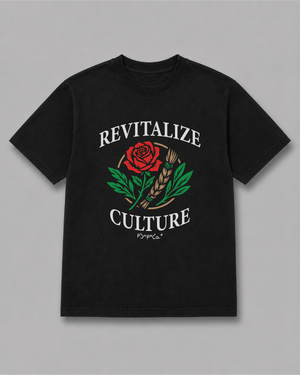
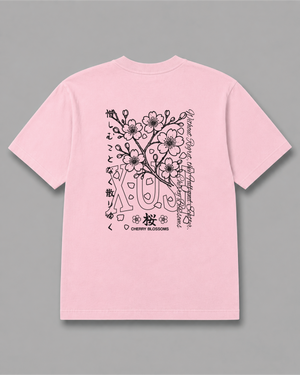
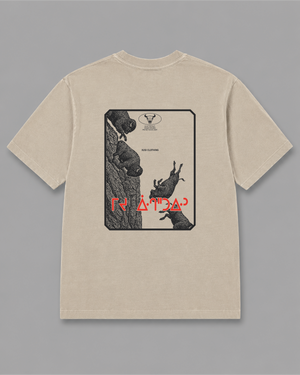
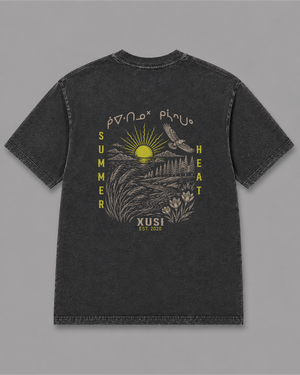
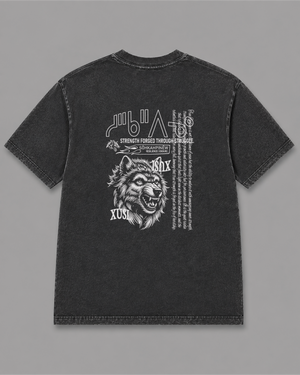
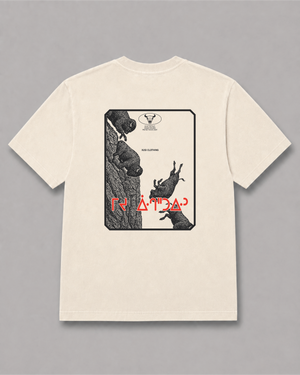
We make tees, hoodies, crewnecks and A-frame hats with Cree words, and we ship across Canada from Saskatoon. Orders ship in 1 to 3 business days. You can browse everything we make, or read our story.
We also do custom screen printing in Saskatoon for schools, teams, businesses and events: a 10-garment minimum, designs up to four colours, design help included, and every order is quoted before printing. See our screen printing page.
And we try to give back where we can. We donated proceeds from our RISE crewnecks to the Orange Shirt Society, and we run the Strong Roots Strong Future workshop for Indigenous youth ages 10 and up. More on our community support page.
If you are looking for Indigenous-made clothing more broadly, our page on Indigenous clothing in Canada is a good place to start.
The short version
Indigenous-owned businesses are a small part of Canada's economy. Many are very small. Buying from them puts money, decisions and jobs in Indigenous hands. Check before you buy, ask questions, and when you find businesses you trust, keep coming back.
Sources
- Statistics Canada: Indigenous-owned businesses in Canada, 2005 to 2021
- Statistics Canada, The Daily: Study: Identifying Indigenous business owners and Indigenous-owned businesses
- Innovation, Science and Economic Development Canada: SME Profile: Indigenous-owned businesses in Canada
- Canadian Council for Indigenous Business: Certified Indigenous Business (CIB)
- Canadian Council for Indigenous Business
- Indigenous Services Canada: Mandatory minimum 5% Indigenous procurement target
- Crown-Indigenous Relations and Northern Affairs Canada: Business and reconciliation (Call to Action 92)
- Orange Shirt Society
Written by XUSI, an Indigenous-owned clothing and screen printing brand from Saskatoon on Treaty 6 territory. Our story · What the words mean