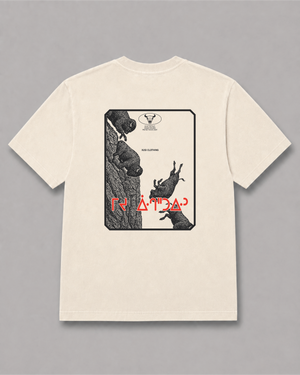

Indigenous Saskatchewan: Treaties, Nations and Community
An introduction to Saskatchewan: its history, its Nations and treaties, and Indigenous community life today, with sources.
About Saskatchewan
Saskatchewan stretches from open grassland in the south through aspen parkland to boreal forest and the rock and lakes of the Canadian Shield in the north. The Canadian Encyclopedia counts at least 70 First Nations in the province, belonging to Cree, Dene, Dakota, Nakota, Lakota and Saulteaux peoples, alongside a long-established Métis homeland. Six numbered treaties cover the land: Treaty 2 in a small southern area, Treaty 4 (1874) across the south, Treaty 5 in a strip along the Manitoba border, Treaty 6 (1876) through the centre, Treaty 8 (1899) in the far north and Treaty 10 (1906) in the northwest. Treaty 6 marked its 150th anniversary in 2026 with gatherings across the territory. Regina is the capital and Saskatoon the largest city, and both host universities; Regina is also home to First Nations University of Canada. Tribal councils such as the Prince Albert Grand Council and Saskatoon Tribal Council deliver services to member nations.
Saskatchewan history
People have lived on the lands now called Saskatchewan since at least 10,000 BCE, when hunters followed migrating bison herds across the plains. By the 1730s, Cree families were living permanently on the plains, and a distinct people, the Nêhiyawak or Plains Cree, took shape. In the early 1800s the Saulteaux joined the Nakota and Plains Cree in a trading partnership known as the Iron Alliance. The fur trade arrived in 1690. That year Henry Kelsey of the Hudson's Bay Company followed the Saskatchewan River west toward present-day Prince Albert. In 1774 Samuel Hearne chose a site on Pine Island for Cumberland House. It became the company's first western inland post and remains the oldest continuously occupied site in Saskatchewan, beside the Cumberland House Cree Nation. Métis families, many with roots at Red River, spread to places such as Batoche, Lebret, Willow Bunch, Green Lake and Buffalo Narrows. Their resistance in 1885, alongside First Nations, ended with the execution of Louis Riel. After Sitting Bull sought refuge north of the border following 1876, Lakota people also settled here, at Wood Mountain. Saskatchewan became a province in 1905, the same year as Alberta. Its population climbed from 19,114 in 1881 to 492,432 by 1911, and control of Crown lands passed to the province in 1930.
Treaty and territory
Saskatchewan is our home province. It lies within the lands of Treaties 2, 4, 5, 6, 8 and 10, and is home to Cree, Dene, Saulteaux, Dakota, Nakota, Lakota and Métis people. XUSI started in Saskatoon, on Treaty 6 territory, and the brothers who founded it grew up in a small reserve community in the north of the province.
Nearby: Saskatoon · Regina · Prince Albert · Lac La Ronge Indian Band · Whitecap Dakota First Nation · Batoche
Regions of Saskatchewan
Two physiographic regions shape the province. The rocky, lake-filled Canadian Shield covers the north, while the Interior Plains in the south hold level or gently rolling land with fertile soils. Language and nationhood follow these landscapes closely. The Denesuline, a branch of the Dene, have long occupied the northern boreal forest. Their communities entered Treaty 8 in 1899 and Treaty 10 in 1906–07. Woods Cree, the th-dialect, is spoken across the central forested belt. Swampy Cree, the n-dialect, is heard around Cumberland House in the east. Plains Cree, the y-dialect, stretches across the southern plains and central parkland. The southeast is Saulteaux and Nakota country. Nakota reserves include Mosquito, Carry the Kettle, Ocean Man and Pheasant Rump. Dakota communities sit at Whitecap, Wahpeton and Standing Buffalo, and Wood Mountain is a Lakota community. Many Dakota nations are not treaty signatories but still hold reserves. Métis communities grew along river lots and trade routes, from Batoche and Duck Lake to St. Louis, Green Lake and Buffalo Narrows.
Indigenous Saskatchewan today
About 17 per cent of Saskatchewan residents identified as Indigenous in the 2021 census. The Federation of Sovereign Indigenous Nations speaks for 74 First Nations in the province. It states its commitment to honouring the spirit and intent of the Treaties and carrying out their promises. Its work runs through secretariats for health, education, justice and women, plus a Treaty Governance Office. Public events on its calendar include the Spirit of Our Nations Pow Wow and the Strength of Our Women Gala. Language is a living thread here. Nêhiyawêwin, the Cree language, has roughly 20,000 speakers in Saskatchewan. Dene is second, with about 5,100 speakers, and it holds on unusually well among children in the north. Saulteaux is the main language of eleven bands in the southeast. Michif, the Métis language blending Cree and French, travelled west with buffalo hunters. For Métis learners, the Gabriel Dumont Institute has been the education and training arm of the Métis Nation–Saskatchewan since 1980. Its SUNTEP program trains teachers in Prince Albert, Regina and Saskatoon. Its Culture and Heritage Department has produced more than 160 Métis-specific resources.
Life in Saskatchewan
Saskatchewan is Canada's wheat heartland. In 2015 its farms grew over 13 million tonnes of wheat, 47 per cent of the national total. Below the fields lie the potash beds that make the province the world's largest potash producer. Crude oil and uranium add to a resource economy that reaches from the southern plains to the Shield. The Cypress Hills in the southwest rise higher than any land between the Rocky Mountains and Labrador. Farther east, Grasslands National Park was Canada's first national park created to protect mixed-grass prairie. It holds the country's only remaining black-tailed prairie dog colonies and is called the darkest dark sky preserve in Canada. Football is close to a provincial faith. The Saskatchewan Roughriders rank third in merchandise sales, behind only the Toronto Maple Leafs and Montréal Canadiens. The sitcom Corner Gas, set in a fictional small town here, ran for 107 episodes. Singer Buffy Sainte-Marie was born on Piapot First Nation in the Qu'Appelle Valley.
Saskatchewan seasons and weather
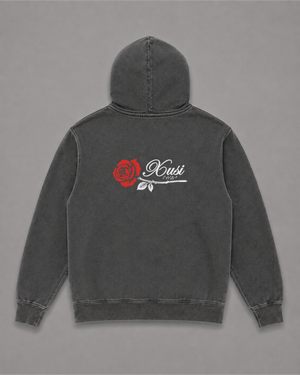
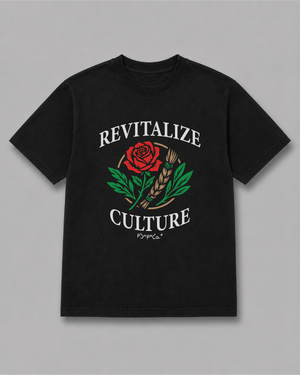
Winters here are long and bitterly cold, often with wind chill sweeping across open fields, while summers turn hot and dry. Most people keep a heavy hoodie, a toque and a lighter tee in rotation for shoulder seasons that can swing twenty degrees in a day.
Communities in Saskatchewan
- Saskatoon
- Regina
- Prince Albert
- North Battleford
- Moose Jaw
- Lloydminster
- Meadow Lake
- La Ronge
- Yorkton
- Swift Current
- Estevan
- Weyburn
- Fort Qu’Appelle
- Humboldt
- Melfort
- Kindersley
- Martensville and Warman
- Île-à-la-Crosse
Keep learning in the XUSI Journal
- The Numbered Treaties, Explained
- Treaty 6 and Saskatoon: Where XUSI Comes From
- Treaty 4 Explained: The 1874 Qu'Appelle Treaty
- Métis History in Saskatchewan: Places to Learn and Visit
- All Journal articles
Saskatchewan questions
I live in a small Saskatchewan town far from Saskatoon. Can I still get free shipping?
Yes. Any order of $90 or more ships free anywhere in Canada, including rural and northern Saskatchewan. Smaller orders show the shipping cost at checkout, and every order leaves our Saskatoon shop within 1 to 3 business days.
Our Saskatchewan First Nation wants shirts printed for a treaty gathering. What do we need to know?
Custom screen printing starts at 10 garments, with up to 4 colours per design and a maximum print area of 23 by 31 inches. Every order gets a full quote before anything is printed, design help is included, and everything is printed in Saskatoon and shipped to you.
Does XUSI use Cree words that Saskatchewan speakers will recognize?
Many of our designs carry a Cree word and the story behind it, which we share on our meanings page. Nêhiyawêwin is the most widely spoken Indigenous language in Saskatchewan, so Cree speakers across the province may recognize these words. We are an Indigenous-owned company based in Saskatoon, on Treaty 6 territory.
Can I buy XUSI in person anywhere in Saskatchewan?
Our only in-person retail is in the Saskatoon area, at Wanuskewin. Everywhere else in the province, from the southern plains to the Shield country up north, ordering online is the way to go. We ship from Saskatoon, and orders of $90 or more ship free anywhere in Canada. Digital gift cards are also available.
Last reviewed . Facts on this page come from the sources listed below.
Sources for this page
- Saskatchewan – The Canadian Encyclopedia
- Indigenous Peoples of Saskatchewan – Indigenous Saskatchewan Encyclopedia, University of Saskatchewan
- Aboriginal Languages – The Encyclopedia of Saskatchewan, University of Regina
- Federation of Sovereign Indigenous Nations
- About – Gabriel Dumont Institute
- Cumberland House – The Canadian Encyclopedia
- Grasslands National Park – Parks Canada
Indigenous clothing from XUSI
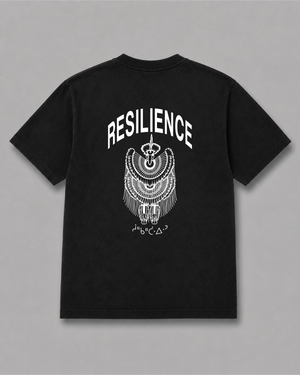
From the South Saskatchewan riverbank in Saskatoon, XUSI designs and prints Indigenous clothing for people right across this province, with tees, hoodies and hats packed up and sent to prairie towns, parkland farms and northern lake communities alike.
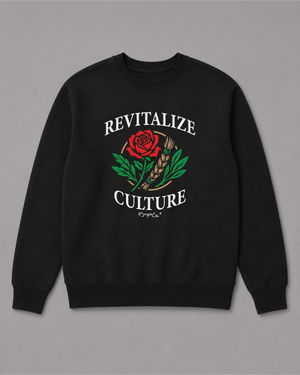
A Saskatchewan year asks a lot of a wardrobe. For a Riders game in late summer, our A-frame snapback hat and a Golden Era ringer tee keep things easy. When harvest runs into cool October evenings, the Black Oni long sleeve layers well under a work jacket. Up north, from La Ronge to Cumberland House, a heavyweight hoodie earns its keep on lake shores and trap lines. Out at Grasslands on a clear night, a Revitalize Culture crewneck is a warm way to wait for the dark sky. Many of our designs carry a Cree word and its story, a language still spoken by thousands of people across this province.