
Indigenous Saskatoon: Treaty 6, Nations and Community
An introduction to Saskatoon: its history, the Nations whose lands it sits on, and Indigenous community life today, with sources.
About Saskatoon
Saskatoon is Saskatchewan’s largest city, spread along both banks of the South Saskatchewan River and linked by so many crossings that it is nicknamed the Bridge City. Its name likely comes from the Cree word for the saskatoon berry. The Temperance Colonization Society founded the settlement in 1882, and it became a city in 1906. Agriculture, potash and uranium mining, and advanced technology drive the economy, and the University of Saskatchewan and Saskatchewan Polytechnic anchor its education sector. The city lies in Treaty 6 territory and the Homeland of the Métis. Just north, Wanuskewin Heritage Park, whose Cree name means “seeking peace of mind,” protects a gathering place used for more than 6,400 years and is a proposed UNESCO World Heritage Site. The Saskatoon Tribal Council serves seven Cree, Saulteaux and Dakota nations, and the Saskatoon Indian and Métis Friendship Centre offers status-blind programs.
Saskatoon history
People have hunted along this stretch of the river for at least 6,000 years, as the Gowen sites in the city show. Before 1882 the region was mainly home to Cree and Métis people. Dakota refugees settled at the Moose Woods reserve in 1881. Treaty 6 was first signed at Fort Carlton on August 23, 1876, and at Fort Pitt that September. Chief Mistawasis was among the Cree leaders who signed. The treaty is known for its medicine chest clause, which no earlier numbered treaty contained. It also promised reserve lands, schools on reserves, farm tools and protection in times of famine. In 1882 a survey party led by Commissioner John Lake came to inspect land granted to the Temperance Colonization Society of Toronto. The first settlers arrived the next year. In 1890 the rail line from Regina to Prince Albert crossed the river here, and growth shifted to the west bank. Three villages grew up side by side: Saskatoon, Nutana and Riversdale. They joined to form one city in 1906. The arrival of the Barr Colonists in 1903 sparked an early boom. Potash mines opened nearby in 1958, beginning a new chapter for the local economy.
Treaty and territory
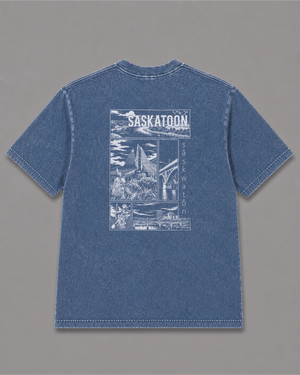
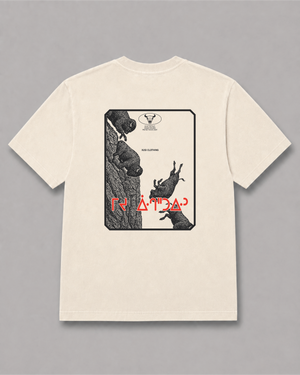
Saskatoon, sâskwatôn in Cree, is on Treaty 6 territory and the homeland of the Métis. It is where XUSI started in 2020, and it is the word on our sâskwatôn tee.
Nearby: Whitecap Dakota First Nation · Muskeg Lake Cree Nation · One Arrow First Nation · Martensville · Warman · Batoche
Indigenous Saskatoon today
About 11.5 percent of Saskatoon residents identified as Indigenous in the 2021 census. The city was a national first for urban reserves. In 1988 Muskeg Lake Cree Nation signed an agreement with all three levels of government for a commercial urban reserve. It covers 35 acres on the northeast side and includes the McKnight Commercial Centre. The Saskatchewan Indian Gaming Authority and CreeWay Gas operate there. On campus, the Gordon Oakes Red Bear Student Centre opened at the University of Saskatchewan on February 3, 2016. Douglas Cardinal, an architect of Métis and Blackfoot heritage, designed it with RBM Architects. Its tiles recall the wampum belt and early treaties. It is named for a Nekaneet First Nation leader who twice served as Chief. The City names Chief Mistawasis Bridge after the Treaty 6 signatory. Wanuskewin holds weekend dance and music presentations and a public gathering on the National Day for Truth and Reconciliation. Its gift shop features local artisans, and its restaurant serves Indigenous cuisine.
Life in Saskatoon
The Meewasin Valley Authority, created in 1979, cares for the South Saskatchewan River valley through the heart of the city. Its name comes from the Cree word miýwâsin, meaning it is beautiful. The City, the province and the University of Saskatchewan share that work, balancing conservation with everyday use. Wanuskewin offers trails, galleries, guided tours of Northern Plains heritage and even tipi sleepovers. It has won Indigenous Tourism Awards in 2016, 2019 and 2023. In the city, the Western Development Museum tells the story of prairie settlement and farming. The population reached 266,141 in 2021, up from 247,201 five years earlier. Mining and a growing high-tech sector have added to the farm economy since the 1970s. The University of Saskatchewan, founded in 1909, remains one of the city’s defining institutions.
Saskatoon seasons and weather
Saskatoon winters are cold and dry with sharp wind chills along the river, and summers are hot and sunny. Locals switch between tees and heavy hoodies, often in the same week in spring and fall.
More on the region: Indigenous Saskatchewan · all of Canada.
Keep learning in the XUSI Journal
- Treaty 6 and Saskatoon: Where XUSI Comes From
- Wanuskewin Heritage Park: History, Bison and Visitor Guide
- Indigenous Events Saskatoon: A Season-by-Season Guide
- Saskatoon Berry: The Plant Behind Our City's Name
- All Journal articles
Saskatoon questions
Can I pick up my order in Saskatoon instead of having it shipped?
Yes. Saskatoon is the only place where local pickup is available, so you can choose pickup at checkout. Orders are ready to go within 1 to 3 business days.
My Saskatoon school wants shirts for a round dance. How does custom printing work?
We print right here in Saskatoon. The minimum is 10 garments, each design can use up to 4 colours on a screen up to 23 by 31 inches, design help is included, and every order is quoted before printing.
Is XUSI actually a Saskatoon company?
Yes. Two brothers founded XUSI here in 2020, on Treaty 6 territory. We design our clothing and do our custom screen printing in Saskatoon, and every online order ships from here across Canada. Buying from us keeps money with an Indigenous-owned business in the city.
Why do many XUSI designs carry Cree words?
Cree is part of this land, and the word saskatoon itself likely comes from Cree. Many of our designs carry a Cree word with a story behind it. You can read those words and their stories on our meanings page before choosing a shirt, hoodie or hat.
Last reviewed . Facts on this page come from the sources listed below.
Sources for this page
- Saskatoon, The Canadian Encyclopedia
- Treaty 6, The Canadian Encyclopedia
- Muskeg Lake Cree Nation, Saskatoon celebrate 30th anniversary of first commercial urban reserve, MBC Radio
- U of S celebrates historic opening of new student centre, University of Saskatchewan
- Wanuskewin Heritage Park
- About, Meewasin Valley Authority
- Indigenous Initiatives, City of Saskatoon
Indigenous clothing from XUSI
Saskatoon is home for XUSI. Our Indigenous-owned shop designs and screen prints tees, hoodies and hats right here in the city, and local customers can pick orders up or have them shipped anywhere in town.
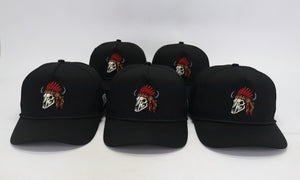
This is our home, so we know the rhythm of a Saskatoon year. A heavyweight cotton tee works for summer evenings on the Meewasin trails or a Saturday at Wanuskewin watching the dancers. When September brings students back to campus, a Golden Era ringer tee under an open hoodie handles cool mornings and warm afternoons. By Truth and Reconciliation Day at the end of the month, many people reach for a crewneck. Through the long winter, our heaviest hoodies layer under a parka for crossing the river bridges. An A-frame snapback finishes the look through every season.