
Indigenous Edmonton: Treaty 6, Nations and Community
An introduction to Edmonton: its history, the Nations whose lands it sits on, and Indigenous community life today, with sources.
About Edmonton
Edmonton, the capital of Alberta, is built along the North Saskatchewan River, whose wooded valley of parks, golf courses and trails is the city’s signature natural feature. The Cree name amiskwaciy-wâskahikan, Beaver Hills House, reflects its long role as a meeting ground for many Indigenous communities, and the city lies within Treaty 6 territory, first signed in 1876. Enoch Cree Nation shares an 8 km border with the western edge of the city. Edmonton is a major supply and service centre for northern Alberta and a leading location for oil refining and petrochemicals, with growing technology sectors. The University of Alberta anchors a large post-secondary community. Known as Canada’s Festival City, it hosts the International Fringe Theatre Festival and the Folk Music Festival, while the Edmonton Indigenous Peoples Festival and Edmonton Indigenous Fashion Week spotlight Indigenous culture. Ociciwan Contemporary Art Centre is the city’s first Indigenous-run contemporary art centre.
Edmonton history
People have camped above the North Saskatchewan River here for thousands of years. On a high bluff over the river, archaeologists found a large campsite with stone tools. It dates to the Middle Prehistoric period, between 3000 and 500 BCE. The Canadian Encyclopedia names the area as traditional territory of the Blackfoot Confederacy, Tsuut’ina, Stoney Nakoda, Cree and Métis. In 1795, the Hudson’s Bay Company and North West Company built rival posts near present-day Fort Saskatchewan. After the two companies merged in 1821, Fort Edmonton became the leading post. It was reputedly named for Edmonton, near London, England, birthplace of an HBC deputy governor. The fort was rebuilt in 1830 on the site of today’s Alberta Legislature Building. Treaty 6 was first signed at Fort Carlton on August 23, 1876, and at Fort Pitt that September. It included a medicine chest clause and a promise of rations in times of famine. In August 1877, more bands signed adhesions at Fort Edmonton. Settlement outside the fort walls began in the 1870s. The Canadian Northern Railway arrived in 1905, the same year Edmonton became Alberta’s capital. Amalgamation with Strathcona in 1912 pushed the population past 50,000.
Treaty and territory
Edmonton, amiskwacîwâskahikan in Cree, is on Treaty 6 territory, the same treaty territory as Saskatoon, and the homeland of the Métis.
Nearby: Enoch Cree Nation · St. Albert · Sherwood Park · Spruce Grove · Alexander First Nation · Beaumont
Indigenous Edmonton today
Edmonton is a centre of Métis life in Alberta. The Métis Nation of Alberta, founded in 1928, reports that about 31,780 Métis live in Edmonton. That is roughly a third of the province’s Métis population, which is the largest of any province. The Canadian Native Friendship Centre has served the city since 1962. It aims to better the lives of Indigenous people and to build cultural awareness among non-Indigenous residents. The centre serves about 10,000 people a year through referrals, social gatherings and recreation. It also works to raise awareness about ending violence against Indigenous women and girls. In the river valley at Fox Drive, the city developed kihcihkaw askî as a gathering place for Indigenous ceremony, traditional arts and teachings. Elders chose the Plains Cree name, which the city translates as this place here is Sacred. The Indigenous Knowledge and Wisdom Centre began operating the site in early 2023. It held a public open house that September.
Life in Edmonton
With 1,010,899 people in the 2021 census, Edmonton is Alberta’s capital and one of Canada’s largest cities. Its landmarks range from grand to playful. West Edmonton Mall covers 5.3 million square feet and is described as the largest mall in North America. The Muttart Conservatory is another well-known city landmark. The Alberta Legislature Building rises on the site of the rebuilt 1830 fort. Sport runs deep here. The Edmonton Oilers play in the NHL, and the Edmonton Elks play CFL football at Commonwealth Stadium, built in 1978 and expanded in 1983. The Edmonton Rush have represented the city in the National Lacrosse League. Edmonton pairs thousands of years of history on its river bluffs with a record-setting mall and major-league sport.
Edmonton seasons and weather
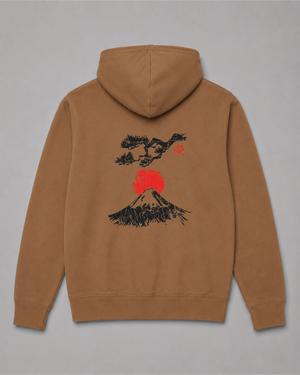
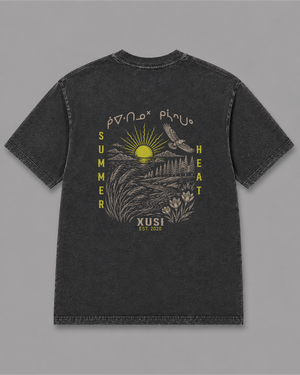
Edmonton winters are long, with deep freezes that call for a thick hoodie under an insulated coat and a warm hat. Summer brings long, warm days made for a tee in the river valley.
More on the region: Indigenous Alberta · all of Canada.
Keep learning in the XUSI Journal
- Treaty 6 and Saskatoon: Where XUSI Comes From
- The Numbered Treaties, Explained
- Treaty Annuity Payments and Treaty Days, Explained
- Nêhiyawêwin: A Beginner's Guide to the Cree Language
- All Journal articles
Edmonton questions
Can I pick up an order in Edmonton?
Local pickup is offered only in Saskatoon. Edmonton orders are shipped from Saskatoon and leave within 1–3 business days, with the shipping cost calculated at checkout.
Our Edmonton organization wants branded shirts for an event. What are the screen printing details?
Orders start at 10 garments, designs can include up to 4 colours, and every order is quoted before printing. Design support comes with the order, which is printed in Saskatoon and shipped to Edmonton. The largest screen size is 23x31 inches.
Can an Edmonton Métis or friendship centre group order custom shirts?
Yes. Our custom screen printing suits community groups, with a 10-garment minimum and up to 4 colours per design. Every order gets a full quote before anything is printed, and design help is included. We are an Indigenous-owned shop in Saskatoon, also in Treaty 6 territory, and we ship finished orders to Edmonton.
What should I wear to an Oilers or Elks game?
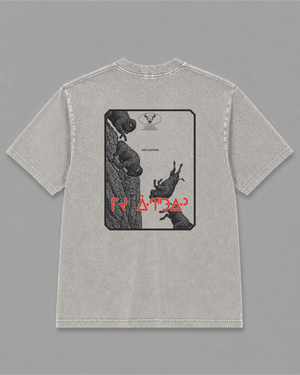
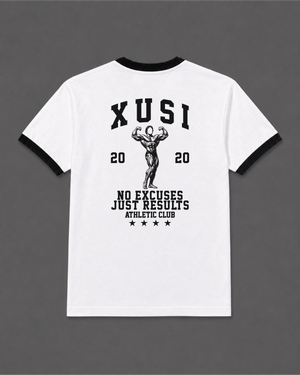
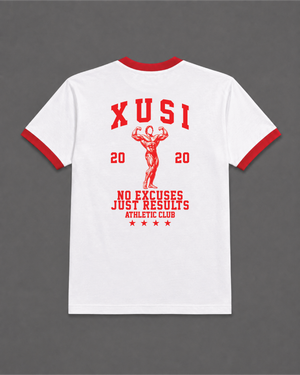
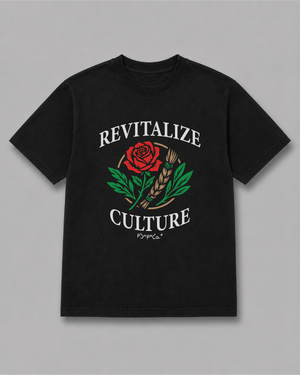
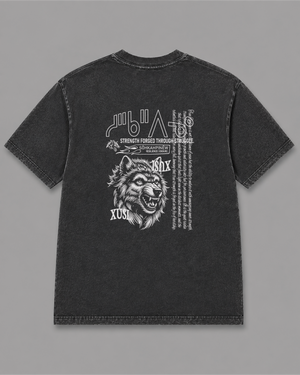
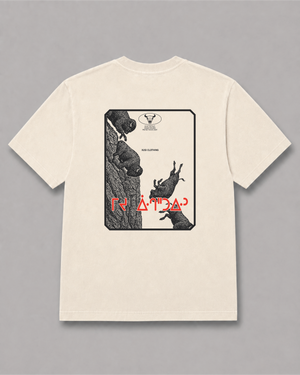
For a cold-night hockey or football game, we suggest one of our hoodies, $59.95 to $89.95, or the Revitalize Culture crewneck, $89.95, as a warm layer. Our heavyweight 100% cotton tee, $49.95, has a generous fit that sits well underneath. An A-frame snapback, $44.95, rounds it out.
Last reviewed . Facts on this page come from the sources listed below.
Indigenous clothing from XUSI
Edmontonians who want to support Indigenous business can order from XUSI, an Indigenous-owned company in Saskatoon that ships its hoodies, hats and tees to Alberta’s capital.
Edmonton winters are serious, and we think our heavier pieces earn their place here. A thick hoodie under a parka works for a frosty walk to an Oilers game . The Revitalize Culture crewneck suits a winter afternoon among the plants at the Muttart Conservatory. When the river valley trails open up in summer, our heavyweight cotton tee and an A-frame snapback are ready for a long bike ride. The Black Oni long sleeve is a good fit for a fall Elks game at Commonwealth Stadium. Everything ships to you from our shop in Saskatoon, in the same Treaty 6 territory.