
Indigenous Kindersley: Treaty 6, Nations and Community
An introduction to Kindersley: its history, the Nations whose lands it sits on, and Indigenous community life today, with sources.
About Kindersley
Kindersley is a west-central Saskatchewan town between Rosetown and the Alberta border, at the junction of Highways 7 and 21 on the main route linking Saskatoon and Calgary. Surveyed in 1909, it was named for Sir Robert Kindersley, a major shareholder in the Canadian Northern Railway. Oil and gas discoveries in the early 1950s brought rapid growth, and grain farming and the energy sector remain the economic mainstays today, with the town acting as the shopping and service centre for a trading area of about 40,000 people. Great Plains College operates a campus on Main Street. The long-running Goose Festival fills the town with a parade and a weekend of community events. Local curiosities include the Addison Sod House, described as the oldest continuously inhabited sod building in the province, and the Great Wall of Saskatchewan, a kilometre-long stone wall built without cement or mortar.
Kindersley history
Long before survey lines crossed west-central Saskatchewan, this was open plains country used by Indigenous peoples. Plains Cree, the y-dialect of the Cree language, is spoken across the southern plains and the central parkland. The Kindersley and District Plains Museum keeps an archaeological room of rocks, fossils and hunting tools found in the local area. Great Plains College runs a campus in town. It describes its region as Treaty 4 and 6 territories and the traditional homeland of the Métis. Homesteaders began arriving in the district in 1907. On January 10, 1910, the village of Kindersley was incorporated. Ten months later, it had already become a town. Growth came in waves after that. The population was just over 1,000 by the early 1920s, then dipped to 990 in 1941. Oil and gas then brought a surge. The count reached 1,755 in 1951 and 2,990 by 1961. The Addison Sod House went up between 1909 and 1911, and it still stands. Nearby, Albert "Stonewall" Johnson spent 30 years stacking fieldstone into his great wall. It measures about three metres wide and two metres high. The local museum moved to a nine-acre site east of town and held its grand opening on June 14, 1991.
Treaty and territory
Kindersley is on Treaty 6 territory, the lands of the Cree and other nations, and the homeland of the Métis.
Nearby: Rosetown · Kerrobert · Eatonia · Flaxcombe · Brock · Marengo
Indigenous Kindersley today
In Kindersley, the local college campus is one public place where reconciliation work is visible. Great Plains College, with a Kindersley campus among its six locations, signed the Colleges and Institutes Canada Indigenous Education Protocol on September 25, 2025. It was the 76th institution in Canada to do so. The protocol asks colleges to prioritize Indigenous education, support Indigenous students and staff, and bring Indigenous knowledge into curriculum. The signing ceremony included a drum performance and remarks from Elders and Knowledge Keepers. At the same time, the college launched its Indigenous Engagement Action Plan. Its president described the protocol as the promise and the plan as the how. The college's Indigenous Engagement Committee works with Elders Dale Mosquito and Sylvia Thorburn. Knowledge Keeper Lyndon Linklater has offered one-on-one support to students and staff and led sharing circles. For Louis Riel Day, the college has welcomed a Métis presenter from the Lil Buffloo Métis Association. The college also belongs to two regional Truth and Reconciliation committees.
Life in Kindersley
Kindersley calls itself a town, but it serves a trading area of roughly 40,000 people. Traffic counts on its highways top 5 million vehicles a year. Grain and energy still carry the local economy, and the town even sells its treated wastewater to an oilfield service company for hydraulic fracturing. The weather here runs to extremes. The hottest day on record reached 41.7°C on July 5, 1937. The coldest fell to −45.0°C on January 30, 1969. Hockey is a big part of winter. The Kindersley Klippers of the Saskatchewan Junior Hockey League play at the West Central Events Centre. Each September, the four-day Goose Festival brings the community together. Kindersley Regional Park sits by the Motherwell Reservoir. The Plains Museum grounds hold a general store, school house, CN station and Anglican church. Inside are a camera collection and period clothing.
Kindersley seasons and weather
Open prairie means strong winds and sharp winter cold, so a wind-blocking shell over a hoodie is practical. Summer days are hot and dry, which suits a light tee and a hat.
More on the region: Indigenous Saskatchewan · all of Canada.
Keep learning in the XUSI Journal
- Treaty 6 and Saskatoon: Where XUSI Comes From
- The Numbered Treaties, Explained
- Métis History in Saskatchewan: Places to Learn and Visit
- Residential Schools in Saskatchewan: Where to Start Learning
- All Journal articles
Kindersley questions
Can a Kindersley rink or curling club order custom printed apparel?
Yes. Minimum order is 10 garments, with designs of up to 4 colours, and every order is quoted before printing. Design assistance is part of the service, and everything is printed in Saskatoon, then shipped to the club.
Is ordering practical from a small town like Kindersley?
It is. Orders leave Saskatoon within 1–3 business days, shipping cost appears at checkout, and orders of $90 or more ship free within Canada.
Could Great Plains College students in Kindersley order matching shirts for a class or club?
Yes. Custom screen printing starts at 10 garments, with up to 4 colours per design, and every order is quoted before printing. We include design help, print in Saskatoon and ship the order to Kindersley. Talk to us early if you have a set date.
We work in the oil patch around Kindersley. Which XUSI pieces hold up to daily wear?
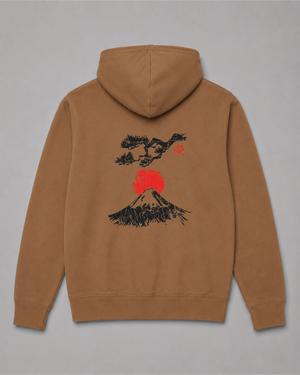
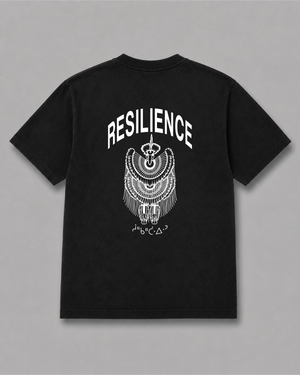
Our heavyweight tees are 100% cotton with a generous fit, which leaves room to layer under coveralls. The Black Oni long sleeve adds coverage on cooler mornings. For time off, our hoodies range from $59.95 to $89.95, and orders over $90 ship free across Canada.
Last reviewed . Facts on this page come from the sources listed below.
Sources for this page
- Kindersley – The Encyclopedia of Saskatchewan, University of Regina
- Aboriginal Languages – The Encyclopedia of Saskatchewan, University of Regina
- Great Plains College marks National Day for Truth and Reconciliation with commitment to Indigenous education
- Great Plains College Annual Report 2023-24
- Kindersley Chamber Feature: The Kindersley & District Plains Museum – Kindersley Social
- Kindersley & District Plains Museum – Museums Association of Saskatchewan
- Kindersley – Wikipedia
Indigenous clothing from XUSI
Kindersley shoppers can wear clothing from XUSI, a Saskatoon business under Indigenous ownership that ships its tees, hoodies and hats to the town and to farms and acreages across west-central Saskatchewan.
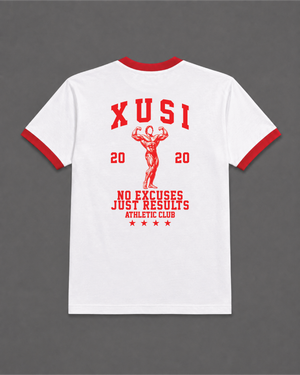
Kindersley life swings between a combine cab in August and a cold rink in January, and we make pieces for both. A heavyweight cotton tee handles long harvest days when the prairie heat climbs. On a September weekend at the Goose Festival, a Golden Era ringer tee and an A-frame snapback fit the easygoing mood. When the Klippers are home at the West Central Events Centre, a heavyweight hoodie keeps you warm in the stands. For oilfield mornings that start well before sunrise, the Black Oni long sleeve layers well under coveralls or a work jacket.