
Indigenous Yorkton: Treaty 4, Nations and Community
An introduction to Yorkton: its history, the Nations whose lands it sits on, and Indigenous community life today, with sources.
About Yorkton
Yorkton serves the aspen parkland of east-central Saskatchewan, about 175 kilometres northeast of Regina, in Treaty 4 territory. It began in 1882 as a colony of the York Farmers’ Colonization Company from York County, Ontario, took the name Yorkton in 1884 and moved to its current site when the railway arrived in 1889. Ukrainian and Doukhobor settlers shaped the region, and St. Mary’s Ukrainian Catholic Church is known for its painted dome. The city became a regional hub for grain farming and was incorporated in 1928. The Yorkton Film Festival, which began in 1950 and presents the Golden Sheaf Awards, is one of Canada’s longest-running film festivals, and a Western Development Museum branch operates here. The Yorkton Tribal Council serves six Treaty 4 nations: Cote, Kahkewistahaw, Keeseekoose, The Key, Ocean Man and Zagime Anishinabek.
Yorkton history
The Yorkton region has long been home to the Nêhiyawak, or Plains Cree, and later the Nahkawininiwak, or Saulteaux. When explorers and traders first travelled through, they also met Assiniboine and Métis people here. In 1874, Treaty 4 covered about 75,000 square miles of this southern country. The York Farmers' Colonization Company was incorporated on May 12, 1882, with $300,000 in capital and N. Clark Wallace as president. Its first settlement, York City, stood about four kilometres northeast of today's city. Four men spent the first winter there together, and by 1883 the colony counted 158 settlers. The post office opened under the Yorkton name on January 1, 1884. After the move to the rail line, growth came steadily. The village had 215 people in 1894, and the new town had 600 in 1900. By 1905, when Saskatchewan became a province, the count had reached 1,200. From the late 1890s, newcomers arrived from Poland, Russia, Germany, Hungary and Sweden, with Ukrainians forming the greatest share. The Queen Victoria Cottage Hospital was built in 1901 for $5,380. City status became official on February 1, 1928.
Treaty and territory
Yorkton is on Treaty 4 territory and the homeland of the Métis.
Nearby: Cote First Nation · Keeseekoose First Nation · The Key First Nation · Melville · Canora · Kamsack
Indigenous Yorkton today
The Yorkton Tribal Council describes itself as a not-for-profit serving six member nations in Treaty 4 territory. It runs eight departments with more than 90 employees in five locations. Its work covers health and social development, education, community infrastructure and justice. It also operates Project Safe Haven, a domestic violence shelter, and the Eagle Sky Healing Lodge. The council's Tribal Justice Unit offers restorative programs for young people in the justice system. These include victim-offender mediation, community justice forums and accountability conferences. Justice Canada committed $1,401,477 to the unit over five years, from 2021 to 2026. Tribal Chief Isabel O'Soup has said the programs connect people with Elders, ceremonies and culture. For urban Indigenous residents, a friendship centre is back. Yorkton went without one from 2018 until the Yorkton Indigenous Friendship Centre incorporated around 2024. Led by executive director Mary Culbertson, it rents two offices and uses community spaces across town. Its programs include a youth drumming group, men's networking nights, grief and healing workshops, an LGBTQ spirit support group and Indigenous market events.
Life in Yorkton
Yorkton sits where three main highways meet, which helps make it the province's fifth-largest city. Grain built the place early. In 1911 alone, Yorkton shipped 2,600,000 bushels of it. The city's population tells a steady story. It reached 5,151 in 1921, climbed to 15,339 by 1981 and reached 17,113 in 1999. The first water tower went up in 1930. For time outdoors, the Ravine Ecological Preserve lies along the west side of the Gallagher Centre. A 2.8-kilometre walking trail winds through habitats from open water to parkland. A floating boardwalk crosses the water, and an arboretum in the southwest corner shows trees and shrubs hardy to the area. The trail also reaches the Dulmage farmstead, a municipal heritage site. The Encyclopedia of Saskatchewan calls the Yorkton Short Film and Video Festival internationally renowned.
Yorkton seasons and weather
Parkland winters are cold with steady snow cover, and summers are warm with more tree shelter than the open south. Expect to reach for a hoodie most mornings from fall to spring.
More on the region: Indigenous Saskatchewan · all of Canada.
Keep learning in the XUSI Journal
- Treaty 4 Explained: The 1874 Qu'Appelle Treaty
- The Numbered Treaties, Explained
- Métis History in Saskatchewan: Places to Learn and Visit
- Residential Schools in Saskatchewan: Where to Start Learning
- All Journal articles
Yorkton questions
Can a Yorkton Tribal Council nation order shirts for a youth event?
Yes. Custom screen printing starts at 10 garments, with up to 4 colours per design, and every order is quoted before printing. We provide design help, print in Saskatoon and ship the order to you.
What if something I order to Yorkton needs to be returned?
Returns can be requested within 30 days. Orders ship from Saskatoon within 1 to 3 business days, and orders of $90 or more ship free within Canada.
Can the Yorkton Indigenous Friendship Centre or a youth drumming group order matching hoodies?
Any Yorkton group can order custom screen printing from 10 garments. Designs can use up to 4 colours, design help is included, and every order is quoted before printing. We print in Saskatoon and ship the finished order to your Yorkton address.
Does XUSI have Cree or Saulteaux designs for people around Yorkton?
Many of our designs carry a Cree word and the story behind it, which we share on our meanings page. We do not currently make Saulteaux-language designs. As an Indigenous-owned Saskatoon company, we would welcome working with a Yorkton-area group on a custom design of its own.
Last reviewed . Facts on this page come from the sources listed below.
Sources for this page
- Yorkton – The Encyclopedia of Saskatchewan, University of Regina
- Our Story – City of Yorkton
- Yorkton Tribal Council
- Supporting systemic change through Yorkton Tribal Council's Tribal Justice Unit – Justice Canada
- The Yorkton Indigenous Friendship Centre has returned – MBC Radio
- Ravine Ecological Preserve – City of Yorkton
Indigenous clothing from XUSI
Yorkton and the east-central parkland are part of XUSI’s shipping map. Our Indigenous-owned Saskatoon brand prints comfy hoodies, tees and hats, then posts them out to the city and nearby Treaty 4 First Nations.
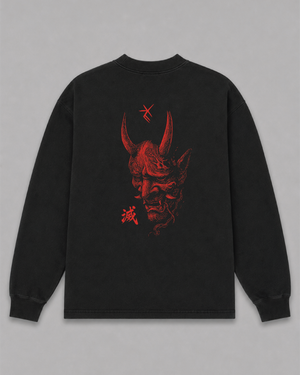
Yorkton weather moves between parkland summers and deep winter, and we like pieces that handle both. A heavyweight cotton tee is right for a July walk along the Ravine Preserve boardwalk. When fall colours come to the aspen bluffs, our Black Oni long sleeve layers well for a morning on the trail. Heading to a festival screening or a Friendship Centre market, the Revitalize Culture crewneck is warm without being bulky. From November to March, a heavyweight hoodie gets you from the truck to the rink. Add an A-frame snapback, or a toque on the coldest days.