
Indigenous Portage la Prairie: Treaty 1, Nations and Community
An introduction to Portage la Prairie: its history, the Nations whose lands it sits on, and Indigenous community life today, with sources.
About Portage la Prairie
Portage la Prairie lies on the Assiniboine River roughly 75 km west of Winnipeg, in an area first inhabited by Anishinaabe, Cree and Dakota peoples. Dakota Tipi First Nation keeps its administrative headquarters in the city, and Long Plain First Nation’s main reserve is about 14 km to the southwest; both belong to the Dakota Ojibway Tribal Council. Long Plain acquired the former Portage la Prairie Indian Residential School, now called the Rufus Prince Building, in 1981. Designated a National Historic Site in 2020, it houses Long Plain offices and the National Indigenous Residential School Museum of Canada. The Portage la Prairie Friendship Centre serves the local Indigenous community. Food processing is a major employer, with McCain Foods and Simplot operating plants that make french fries, and Island Park with Crescent Lake offers walking trails and birdwatching close to downtown.
Portage la Prairie history
The city's French name describes the place where canoes were carried overland between the Assiniboine River and Lake Manitoba. In 1738, Pierre Gaultier de La Vérendrye built Fort la Reine in the area. After 1794, both the North West Company and the Hudson's Bay Company ran trading posts here. Reverend William Cockran founded a mission in 1851, the start of permanent European settlement. Treaty 1 was signed on August 3, 1871, at Lower Fort Garry, also called the Stone Fort. Anishinaabe and Swampy Cree leaders of southern Manitoba signed, among them Red Eagle (Henry Prince) and Yellow Quill. Métis interpreter James McKay worked alongside Lieutenant-Governor Adams Archibald and Commissioner Wemyss Simpson. Many verbal commitments, including farm implements, animals and clothing, were left out of the written text. These outside promises were only recognized by order-in-council on April 30, 1875. In 1867–68, Thomas Spence's short-lived colony of Manitobah used Portage as its capital. The Canadian Pacific Railway arrived in 1880 and set off rapid growth, and Portage became a city in 1907. The Portage Indian Residential School dates back to the 1880s, first run by Methodist and Presbyterian church bodies.
Treaty and territory
Portage la Prairie is on Treaty 1 territory, the lands of the Anishinaabe, Cree, Oji-Cree, Dakota and Dene peoples, and the homeland of the Métis.
Nearby: Long Plain First Nation · Dakota Tipi First Nation · Dakota Plains Wahpeton Oyate · Sandy Bay Ojibway First Nation · MacGregor · Oakville
Indigenous Portage la Prairie today
The Dakota Ojibway Tribal Council keeps its headquarters on Crescent Road West in Keeshkeemaquah. Its member nations are Birdtail Sioux, Long Plain, Roseau River Anishinabe, Sandy Bay Ojibway and Swan Lake. Its stated aim is to work in partnership with communities to improve services and meet member Nations' needs. The council delivers child and family services, housing, health, policing, social development and vocational training, along with community futures development. Post-secondary learning is offered through Yellowquill University College. The National Indigenous Residential School Museum of Canada grew out of Assembly of First Nations Resolution No. 34(B) of 2001. That resolution called for a museum on Long Plain's land. The school building once housed children from Long Plain, from northern communities and Inuit children. It was one of seventeen Indian Residential Schools in Manitoba. The museum describes itself as a place to learn, share, heal and move forward. Tours can be booked on weekdays, and a 24-hour crisis line is shared for anyone affected by residential schools.
Life in Portage la Prairie
The 2021 census counted 13,270 people in Portage la Prairie. Tourism promoters call it the Island on the Prairies. Its place on the Trans-Canada Highway and major rail lines supports several industrial parks, and the provincial Food Development Centre is based here. A former Canadian Forces Base closed in 1992 and now houses Southport Aerospace Centre. History is easy to find. Fort la Reine Museum, a Manitoba Star Attraction open from May to October, spreads 15 buildings across five acres. Its prize piece is Le Rideau, the personal business rail car of Sir William Van Horne. The CPR Station and Heritage Park, opened in 2003, is home to a model railroad club. The area counts 139 designated heritage sites, including the former home of Prime Minister Arthur Meighen. The William Glesby Centre offers performances and an art gallery. Stride Place anchors indoor recreation, and the Prairie Flow Trails and Crescent Lake community docks draw people outside.
Portage la Prairie seasons and weather
Portage has a humid continental climate with warm, sunny summers and around 119 cm of snow in an average year, so seasonal layering from tee to hoodie to toque is the local habit.
More on the region: Indigenous Manitoba · all of Canada.
Keep learning in the XUSI Journal
- The Numbered Treaties, Explained
- Treaty Annuity Payments and Treaty Days, Explained
- Nêhiyawêwin: A Beginner's Guide to the Cree Language
- First Nations, Métis and Inuit: What’s the Difference?
- All Journal articles
Portage la Prairie questions
Is shipping free to Portage la Prairie?
Any order of $90 or more ships free within Canada. For smaller orders, the cost is worked out at checkout.
Can a Portage la Prairie school or club order custom printed hoodies?
Yes, as long as the order is at least 10 garments. Each design can have up to 4 colours, the order is printed in Saskatoon before it ships to you, and every order is quoted before printing.
What should I wear to visit Fort la Reine Museum in Portage?
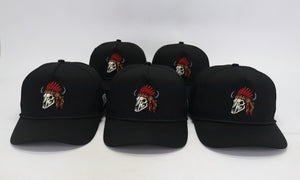
The museum is open from May to October and spreads across five acres of outdoor buildings. A heavyweight 100% cotton tee ($49.95) and an A-frame snapback ($44.95) handle summer sun. In spring or fall, add the Black Oni long sleeve ($54.95) or a hoodie as you walk between buildings.
Could a Dakota Ojibway Tribal Council program order custom printed shirts?
Any program or group can order custom screen printing from 10 garments, with up to 4 colours per design and design help included. Every order gets a full quote before anything is printed. We print in Saskatoon and ship to Keeshkeemaquah or Portage la Prairie.
Last reviewed . Facts on this page come from the sources listed below.
Indigenous clothing from XUSI
XUSI, an Indigenous-owned clothing brand rooted in Saskatoon, ships hoodies, hats and tees to Portage la Prairie, making it simple for central Manitoba shoppers to wear Indigenous design.
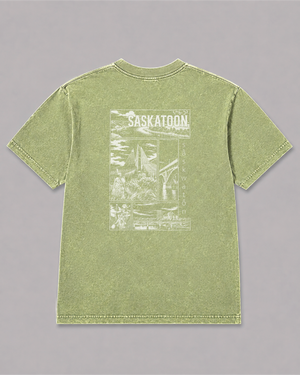
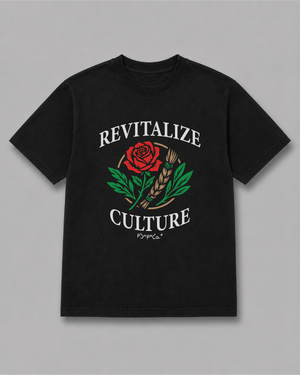
Portage life moves between the lake, the rink and the open prairie, and we think our pieces fit all three. A heavyweight 100% cotton tee suits a summer walk on the Prairie Flow Trails or a lazy afternoon at the Crescent Lake docks. Our A-frame snapback shades you on a flat, sunny stretch of the Trans-Canada. When winter settles in, a hoodie layers under your coat for a game at Stride Place. The Black Oni long sleeve works for a cool October visit to Fort la Reine Museum, just before it closes for the season. For a thoughtful visit to the residential school museum, the Revitalize Culture crewneck is a quiet, meaningful layer.