
Indigenous Fort McMurray: Treaty 8, Nations and Community
An introduction to Fort McMurray: its history, the Nations whose lands it sits on, and Indigenous community life today, with sources.
About Fort McMurray
Fort McMurray is an urban service area within the Regional Municipality of Wood Buffalo, set in the boreal forest where the Athabasca, Clearwater, Hangingstone and Horse rivers meet, about 435 km northeast of Edmonton. Cree, Denesuline and Dane-zaa peoples lived here long before the fur trade, and the region falls under Treaty 8, signed in 1899. The Hudson’s Bay Company established a post in 1870 named for factor William McMurray. The modern community took shape after oil sands extraction began in 1964, and petroleum remains the backbone of the economy, alongside natural gas, pipelines, forestry and tourism. Keyano College trains workers for the region and hosts cultural events. In 2016 a wildfire forced the evacuation of roughly 88,000 people and destroyed about one-fifth of homes. Fort McMurray #468 First Nation, of Cree and Chipewyan heritage, has reserves on Gregoire Lake near Anzac, about 50 km southeast.
Fort McMurray history
People have lived along the Clearwater River for about 6,000 years, according to the Canadian Heritage Rivers System. Before Europeans arrived, Cree and Denesuline families moved with the seasons to hunt and fish across the Athabasca country. In 1778 fur trader Peter Pond reached the meeting of the Athabasca and Clearwater rivers. He came over the Methye Portage, a 19-kilometre carry that linked the Clearwater to the Churchill River system. David Thompson and Alexander Mackenzie later used the same route. The North West Company opened trading posts in the area from around 1786. Hudson's Bay Company trader H.J. Moberly founded the 1870 post as the end point of a planned steamboat route. The S.S. Grahame made its first run in 1883. Treaty 8 was signed at Fort McMurray and other northern points in 1899, promising reserves, annual payments and hunting and fishing rights. The modern municipality came together in steps. McMurray became a village in 1947 and a town in 1948, taking the name Fort McMurray in 1962. By 1966 the town had 2,614 people, two years after Great Canadian Oil Sands began operating. It became a city in 1980 and joined the Regional Municipality of Wood Buffalo in 1995. The 2016 wildfire destroyed about 2,400 structures.
Treaty and territory
Fort McMurray is on Treaty 8 territory, the traditional lands of the Cree and Dene, and the homeland of the Métis. It lies in the Regional Municipality of Wood Buffalo.
Nearby: Anzac · Fort McMurray #468 First Nation · Fort McKay First Nation · Chipewyan Prairie First Nation · Conklin · Fort Chipewyan
Indigenous Fort McMurray today
McMurray Métis was founded in 1987 as a local of the Métis Nation of Alberta, run by an elected council. From its office on Sakitawaw Trail it offers bursaries, summer student jobs and citizenship services. Its calendar includes the annual Métis Fest, Louis Riel Day and Christmas celebrations for children and Elders. In June 2026 it reported that construction of the McMurray Métis Cultural Centre was advancing. About 60 kilometres north, Fort McKay First Nation sits on the Athabasca River. Its roughly 800 members are of Dene, Cree and Métis descent, and it shares its territory with the Fort McKay Métis Community. The Nation runs the Elsie Fabian School, a youth centre and a health centre. Fort McKay also owns several businesses. They include Fort McKay Landing, the Fort McKay Oil Sands Development Company and the Alex & Alice Boucher Industrial Park. It works in partnership with energy companies such as Suncor. Its guiding approach, in the Nation's words, is to embrace change while keeping its cultural identity strong.
Life in Fort McMurray
The Clearwater River flows west from Broach Lake in Saskatchewan to meet the Athabasca at Fort McMurray. Its Alberta stretch became a Canadian Heritage River in 2003, joining the Saskatchewan section designated in 1987. Together they cover 326 kilometres. Upstream in Saskatchewan, three pictographs are the most northwesterly documented in that province. The town also grew as a transport hub. Each spring, freight arrived by rail and moved onto boats heading down the Athabasca to northern communities. The Heritage Shipyard keeps that story alive with historic vessels, two train cars and the Jack "Torchy" Peden Centre. The nearby Heritage Village preserves buildings that are about a century old. Both are currently closed while the municipality prepares a new operating plan. The 2016 wildfire caused about 3.7 billion dollars in insured losses.
Fort McMurray seasons and weather
Boreal winters here are long and very cold, so heavy layers over a thick hoodie and a warm hat are basics. Summers are short and can be warm.
More on the region: Indigenous Alberta · all of Canada.
Keep learning in the XUSI Journal
- The Numbered Treaties, Explained
- Treaty Annuity Payments and Treaty Days, Explained
- Nêhiyawêwin: A Beginner's Guide to the Cree Language
- First Nations, Métis and Inuit: What’s the Difference?
- All Journal articles
Fort McMurray questions
Our Fort McMurray minor hockey association wants printed hoodies. Is there a minimum?
The minimum is 10 garments. Designs can use up to 4 colours, design help is included, and every order is quoted before printing. The hoodies are printed in Saskatoon and shipped to Fort McMurray.
Can I order to Fort McMurray even though it is far north?
Yes. Orders ship from Saskatoon within 1–3 business days, shipping cost is calculated at checkout, and orders of $90 or more ship free within Canada.
Could McMurray Métis or a Fort McKay program order custom hoodies for a community event?
Yes. Custom screen printing starts at 10 garments, with up to 4 colours per design, and every order is quoted before printing. Design help is included. We print in Saskatoon and ship the finished order to the Wood Buffalo region, which suits a youth program, a festival volunteer team or a work crew.
Which XUSI pieces suit the long winters around Fort McMurray?
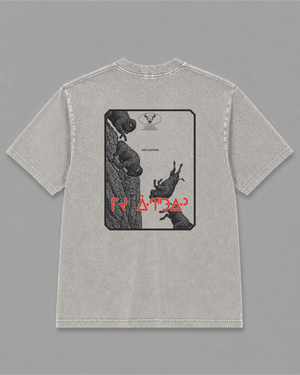
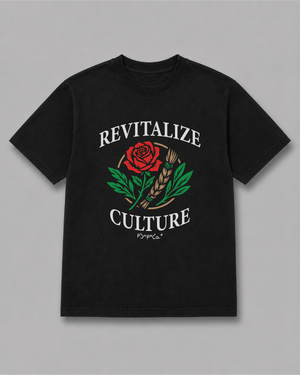
Our hoodies, from $59.95 to $89.95, and the Revitalize Culture crewneck at $89.95 are our warmest pieces. The Black Oni long sleeve at $54.95 layers well underneath. Many designs carry a Cree word, and the story behind each one is on our Meanings page.
Last reviewed . Facts on this page come from the sources listed below.
Indigenous clothing from XUSI
Fort McMurray residents can get Indigenous-owned apparel from XUSI, a Saskatoon brand that sends tees, hoodies and hats north to the Athabasca River community and other boreal towns across northeastern Alberta.
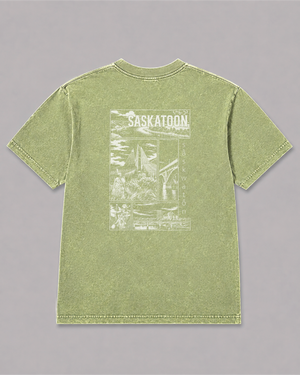
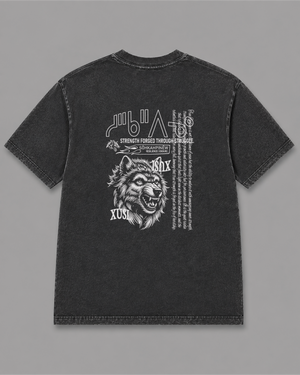
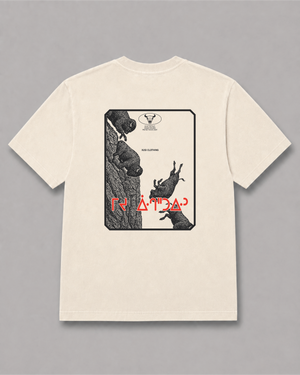
Fort McMurray gear has to handle big swings. Paddling the Clearwater on a long June day, you want something breathable, and our 100% cotton heavyweight tee fits the bill. Throw on an A-frame snapback to cut the glare off the river. For a long shift or a frozen commute out to a site, a hoodie makes a solid mid-layer under a work jacket. At a Métis Fest evening or a Louis Riel Day gathering, the Revitalize Culture crewneck keeps the chill off. When winter drags into April, the Black Oni long sleeve slips under everything. Crews and community groups here can also order custom hoodies, printed in Saskatoon and shipped to the Wood Buffalo region.