
Indigenous Montreal: Tiohtià:ke, Nations and Community
An introduction to Montreal: its history, the Nations whose lands it sits on, and Indigenous community life today, with sources.
About Montreal
Montreal occupies an island where the St. Lawrence and Ottawa rivers meet and is named for Mount Royal, the three-peaked mountain at its centre. The Mohawk name Tiohtià:ke is often explained as where the group parted ways, and the St. Lawrence Iroquoian village of Hochelaga stood at the mountain’s foot before Ville-Marie was founded in 1642. Canada’s second-largest city and the largest primarily French-speaking city in the Americas, it is a centre for aerospace, video games, film, finance and education, with McGill, Concordia, Université de Montréal and UQAM among its universities. The Native Friendship Centre of Montreal, open since 1974, is the main service and referral hub for First Nations, Inuit and Métis residents. Each August, Land InSights (Terres en vues), founded in 1990, presents the Montreal First Peoples Festival, featuring Indigenous creativity from across the Americas. Kahnawà:ke and Kanehsatà:ke, both Kanien’kehá:ka communities, lie nearby.
Montreal history
St. Lawrence Iroquoians lived on the island for generations before Europeans arrived. When Jacques Cartier visited in 1535, Hochelaga was a large village of about 50 longhouses. Roughly 1,500 people lived there on the slopes of Mount Royal. The settlement founded in 1642 began as a missionary colony. The fur trade soon became its main business, and traders and explorers set out from the town into the interior. Montreal also hosted a landmark peace. In 1701 the Great Peace of Montreal ended almost a century of hostilities between the French and the Haudenosaunee. About 700 Indigenous allies attended the peace congress. They included Chippewa, Odawa, Potawatomi, Wendat, Miami, Menominee, Sauk, Fox and Mascouten delegates. Kondiaronk, a Tionontati chief, was one of its main brokers. He fell ill during the talks and died in Montreal. Governor de Callière gave him a grand funeral, and he was buried in Notre-Dame Church before the treaty was signed. The Lachine Canal, built in 1825, set Montreal on its way to becoming a major seaport. By 1844 the population was 44,591, and by 1911 it had reached 467,986.
Treaty and territory
Montreal, Tiohtià:ke in Kanien’kéha, is on unceded Indigenous land, long a meeting place for many nations; the Kanien’kehá:ka (Mohawk) are recognized as its custodians.
Nearby: Kahnawà:ke · Kanehsatà:ke · Akwesasne · Laval · Longueuil
Indigenous Montreal today
Montreal's urban Indigenous community has built a strong web of its own services. The Native Friendship Centre of Montreal works from Saint-Laurent Boulevard. It serves people from the ten First Nations of Quebec, as well as Inuit, Métis and people in transition. In February 2024 it launched the Atónhnhets Cultural Services Program. It also runs the Kaie:ri:nikawera:ke Day Centre, the Ka'wáhse Street Patrol and a nurse-led health clinic with Doctors of the World. The Kanekó:ta Adult Education Program adds daily meals to its classes. The Montreal Indigenous Community NETWORK connects many of these groups. Its vision is a city where urban Indigenous well-being is led by Indigenous communities themselves. Its motto is Listen, Connect, Support. It funds mental health support for frontline workers, publishes resource guides and runs a platform called The INDex. In 2026 it hosted a Strengthening the Circle gathering on Indigenous health networks. Students have a home base too. McGill's First Peoples' House offers residence space for Indigenous students and academic and cultural support. It organizes events that include powwows and feasts. Nearby, the Mohawk Council of Kahnawà:ke runs a language and culture training program for the community.
Life in Montreal
Montreal had 1,762,949 residents in the 2021 census, up from about 5,500 in 1789. For much of its history it was also Canada's economic capital. The Canadian Encyclopedia notes that Toronto overtook it as the national economic hub by 1960. Montreal remains a major centre for finance and research, especially in aerospace, telecommunications and pharmaceuticals. The 1960s and 1970s gave the city some of its defining moments. The Métro began running in 1966, and Expo 67 opened the following year. In 1976 Montreal hosted the Summer Olympic Games. Culture has deep roots here. The Montreal Museum of Fine Arts dates back to 1860, making it one of the city's oldest cultural institutions. The Montreal Botanical Garden was founded in 1931. Place des Arts is the city's major performing arts centre.
Montreal seasons and weather
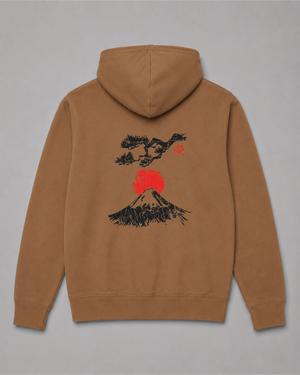
Montreal winters are long and snowy, with cold that often sits well below freezing from December to March, while summers are hot and humid. People here layer hoodies under winter coats for months at a time.
More on the region: Indigenous Quebec · all of Canada.
Keep learning in the XUSI Journal
- First Nations, Métis and Inuit: What’s the Difference?
- How to Write a Land Acknowledgement That Means Something
- Orange Shirt Day & the National Day for Truth and Reconciliation
- National Indigenous Peoples Day and History Month: A Guide
- All Journal articles
Montreal questions
Is the XUSI website available in French for Montreal shoppers?
The site is in English only. Orders to Montreal ship from Saskatoon within 1–3 business days, with shipping cost calculated at checkout.
Can a Montreal collective order screen-printed shirts?
Yes, starting at 10 garments. Designs may use up to 4 colours on a screen as large as 23x31 inches with design help included, and every order is quoted before printing. Printing is done in Saskatoon and the order is shipped to Montreal.
Can a Montreal student group order custom shirts for a campus powwow?
Yes. Our custom screen printing starts at 10 garments, with up to 4 colours per design, and every order is quoted before printing. Design help is included, so your group can bring its own artwork or build one with us. We print in Saskatoon and ship to Montreal.
Do you use Kanien'kéha or other local languages in your designs?
Many of our designs carry a Cree word and its story, which you can read on our meanings page. For a design in Kanien'kéha or another local language, a group can order custom printing from 10 garments. We suggest supplying wording checked by a fluent speaker, and our design help covers the layout.
Last reviewed . Facts on this page come from the sources listed below.
Indigenous clothing from XUSI
Montreal, known in Kanien’kéha as Tiohtià:ke, can order XUSI tees, hoodies and hats online. The Indigenous-owned brand is based in Saskatoon and ships across Canada, the island included.
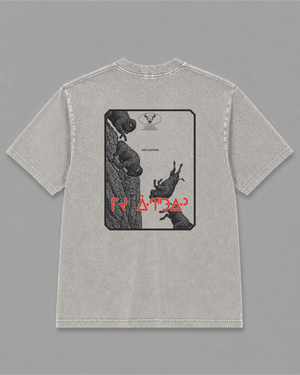
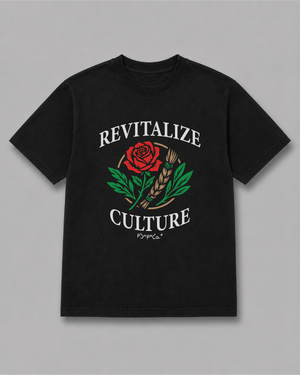
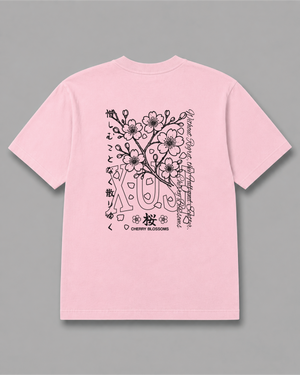
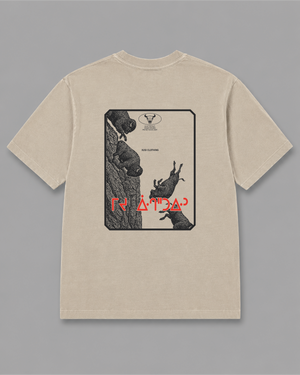
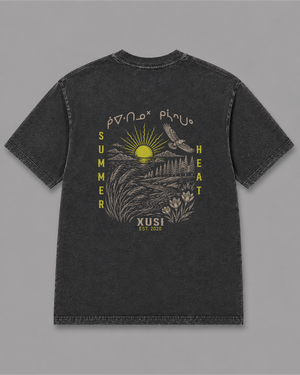
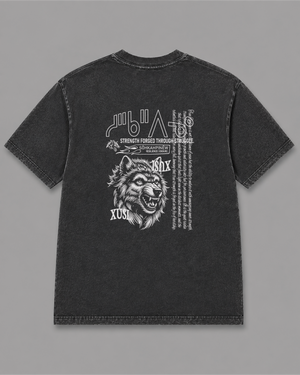
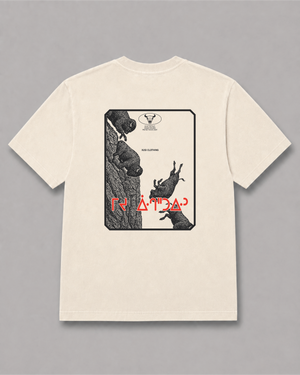
Montreal swings from humid summer festivals to deep winter, and we plan our layers around both. A heavyweight 100% cotton tee and an A-frame snapback suit an August afternoon at an outdoor festival. For a fall walk on Mount Royal or along the Lachine Canal, add the Black Oni long sleeve. Once snow settles in, a hoodie from our $59.95 to $89.95 range goes under your winter coat for the Métro commute. The Revitalize Culture crewneck is a warm pick for an evening at Place des Arts. Our women's baby rib tee works well for a summer powwow on campus. Custom orders for a student or community group start at 10 garments.