



You have probably heard a land acknowledgement at the start of a meeting, a game or a school assembly. Sometimes it lands. Sometimes it sounds like it was read off a card for the hundredth time, and everyone in the room can tell.
We are an Indigenous-owned company in Saskatoon, on Treaty 6 territory. We are not the final word on protocol, and your local nations and Elders should always come first. But here is what the published guidance says about writing a land acknowledgement that means something.
What is a land acknowledgement?
The Canadian Encyclopedia defines land acknowledgements, also called territorial acknowledgements, as "short statements that recognize both the land and the Indigenous people who lived — and in many situations continue to live — on the land prior to Canada's colonial history."
According to the Canadian Encyclopedia, they became much more common after the Truth and Reconciliation Commission released its 94 Calls to Action in 2015. In 2019, the National Inquiry into Missing and Murdered Indigenous Women and Girls went further. Its Call for Justice 15.2 asked Canadians to acknowledge "the land you live on and its importance to local Indigenous communities."
The problem with most land acknowledgements
A lot of Indigenous people have mixed feelings about land acknowledgements. That is worth hearing before you write one.
The Canadian Encyclopedia quotes Hayden King, director of the Yellowhead Institute, who warned that "the territorial acknowledgement could become very superficial." It also quotes Ovide Mercredi, a former national chief of the Assembly of First Nations, who asked: "what are you prepared to do for us to become land owners — not landless in our homeland?"
Those are fair questions. A land acknowledgement that changes nothing can feel like a box being ticked. The goal is not to avoid saying one. The goal is to say one you have thought about, and then to back it up.
How to write one, step by step
1. Find out whose land you are on
Start with the basics. Which treaty covers the land? Which First Nations, Métis and Inuit peoples have lived there, and still live there? Is it land that was never covered by a treaty?
If you are in Saskatoon, the University of Saskatchewan's acknowledgement names "Treaty 6 Territory and Homeland of the Métis." A guide from the Canadian Association of University Teachers shares another Saskatoon example, from St. Thomas More College: "the land on which we gather is Treaty 6 territory, the traditional territory of Cree Peoples, and the homeland of the Métis Nation."
For an example of how much history sits behind a single treaty name, see our posts on Treaty 6 and Saskatoon and the numbered treaties.
2. Learn to say the names properly
The Canadian Encyclopedia notes that Indigenous people have called for more care in land acknowledgements, starting with "learning the proper pronunciations of both the land and the people." If you are naming a nation or a place in an Indigenous language, practise it. Ask someone who knows. Getting a name wrong in front of a room can undo the respect you meant to show.
3. Do your own research
The Canadian Encyclopedia also points to "doing more historical research and analysis," including the complexities of overlapping claims to the same territory by distinct Indigenous nations. What was promised in the treaty? What was kept? What is still being argued over? You do not need to explain all of it in your statement. But you should know it.
4. Write it in your own words
Copying a template word for word is where acknowledgements start to feel hollow. Use a model to get the facts right, then say why it matters to you, your school or your business. Keep it short and honest.
5. Ask Indigenous people, and respect their time
The CAUT guide notes that the University of Saskatchewan's acknowledgement was developed by Indigenous faculty and staff. If you are writing one for an organization, involve Indigenous people from your community. If you are asking for their time and knowledge, offer to pay them.
6. Connect it to action
This is the part most acknowledgements miss. The Canadian Encyclopedia notes that Indigenous people have asked for acknowledgements to be connected to practical action, from education programs to the federal government returning land to Indigenous peoples through the modern treaty process.
Ask yourself: what does our organization actually do? Some ideas:
- Read and discuss the Truth and Reconciliation Commission's Calls to Action with your staff or students.
- Mark the National Day for Truth and Reconciliation on September 30. Our post on Orange Shirt Day and the National Day for Truth and Reconciliation has more.
- Support Indigenous youth programs in your area. Ours is Strong Roots Strong Future, for Indigenous youth ages 10 and up. See our youth workshops page.
- Buy from Indigenous-owned businesses, and hire Indigenous people.
A simple structure you can use
Here is a shape that works for many people. Fill it with your own words and your own facts.
- Name the land. The treaty or territory, and the peoples.
- Say why you are naming it. One honest sentence about what it means to you.
- Name a commitment. Something real you or your group are doing.
For example, a small business in Saskatoon might say something like this:
We are on Treaty 6 territory and the homeland of the Métis. We say this because our business depends on this land and the people who have cared for it long before us. This year we are learning about the treaties together as a team, and we are buying from Indigenous-owned businesses where we can.
Notice the last sentence. It is specific, and someone could check whether you did it.
What to avoid
- Past tense only. Indigenous peoples are not only history. Many continue to live on the land, as the Canadian Encyclopedia's definition points out.
- Reading it without knowing it. If you could not answer a question about the treaty you just named, do more homework.
- Using it as a shield. An acknowledgement is not a replacement for relationships or action.
- Making it the Indigenous person's job. Do not ask the only Indigenous person in the room to write or read it unless they want to.
A land acknowledgement on a shirt?
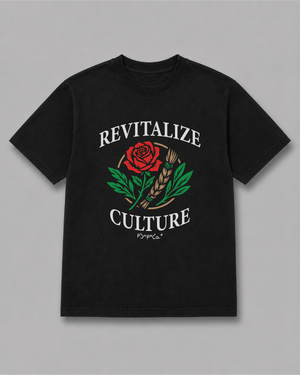
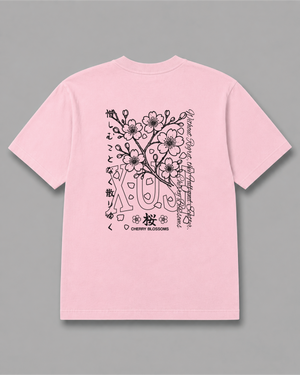
If you want your acknowledgement or treaty territory printed on shirts for an event, write the words with care first. We do custom screen printing in Saskatoon with a 10-garment minimum, designs up to four colours with design help included, and every order is quoted before printing. See our screen printing page or our guide to ordering custom shirts for a school, team or event.
The last word
The University of Saskatchewan's acknowledgement ends with a line we like: "We are born to the land and the land claims us." A land acknowledgement is a small thing. Said with care, and followed by action, it can be a start.
Sources
- The Canadian Encyclopedia: Land Acknowledgment
- University of Saskatchewan, Office of the Vice-Provost Indigenous Engagement: Land Acknowledgement
- Canadian Association of University Teachers: Guide for territorial acknowledgements in Saskatchewan
- National Centre for Truth and Reconciliation: Truth and Reconciliation Commission of Canada

Written by XUSI, an Indigenous-owned clothing and screen printing brand from Saskatoon on Treaty 6 territory. Our story · What the words mean