
Indigenous Quebec City: Nionwentsïo, Nations and Community
An introduction to Quebec City: its history, the Nations whose lands it sits on, and Indigenous community life today, with sources.
About Quebec City
Perched on Cap-Diamant above a narrowing of the St. Lawrence River, Quebec City takes its name from the Algonquin word Kébec, meaning where the river narrows. Samuel de Champlain established a settlement here in 1608 at the site of Stadacona, a former St. Lawrence Iroquoian village. Old Quebec, with the only fortified city walls remaining in the Americas north of Mexico, became a UNESCO World Heritage Site in 1985, and the city is split between an upper and lower town. It is the provincial capital and Quebec’s second-largest city, and Université Laval in the Sainte-Foy borough is its major university. The Quebec Winter Carnival draws visitors each year. On the city’s northern side, Wendake is home to the Huron-Wendat Nation, the Musée Huron-Wendat, the Hôtel-Musée Premières Nations and an open-air dance circle where the International Powwow of Wendake takes place.
Quebec City history
When Jacques Cartier arrived in 1535, Stadacona was home to about 1,000 Iroquoian people. They lived by fishing, hunting and growing corn. The Huron-Wendat came to the region after a hard exile. In 1649, about 1,000 Wendat fled with the Jesuits to Christian Island in Georgian Bay. Only about 300 survived to the spring of 1650, and they settled on Île d’Orléans. The survivors later moved to Sillery and then to Lorette, where their descendants still live today. The French town grew into a fortress. It drove off an assault by Sir William Phips in 1690. British forces conquered it in 1759, in the Battle of the Plains of Abraham. An American force tried to invade in 1775–76, but the city held and the colony stayed under British control. Quebec City served as a national capital until 1840, and again from 1851 to 1855 and 1859 to 1865. It has been the capital of the province of Quebec since Confederation in 1867. In 1908, Battlefields Park was created on the Plains of Abraham, scene of the 1759 and 1760 battles.
Treaty and territory
Quebec City is on Nionwentsïo, the ancestral territory of the Huron-Wendat Nation, whose community of Wendake is within the city.
Nearby: Wendake · Lévis · L’Ancienne-Lorette · Île d’Orléans · Sainte-Catherine-de-la-Jacques-Cartier
Indigenous Quebec City today
Wendake counted 5,155 registered members of the Huron-Wendat Nation as of April 2024. In the 2021 census, 6,980 people reported Wendat ancestry. Tourisme Wendake describes the community as landlocked within Quebec City. Wendake is governed by an elected council led by a Grand Chief, alongside family chiefs. The Nation reports that the Wendat language now appears across its governance. It runs an elementary school, a health facility and a police service, and it supports housing, youth programs and entrepreneurship. It also cares for a protected area called Ya’nienhonhndeh. Community services extend to environmental stewardship and hunting access. Visitors can explore Onhoüa Chetek8e, a traditional Huron site open year-round. Onhwa’ Lumina is a nighttime forest walk in which the Wendat Nation shares its legends through light. Organizers have announced a 2027 edition of the Wendake Pow Wow, with dates still to come. Wendake is also one of the 43 First Nations communities represented by the Assembly of First Nations Quebec-Labrador. Created in 1985, the Assembly brings together chiefs from 10 nations across Quebec and Labrador. Its work has included caribou protection and self-government for First Nations.
Life in Quebec City
Quebec City had 549,459 residents in the 2021 census, and the metropolitan area had 839,311. The Château Frontenac and the Citadel anchor its skyline. Battlefields Park covers 103 hectares on the Plains of Abraham and draws about 4 million visitors a year. Its museum explores the battles of 1759 and 1760. In summer, the Edwin-Bélanger Bandstand hosts an outdoor concert series. The park lists more than 30 points of interest and over 40 historical activities. Museum exhibits such as Natura & Historia and Homes of Cove Fields add to the battle story. About 15 minutes from Old Quebec, Montmorency Falls drops 83 metres. A large zipline is one of the park’s main attractions. Between cliffs, battlefields and waterfalls, Quebec City turns its long history into places people can walk and explore.
Quebec City seasons and weather
Quebec City is known for heavy snowfall, with cold winters lasting from December into March, while summers are pleasant and fairly short. Warm layers are a must during Winter Carnival season.
More on the region: Indigenous Quebec · all of Canada.
Keep learning in the XUSI Journal
- First Nations, Métis and Inuit: What’s the Difference?
- How to Write a Land Acknowledgement That Means Something
- Orange Shirt Day & the National Day for Truth and Reconciliation
- National Indigenous Peoples Day and History Month: A Guide
- All Journal articles
Quebec City questions
What does delivery to Quebec City cost?
Shipping is calculated at checkout, and orders of $90 or more ship free anywhere in Canada.
Are returns possible from Quebec City?
Yes, returns can be requested within 30 days. Please note that the XUSI website is available in English only.
What should I wear to visit Montmorency Falls?
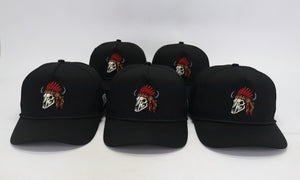
The 83-metre falls throw off cool spray, even in summer. Our Black Oni long sleeve, $54.95, is a light layer, and a hoodie from our $59.95 to $89.95 range helps on cooler days. For sunny afternoons on the Plains of Abraham, pair our heavyweight 100% cotton tee, $49.95, with an A-frame snapback, $44.95.
Can a Wendake or Quebec City group order custom printed shirts?
Yes. Our custom screen printing suits community groups, schools and events, with a 10-garment minimum and up to 4 colours per design. Every order gets a full quote before anything is printed, and design help is included. Please note that our website is available in English only.
Last reviewed . Facts on this page come from the sources listed below.
Indigenous clothing from XUSI
Quebec City residents can get tees, hoodies and hats from XUSI, an Indigenous-owned brand working out of Saskatoon, delivered anywhere in the provincial capital, from Limoilou to Sainte-Foy.
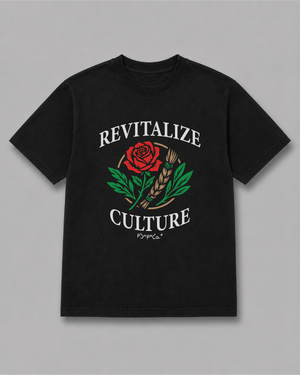
Quebec City asks for real cold-weather layering, and we build around that. On a January night at the Winter Carnival, one of our heavier hoodies works under a parka. The Revitalize Culture crewneck suits a snowy walk along the ramparts of Old Quebec. For a summer concert at the Edwin-Bélanger Bandstand, our heavyweight cotton tee and an A-frame snapback keep it simple. The Black Oni long sleeve is a good choice for the misty spray at Montmorency Falls in spring. We ship everything from Saskatoon, and our site is in English only.