
Indigenous Sherbrooke: Ndakina, Nations and Community
An introduction to Sherbrooke: its history, the Nations whose lands it sits on, and Indigenous community life today, with sources.
About Sherbrooke
Sherbrooke had 172,950 residents in the 2021 census, making it Quebec's sixth-largest city. It covers about 367 square kilometres in the Estrie region. The city sits at the confluence of the Saint-François and Magog rivers, surrounded by lakes and mountains. Mont-Orford provincial park lies close by. French is the mother tongue of most residents, at 89.6 per cent in 2016. Sherbrooke is a major student city, with about 40,000 postsecondary students. The Université de Sherbrooke enrols more than 31,000 of them, and Bishop's University about 3,000. That gives the city the largest concentration of students in Quebec. Lac des Nations and Mont-Bellevue Park bring green space into the centre. Education, health care, commerce and administration employ most workers today.
Sherbrooke history
The W8banaki, or Abenaki, knew the meeting of these rivers as Ktinékétolékouac, meaning the large forks. In French it became known as the Grandes Fourches. The Saint-François River, called Alsig8ntegw in W8banaki, also flows past Odanak. The W8banaki Nation describes Sherbrooke and Estrie as the heart of Ndakina, its ancestral territory. Farmer Jean-Baptiste Nolain settled in the area in 1779. American Loyalists led by Gilbert Hyatt arrived around 1803 and built mills. The settlement became known as Hyatt's Mills. In 1818 it was renamed after Governor General John Coape Sherbrooke. Sherbrooke grew into an industrial centre. Canada's first cotton manufacturing plant opened here in 1844. Textiles, clothing and machinery shaped local work for generations. The share of francophones rose from 50 per cent in 1871 to 92 per cent in 1996. The Université de Sherbrooke was founded in 1954. On January 1, 2002, the present city was constituted by merging surrounding communities. Today, nearly 90 per cent of Estrie is privately held. The W8banaki Nation says this limits access for hunting, trapping and passing on culture.
Treaty and territory
Sherbrooke lies within Ndakina, the ancestral territory of the W8banaki (Abenaki) Nation, whose communities today are Odanak and Wôlinak. The Nation describes Estrie as the heart of that territory.
Nearby: Magog · Lennoxville · North Hatley · Mont-Orford National Park · Coaticook · Richmond
Indigenous Sherbrooke today
The W8banaki Nation has more than 3,000 members across Odanak and Wôlinak. Since 1999, hunting and trapping agreements with Quebec have covered parts of Ndakina. The Nation asserts ancestral rights across the whole territory. The Grand Conseil de la Nation Waban-Aki represents both communities. In Sherbrooke, much Indigenous work happens through higher education. In autumn 2022, the Université de Sherbrooke launched an undergraduate microprogram in Indigenous studies. It was developed with the Conseil des Abénakis d'Odanak and the Grand Conseil de la Nation Waban-Aki. The program highlights Abenaki, which the university calls one of the most endangered Indigenous languages in Canada. It also aims to make university more accessible for First Nations students. In August 2025, the university and the Cégep de Sherbrooke held a summer school on W8banaki communities in the 19th century. About 20 students worked with archives and visited Odanak to learn from community experts. The W8banaki Nation and Bishop's University were partners. The Nation approved the project's outputs, which were shared on a public web platform.
Life in Sherbrooke
Sherbrooke is known as a university city with a lively cultural life. It supports a symphony orchestra, theatre companies, art museums and natural history institutions. With about 40,000 postsecondary students, the city has the largest concentration of students in Quebec. Two universities and the Cégep de Sherbrooke shape much of city life. Lac des Nations sits at the centre of the city, and the Fête du Lac des Nations brings summer crowds to its shores. Mont-Bellevue Park offers skiing and trails within city limits. Mont-Orford provincial park, with its lakes and mountains, lies close by. The local economy still includes clothing, textiles, machinery and electronics. Those industries carry on a manufacturing story that began with Canada's first cotton mill in 1844. Commerce, education and health services now employ most people.
Sherbrooke seasons and weather
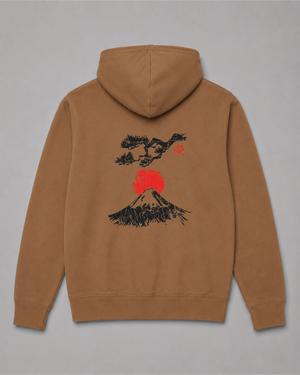
Sherbrooke has a humid continental climate with long, snowy winters and warm summers. Mont-Bellevue Park offers skiing right in the city once the snow arrives. A heavy hoodie and a warm layer carry you through winter. Summer by Lac des Nations calls for a light cotton tee and a cap.
More on the region: Indigenous Quebec · all of Canada.
Keep learning in the XUSI Journal
- First Nations, Métis and Inuit: What’s the Difference?
- How to Write a Land Acknowledgement That Means Something
- Orange Shirt Day & the National Day for Truth and Reconciliation
- National Indigenous Peoples Day and History Month: A Guide
- All Journal articles
Sherbrooke questions
How does shipping to Sherbrooke work?
Orders of $90 or more ship free to Sherbrooke and anywhere in Canada. Orders under $90 show the shipping cost at checkout. Every order leaves our Saskatoon shop within 1 to 3 business days.
Can you print shirts for a Sherbrooke student association or team?
Yes. Custom screen printing starts at 10 garments, with up to 4 colours per design. Every order gets a full quote before anything is printed, and design help is included. We print in Saskatoon and ship the order to Sherbrooke.
Does XUSI have a store or stockist in Sherbrooke?
No. We have no store, stockist or event booth in Sherbrooke or elsewhere in Estrie. Outside our online shop, our only retail presence is at Wanuskewin near Saskatoon. Sherbrooke customers order online, and orders over $90 ship free.
What should I wear through a Sherbrooke winter?
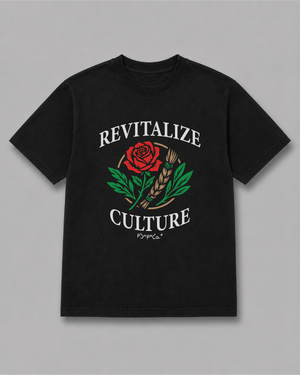
Sherbrooke winters are long and snowy. Our heavyweight hoodies, priced from $59.95 to $89.95, layer well under a winter coat. The Revitalize Culture crewneck at $89.95 is another warm option. Pair either with our A-frame snapback or a toque for time outdoors.
Last reviewed . Facts on this page come from the sources listed below.
Sources for this page
- Sherbrooke – Wikipedia
- Sherbrooke – The Canadian Encyclopedia
- La Nation W8banaki en Estrie – Grand Conseil de la Nation Waban-Aki
- Langues et cultures autochtones au cœur d'un nouveau programme – Université de Sherbrooke
- Explorer l'histoire des communautés d'Odanak et de W8linak – Université de Sherbrooke
Indigenous clothing from XUSI
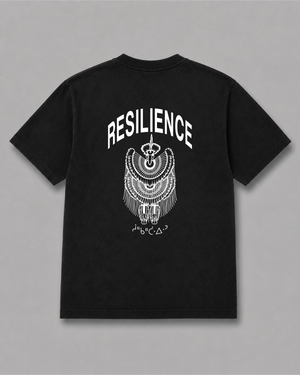
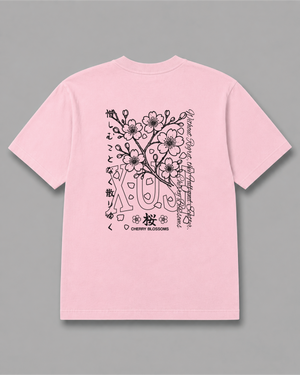
Where the Magog and Saint-François rivers meet in the Eastern Townships, Sherbrooke students and families can order Indigenous-designed XUSI tees, hoodies and hats that we print in Saskatoon and ship across Canada.
Sherbrooke winters are long and snowy, so our heavyweight hoodies suit ski days at Mont-Bellevue and walks between classes. The Revitalize Culture crewneck makes a warm layer for study sessions, and it carries a Cree word and story. In spring and fall, our Black Oni long sleeve fits walks along the Magog River. Summer evenings at the Fête du Lac des Nations call for something light. A 100% cotton tee, Golden Era ringer or women's baby rib tee keeps you cool. Our A-frame snapback helps on sunny hiking days around Mont-Orford.