
Indigenous Surrey: Coast Salish Territory, Nations and Community
An introduction to Surrey: its history, the Nations whose lands it sits on, and Indigenous community life today, with sources.
About Surrey
Surrey is British Columbia’s second-largest city by population, stretching south from the Fraser River to the Canada–U.S. border within Metro Vancouver. It lies on traditional lands of the Katzie, Kwantlen and Semiahmoo peoples, whose languages include Halkomelem and North Straits Salish. Semiahmoo First Nation’s reserve sits between White Rock and the international boundary, near Peace Arch Provincial Park. The Fraser Region Aboriginal Friendship Centre Association, whose roots go back to 1996 and whose head office is on Whalley Boulevard, serves Indigenous people across the region. The city is organized around town centres including Cloverdale, Fleetwood, Guildford, Newton, South Surrey and City Centre. Kwantlen Polytechnic University and Simon Fraser University’s Surrey campus are the main post-secondary institutions, and Fraser Health and the local school district rank among the largest employers, alongside technology, manufacturing and agriculture.
Surrey history
The Canadian Encyclopedia says Kwantlen and Semiahmoo peoples have lived around the Fraser River and Boundary Bay for more than 6,000 years. Both belong to the Straits Salish group. Diseases carried by European newcomers later devastated their communities. Surrey was incorporated as a district municipality in 1879. An early pioneer named it after the county of Surrey in England. Logging and farming drove the first decades of growth. Bridges shaped the city’s story. A Fraser River crossing opened in 1904, and the Pattullo Bridge was finished in 1937. The Port Mann Bridge followed in 1960 and set off a wave of suburban building. Whalley was one of the six town centres that took shape as that growth spread. In 1957 the seaside ward known as Ward 7 broke away to become White Rock. The province extended SkyTrain across the Fraser into Surrey in 1990. The line eventually served four stations in the city. Three years later, in 1993, Surrey was incorporated as a city. Its population rose from 517,887 in 2016 to 568,322 in 2021.
Treaty and territory
Surrey is on the traditional territories of Coast Salish peoples, including the Semiahmoo, Katzie and Kwantlen First Nations.
Nearby: Semiahmoo First Nation · Katzie First Nation · Kwantlen First Nation · White Rock · Langley · Delta
Indigenous Surrey today
Three First Nations hold deep ties to Surrey. Katzie First Nation describes its territory as reaching across Pitt Meadows, Maple Ridge, Surrey, Langley and Delta. Katzie calls itself q̓ic̓əy̓, which the Nation translates as land of the moss. It runs an Early Years Centre for children from birth to five and is pursuing self-government. Semiahmoo First Nation, based on Beach Road in Surrey, calls its people the Semiahma. They describe themselves as a trans-boundary people rooted in the lands and waters of the Salish Sea. The Nation runs lands and culture services focused on cultural revitalization, and it keeps an artist showcase. Kwantlen First Nation’s office is on Glover Road in nearby Fort Langley. The City runs Totest Aleng: Indigenous Learning House in Elgin Heritage Park, beside the historic Stewart farmhouse. It is a studio for Indigenous artists in residence, with an open-air pavilion for workshops and school programs. Its current resident is a Cree artist from Kahkewistahaw First Nation. The Museum of Surrey has featured an exhibit on Stó:lō tools and their modern uses. Semiahmoo also runs community health, housing and emergency management services for its members.
Life in Surrey
Surrey loves a big gathering. The City bills its Canada Day party at Bill Reid Millennium Amphitheatre as Western Canada’s largest July 1. The Surrey Fusion Festival fills Holland Park each summer with food, music and culture from around the world. Party for the Planet marks Earth Day at Surrey Civic Plaza. In winter, a 60-foot Christmas tree lights up the plaza for the Tree Lighting Festival. History is close at hand too. Historic Stewart Farm offers free summer activities, a Harvest Fair and a Victorian Christmas evening. The Museum of Surrey runs a textile centre and school programs, and it hosts community events such as Filipino Fest. The City also runs the Canadians of South Asian Heritages Museum, one more window into the people who call Surrey home. At Stewart Farm, volunteer ambassadors in period costume greet visitors, and the farmhouse hosts afternoon teas.
Surrey seasons and weather
Surrey’s oceanic climate brings rainy winters that can linger into early spring and mild summers, so hoodies see steady use for most of the year.
More on the region: Indigenous British Columbia · all of Canada.
Keep learning in the XUSI Journal
- First Nations, Métis and Inuit: What’s the Difference?
- How to Write a Land Acknowledgement That Means Something
- Orange Shirt Day & the National Day for Truth and Reconciliation
- National Indigenous Peoples Day and History Month: A Guide
- All Journal articles
Surrey questions
How many colours can a custom design for a Surrey event include?
Up to 4 colours per design with a 10-garment minimum, and every order is quoted before printing. Design help is included, and the order is printed in Saskatoon and shipped to Surrey.
What if I need to return something to XUSI from Surrey?
Returns can be requested within 30 days. New orders leave Saskatoon within 1–3 business days.
Could a Surrey Indigenous artist collective order printed shirts with its own artwork?
Yes. Send us your art and we will prepare it for screen printing, with up to 4 colours per design. Runs start at 10 garments, and every order is quoted before printing. We print in Saskatoon and ship the finished order to Surrey.
XUSI is from Treaty 6. Is it respectful to wear your designs on Coast Salish land?
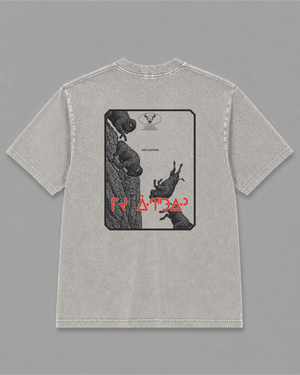
We think so. Our designs carry Cree words and stories from our own home in Treaty 6, explained on our meanings page. Surrey sits on the lands of the Katzie, Kwantlen and Semiahmoo peoples, who have their own languages and art. We encourage customers to learn about and support those Nations too.
Last reviewed . Facts on this page come from the sources listed below.
Indigenous clothing from XUSI
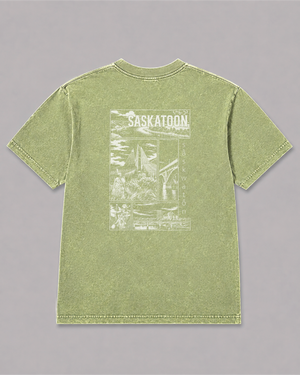
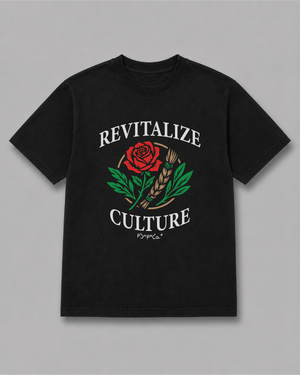
In Surrey, Indigenous clothing from XUSI arrives by mail from Saskatoon, where this Indigenous-owned brand creates the tees, hoodies and hats that people across the Lower Mainland can order online.
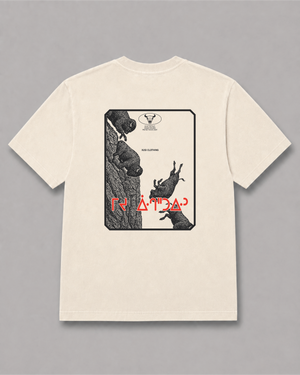
Surrey’s year is gentle but damp, so we lean on layers that handle drizzle and cool evenings. A heavyweight cotton tee and an A-frame snapback work for July 1 at the amphitheatre or a sunny afternoon at Fusion Festival. For a walk through Elgin Heritage Park on a grey fall day, a Black Oni long sleeve under a rain shell is enough. Our hoodies come into their own from November to March, when rain is steady and the SkyTrain platform gets chilly. A women’s baby rib tee layers neatly under a crewneck for a market day at Totest Aleng.