
Indigenous British Columbia: Unceded Lands, Treaties and Nations
An introduction to British Columbia: its history, its Nations and treaties, and Indigenous community life today, with sources.
About British Columbia
British Columbia holds coastal rainforest, island archipelagos, interior valleys and mountain ranges, with the Fraser, Skeena and Columbia among its great rivers. The Canadian Encyclopedia reports 203 Indigenous nations in the province, and the First Peoples’ Cultural Council recognizes 36 distinct First Nations languages here, more than anywhere else in Canada. Unlike the prairies, most of B.C. was never covered by historic treaties. Exceptions are the 14 Douglas Treaties signed on Vancouver Island between 1850 and 1854 and Treaty 8, which reaches into the northeast. Modern agreements have followed, including the Nisga’a Final Agreement and treaties with Tsawwassen, Maa-nulth and Tla’amin First Nations. Victoria is the capital and Vancouver the largest city, both on unceded or treaty lands of Coast Salish peoples. The province’s economy leans on trade through Pacific ports, forestry, tourism, film and technology.
British Columbia history
Carbon dating confirms that people lived in what is now British Columbia at least 6,000 to 8,000 years ago. On the Northwest Coast, autonomous villages held between 200 and 1,000 people. Many Interior peoples, including the Carrier, Interior Salish and Kootenay, moved with the seasons. Spanish sailors under Juan Pérez Hernández probably sighted the coast in 1774, and James Cook entered Nootka Sound in 1778. Alexander Mackenzie crossed the interior in 1793, and Simon Fraser reached the mouth of the river that bears his name in 1808. The Hudson’s Bay Company moved its western headquarters to Fort Victoria in 1843. Gold on the lower Fraser River in 1858 brought thousands of miners and led Britain to create a mainland colony. New Westminster became its capital in 1859. The mainland and island colonies merged in 1866, and Victoria became the capital in 1868. In 1881, an estimated 25,000 Indigenous people outnumbered about 24,000 white residents. British Columbia joined Confederation in 1871 on the promise of a railway, which reached the coast in 1885. In 1973, Nisga’a chief Frank Calder’s case led the Supreme Court to recognize that Aboriginal title has a place in Canadian law.
Treaty and territory
Most of British Columbia was never ceded by treaty. The province is home to more than 200 First Nations. Treaty 8 covers the northeast, the Douglas Treaties cover parts of Vancouver Island, and a handful of modern treaties are in place, including the Nisga’a Final Agreement.
Nearby: Vancouver · Victoria · Prince George · Nisga’a Lisims Government · Tsawwassen First Nation · Kamloops
Regions of British Columbia
The Canadian Encyclopedia divides British Columbia between two physiographic regions. Most of the province lies in the Cordillera of mountains and plateaus. Only the northeast corner belongs to the Interior Plains, the same landscape that runs east across the Prairies. Indigenous nations follow these landscapes. On the Northwest Coast, the Haida, Tsimshian, Tlingit, Kwakwaka’wakw and Nuu-chah-nulth built their lives around the sea and cedar. In the interior plateaus, the Dakelh (Carrier), Interior Salish and Ktunaxa (Kootenay) peoples lived with the rivers and seasons. Southern interior communities relied on salmon runs, while northern subarctic peoples hunted moose and caribou. Treaty history also follows the map. Treaty 8, signed on June 21, 1899, is the largest treaty in Canada by area and reaches into the northeast. Part of the Dane-zaa band at Fort St. John signed an adhesion in February 1900. The Liard River, Fort Grahame and Finlay River bands did not sign. The Tsek’ehne of McLeod Lake were brought into Treaty 8 in 2000. Across most of the Cordillera, relationships are being set through modern treaty tables instead.
Indigenous British Columbia today
Indigenous people made up 5.9 per cent of British Columbia’s population in the 2021 census. Much of today’s community life runs through First Nations governments, treaty tables and urban organizations. The BC Treaty Commission reports that 61 self-determining First Nations, representing 110 Indian Act bands, have taken part in modern treaty or tripartite talks. Seven are now implementing modern treaties. Another 18 are at the stage of finalizing a treaty, and 29 are negotiating agreements in principle. In November 2019, the province passed the Declaration on the Rights of Indigenous Peoples Act. It requires British Columbia to bring its laws into line with the UN Declaration. It also calls for a five-year action plan built with Indigenous Peoples, plus an annual report each June. In cities and towns, 24 Friendship Centres operate under the BC Association of Aboriginal Friendship Centres. These Indigenous-led non-profits run youth and family programs, employment training, health services, language and culture work, and sports. Together they employ more than 1,200 people and serve about a million clients a year.
Life in British Columbia
Two great mountain systems frame British Columbia: the Coast Mountains in the west and the Rockies in the east. The Columbia Mountains fill the southeast, and the Cassiar-Omineca ranges run across the north. Douglas fir, western red cedar, hemlock and Sitka spruce dominate the coast, while lodgepole and ponderosa pine cover much of the interior. Forestry carried the economy through the 20th century, and the first pulp and paper mill opened at Powell River in 1912. Hydroelectric dams generate most of the province’s power, and B.C. is one of Canada’s largest natural gas producers. The Peace River district grows about 90 per cent of the provincial grain harvest. Visitors walk the gold rush streets of Barkerville and the fur trade post at Fort Langley. Yoho, Kootenay, Glacier and Mount Revelstoke national parks draw hikers and skiers. Gwaii Haanas protects Haida ancestral lands and waters.
British Columbia seasons and weather
The coast stays mild and rainy for much of the year, while the interior sees hot summers and the north has long snowy winters. Coastal buyers tend to want a mid-weight hoodie year round; northern B.C. calls for heavier layers.
Communities in British Columbia
- Vancouver
- Victoria
- Kelowna
- Kamloops
- Prince George
- Surrey
- Abbotsford
- Nanaimo
- Prince Rupert
- Campbell River
- Chilliwack
- Penticton
- Terrace
- Vernon
- Williams Lake
Keep learning in the XUSI Journal
- The Numbered Treaties, Explained
- First Nations, Métis and Inuit: What’s the Difference?
- How to Write a Land Acknowledgement That Means Something
- Orange Shirt Day & the National Day for Truth and Reconciliation
- All Journal articles
British Columbia questions
Is shipping free to Vancouver Island or northern B.C.?
Orders of $90 or more ship free anywhere in Canada, islands and the north included. For smaller orders the exact cost is shown at checkout. Everything ships from Saskatoon within 1 to 3 business days.
Our B.C. nation wants a design in our own language printed on hoodies. Can you help?
Yes. Design help is part of our custom screen printing. Orders start at 10 garments, designs can use up to 4 colours, the largest screen is 23 by 31 inches, and every order is quoted before printing.
Which XUSI pieces suit British Columbia’s wet coast?
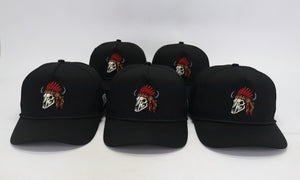
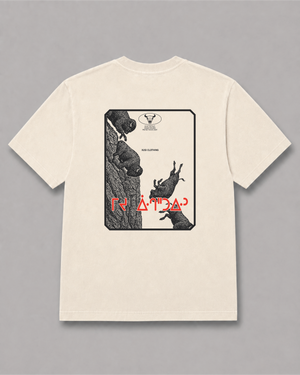
For rainy months on the coast, we suggest one of our hoodies, priced from $59.95 to $89.95, as a mid layer under a waterproof jacket. Our heavyweight 100% cotton tee has a generous fit, so it layers easily underneath. Add an A-frame snapback, $44.95, for drizzly walks.
Can a B.C. Friendship Centre youth program order printed shirts?
Yes. Many of the province’s 24 Friendship Centres run youth, sports and culture programs, and our custom screen printing fits group orders. The minimum is 10 garments, designs can use up to 4 colours, and every order is quoted before printing. We help with the design, print in Saskatoon and ship to you.
Last reviewed . Facts on this page come from the sources listed below.
Sources for this page
Indigenous clothing from XUSI
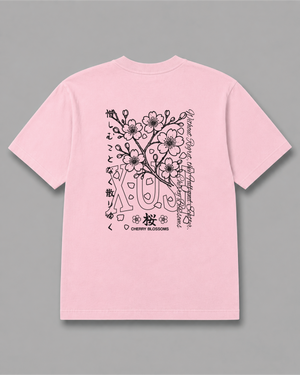
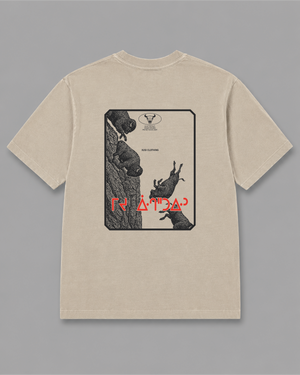
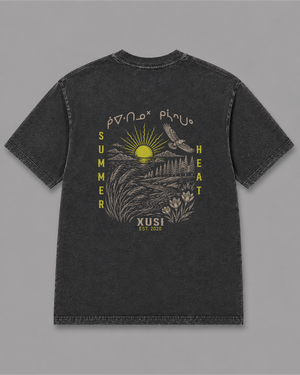
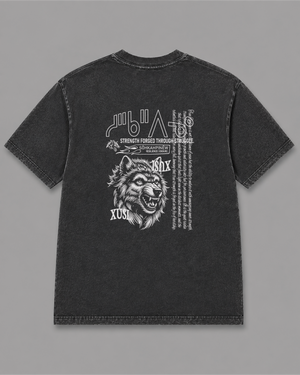
XUSI brings Indigenous-owned streetwear from Saskatoon over the Rockies to British Columbia. Whether you are on Vancouver Island, in the Okanagan or up near Fort St. John, our screen-printed tees, hoodies and caps can be shipped to your door.
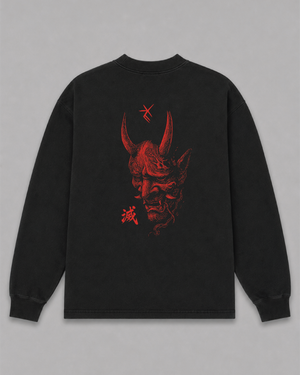
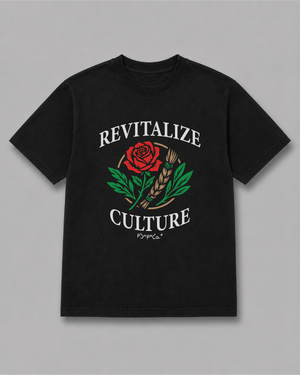
British Columbia asks a lot of a wardrobe, so we think in layers. On a wet coastal trail below the cedars, one of our hoodies under a rain shell keeps the damp off. In the dry southern interior, our heavyweight cotton tee handles orchard country heat. Up in the Peace River country, the Revitalize Culture crewneck makes sense for cold harvest mornings. Hikers heading into the Rockies or Columbia Mountains can keep the sun off with an A-frame snapback. For a ski day at Revelstoke, the Black Oni long sleeve works as a base under a shell. Each piece ships from Saskatoon, wherever you are in the province.