
Indigenous The Pas: Treaty 5, Nations and Community
An introduction to The Pas: its history, the Nations whose lands it sits on, and Indigenous community life today, with sources.
About The Pas
The Pas sits where the Pasquia River joins the Saskatchewan River in northern Manitoba, roughly 520 km northwest of Winnipeg, and more than half of its residents identify as Indigenous. Opaskwayak Cree Nation, whose Cree name means at the wooded narrows, lies right beside the town; its Swampy Cree ancestors entered Treaty 5 in 1876. The Nation hosts Opaskwayak Indigenous Days every August. Each winter, the Northern Manitoba Trappers’ Festival, held continuously since 1948, brings sled dog racing and other outdoor traditions. The town is home to one of the two main campuses of University College of the North, and the Sam Waller Museum occupies the old courthouse downtown. Agriculture, forestry, commercial fishing, tourism, transportation and services such as health and education make up the regional economy, with a kraft paper mill as a leading employer.
The Pas history
Before any fort or town, this place was a Cree encampment on the Saskatchewan River. It sits about 60 kilometres upstream of where the river enters Cedar Lake. The town recognizes Treaty 5 territory as the traditional lands of Opaskwayak Cree Nation and of many Cree, Dene and Oji-Cree people. It also names it the homeland of the Red River Métis. The French built Fort Paskoyac here in the mid-1700s, and the name was also spelled Pasquia and Paskoya. Henry Kelsey, the sons of La Vérendrye and Sir John Franklin all passed through. In 1847, a rescue party searching for Franklin's lost expedition founded the Anglican mission. A Roman Catholic mission followed in 1887. The Pas Band of Cree signed Treaty 5. From 1904 until 1930, the band also ran its own sawmill. The Hudson Bay Railway pushed north in the early 1900s. In 1906, the band was forced to surrender its reserve land south of the river. The people relocated across the water, and the townsite grew on the land they left. The Pas became a town in 1912. A major drainage project in the area was finished in 1960.
Treaty and territory
The Pas is on Treaty 5 territory, the lands of the Cree, and the homeland of the Métis. Opaskwayak Cree Nation is next to the town.
Nearby: Opaskwayak Cree Nation · Wanless · Cranberry Portage · Mosakahiken Cree Nation (Moose Lake) · Flin Flon
Indigenous The Pas today
Across the river from the town, Opaskwayak Cree Nation counted 6,587 members in 2022, with 3,380 living on reserve. Its main reserve, OCN 21E, covers nearly 178 square kilometres across 24 land parcels. A chief and eight councillors govern under an election code the members adopted in 2012. Opaskwayak runs Joe A. Ross School and Oscar Lathlin Collegiate on reserve. The Nation also built Otineka Mall, which opened in 1976. At 225,000 square feet, it is the largest mall in northern Manitoba. The 1,100-seat Gordon Lathlin Memorial Centre opened in 1985. Since 1996 it has hosted the Blizzard of the Manitoba Junior Hockey League. One census count put the town's Indigenous share at 46.2 per cent. That included 26.4 per cent First Nations and 19.8 per cent Métis residents. University College of the North keeps one of its two main campuses here. It runs 12 regional centres from Swan River to Churchill, nine of them in First Nations communities. A Council of Elders helps the college respect Indigenous and northern cultures. The college reports that 84 per cent of its graduates stay to work in northern Manitoba.
Life in The Pas
The Pas is a northern hub with a strong winter culture. The Northern Manitoba Trappers' Festival is described as Manitoba's oldest festival and one of Canada's oldest winter festivals. Its line-up has included ice fishing and muskrat skinning alongside the sled dog race. The climate is humid continental, with long cold winters and short warm summers. The record high reached 37.8°C on July 19, 1941. The record low fell to −49.4°C on February 18, 1966. For year-round recreation, the town runs the Roy H. Johnston Arena, a wellness centre and the Winton Pool, and minor hockey and figure skating clubs keep the rinks busy. The Sam Waller Museum has three galleries. Its Main Gallery traces local history from the region's geology forward. Sam's Gallery displays the founder's own curiosities. Just outside town, Clearwater Lake Provincial Park was established in 1963 and covers 593 square kilometres around its namesake lake.
The Pas seasons and weather
Temperatures in The Pas have dropped below −49°C on record and climbed past 37°C in summer, so insulated layers matter as much as a light tee.
More on the region: Indigenous Manitoba · all of Canada.
Keep learning in the XUSI Journal
- The Numbered Treaties, Explained
- Treaty Annuity Payments and Treaty Days, Explained
- Nêhiyawêwin: A Beginner's Guide to the Cree Language
- First Nations, Métis and Inuit: What’s the Difference?
- All Journal articles
The Pas questions
Can a group in The Pas order custom printed hoodies?
Yes. Orders start at 10 garments with up to 4 colours per design, the largest screen is 23x31 inches, and every order is quoted before printing. Design help is included, and everything ships to you from Saskatoon.
Is there a pickup location near The Pas?
Pickup is available only in Saskatoon, so orders to The Pas are shipped. They leave within 1–3 business days, and orders of $90 or more ship free within Canada.
Can Opaskwayak or University College of the North groups order custom shirts?
Any group in The Pas or Opaskwayak can order custom screen printing from 10 garments. Designs can use up to 4 colours, and every order is quoted before printing. Design help is included. We print in Saskatoon and ship to you, so allow time before festival dates.
Does XUSI carry Cree designs that fit a Swampy Cree community like The Pas?
Many of our designs carry a Cree word and its story, shared on our meanings page. Many of our designs carry a Cree word, with its story on our Meanings page. For a design in your own dialect, our custom screen printing includes design help.
Last reviewed . Facts on this page come from the sources listed below.
Indigenous clothing from XUSI
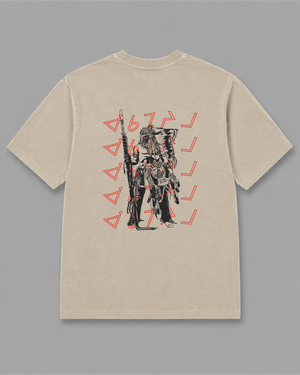
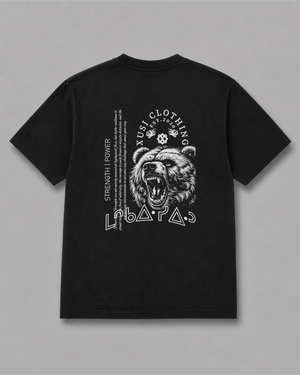
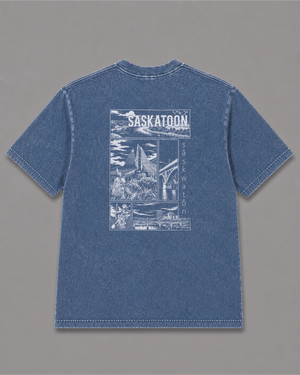
Indigenous clothing in The Pas is a few clicks away: XUSI, the Indigenous-owned Saskatoon label, ships its tees, hoodies and hats north to the town and its neighbouring communities.
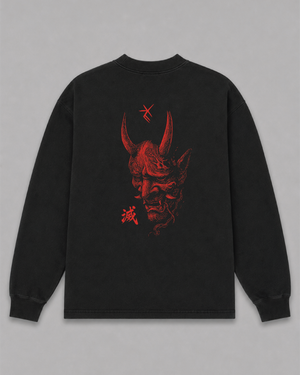
Northern Manitoba asks a lot of clothing, so we think in real layers for The Pas. At the Trappers' Festival in February, a heavyweight hoodie belongs under a parka while you watch the sled dogs come in. In a cold rink at the Gordon Lathlin Memorial Centre, our Revitalize Culture crewneck is a warm pick. When summer finally arrives, a heavyweight cotton tee and an A-frame snapback suit a day at Clearwater Lake. The Black Oni long sleeve covers cool August evenings on the riverbank, including those during Opaskwayak Indigenous Days.