
Indigenous Val-d’Or: Anishinaabeg Territory, Nations and Community
An introduction to Val-d’Or: its history, the Nations whose lands it sits on, and Indigenous community life today, with sources.
About Val-d’Or
Val-d'Or had 32,752 residents in the 2021 census. The city spreads over about 3,541 square kilometres of the Canadian Shield, at an elevation of 306 metres. Its name means Valley of Gold, though the land is mostly a broad, gently rolling plain. Lac Blouin and Lac De Montigny sit within city limits. The present city took shape on January 1, 2002, when it merged with Dubuisson, Sullivan, Val-Senneville and Vassan. The Abitibi forests supply about 65 per cent of the lumber produced in Quebec. Along with mining and forestry, tourism and services support the local economy. The Centre d'amitié autochtone de Val-d'Or serves Indigenous and non-Indigenous residents from its 7e Rue location.
Val-d’Or history
The Anishinaabeg, known in English as the Algonquin, have long lived in this part of Abitibi. Families from Kitcisakik, Lac-Simon and Lac-Rapide frequented the area. Anishinaabe people served as guides and prospectors in the early mining years. In 1923, Gabriel Commanda and Robert Clark discovered the deposit that became the Lamaque mine. That discovery set off a gold rush in the mid-1930s. The Canadian Encyclopedia calls it second in scale only to the Klondike. Bourlamaque was founded in 1934 as a planned mining village. Val-d'Or was incorporated in 1935, and the Sigma mine opened the same year. By 1937, Val-d'Or had about 4,000 residents and city status. In 1968, Val-d'Or, Bourlamaque and Lac Lemoyne merged under the Val-d'Or name. Bourlamaque village received heritage status in 1979. The Louvicourt mine was discovered in 1989 and began production in 1994. In total, the area has produced about 45 million ounces of gold since the 1930s. Copper, zinc and lead also grew in importance. In 2012, a lithium mine reopened about 60 kilometres north of the city.
Treaty and territory
Val-d’Or lies in the traditional territory of the Anishinaabeg, or Algonquin people. Communities from Kitcisakik, Lac-Simon and Lac-Rapide have long travelled and lived on these lands.
Nearby: Lac-Simon · Kitcisakik · Malartic · Amos · Rouyn-Noranda · Senneville
Indigenous Val-d’Or today
Anishinaabe communities remain close neighbours of Val-d'Or. Kitcisakik, an Anicinape community in La Vallée-de-l'Or, had 257 residents in 2021. Before October 1999, it was officially called Grand-Lac-Victoria. In 2021, the Government of Quebec designated Kitcisakik a historic site. Its chief is Adrienne Anichinapéo. The settlement covers about 1.5 square kilometres. In the city, the Centre d'amitié autochtone de Val-d'Or calls itself a hub of urban services for First Peoples. It also describes itself as a living environment and a cultural anchor. It runs an Indigenous health clinic, early childhood programs and medical transportation. It also offers employability and education services, access to justice support and community housing. Its programs address homelessness and social inclusion. Psychosocial support groups and community life activities are also part of its work. The centre's Reconciliation Space hosts colloquiums, seminars and public events. These include the National Day for Truth and Reconciliation and National Indigenous Peoples Day. The centre also holds an anti-racism awareness week.
Life in Val-d’Or
Val-d'Or is best known for gold. La Cité de l'Or takes visitors 91 metres underground into the former Lamaque mine. It is described as the only site in Canada that brings visitors into the heart of a gold mine operation. Tours also cover four heritage buildings from the Lamaque mine and a collection of rare minerals. Next door, Bourlamaque village is a historic mining village still lived in today. An exhibit called At home in Bourlamaque shows how miners' families lived. The city's recreational forest offers trails close to town. Hockey fans follow the Foreurs de Val-d'Or, the city's junior team. The Festival d'humour de l'Abitibi-Témiscamingue brings comedy to the region. Lumber, tourism, services and an industrial park opened in 1972 round out the local economy. Base metals such as copper, zinc and lead keep mining going beyond gold.
Val-d’Or seasons and weather
Val-d'Or has a cold, fairly dry continental climate. January averages −17.4°C, and around 288 centimetres of snow fall each year. Snow usually covers the ground from November through April. July averages about 23.7°C. That means heavy layers for most of the year, with tees saved for a short, warm summer.
More on the region: Indigenous Quebec · all of Canada.
Keep learning in the XUSI Journal
- First Nations, Métis and Inuit: What’s the Difference?
- How to Write a Land Acknowledgement That Means Something
- Orange Shirt Day & the National Day for Truth and Reconciliation
- National Indigenous Peoples Day and History Month: A Guide
- All Journal articles
Val-d’Or questions
How does shipping to Val-d'Or work?
Orders of $90 or more ship free to Val-d'Or and anywhere in Canada. Orders under $90 show the shipping cost at checkout. Every order leaves our Saskatoon shop within 1 to 3 business days.
Can you print shirts for a Val-d'Or team or community group?
Yes. Custom screen printing starts at 10 garments, with up to 4 colours per design. Every order gets a full quote before anything is printed, and design help is included. We print in Saskatoon and ship your order to Val-d'Or.
Does XUSI have a store in Val-d'Or or elsewhere in Abitibi?
No. We have no store, stockist or event booth in Val-d'Or or anywhere in Abitibi-Témiscamingue. Outside our online shop, our only retail presence is at Wanuskewin near Saskatoon. Val-d'Or customers order online, and orders over $90 ship free.
What XUSI pieces handle a Val-d'Or winter?
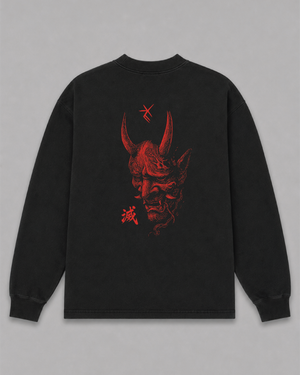
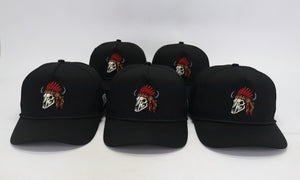
January in Val-d'Or averages −17.4°C, with snow from November to April. Our heavyweight hoodies, priced from $59.95 to $89.95, layer under a parka. The Black Oni long sleeve at $54.95 adds a base layer, and the A-frame snapback at $44.95 finishes the look.
Last reviewed . Facts on this page come from the sources listed below.
Indigenous clothing from XUSI
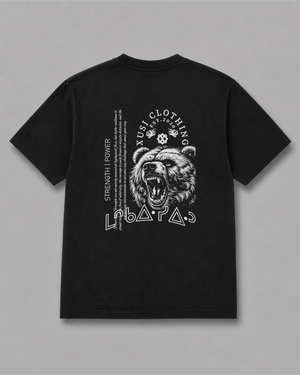
On the Canadian Shield plains of Abitibi, where gold mining and Anishinaabe history run side by side, Val-d'Or residents can order Indigenous-designed XUSI tees, hoodies and hats that we print in Saskatoon.
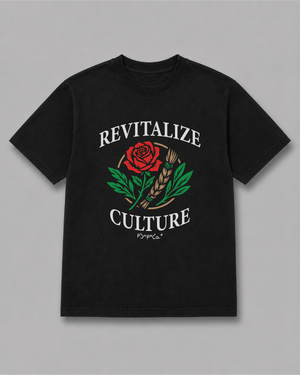
With snow on the ground from November to April, Val-d'Or calls for our heavyweight hoodies under a winter coat. They work well at a Foreurs game or on the recreational forest trails. The Revitalize Culture crewneck adds warmth on cold January days, and it carries a Cree word and story. Our Black Oni long sleeve is a good layer for the 91-metre descent at La Cité de l'Or. In July, a 100% cotton tee or Golden Era ringer suits a day by Lac Blouin. Top it off with our A-frame snapback.