

Indigenous Gander: Beothuk and Mi’kmaq Lands, Nations and Community
An introduction to Gander: its history, the Nations whose lands it sits on, and Indigenous community life today, with sources.
About Gander
Gander had 11,880 residents in the 2021 census, across about 104.5 square kilometres. The town sits on the northeastern shore of Gander Lake and takes its name from the Gander River. Gander grew around its airport, which was one of the largest in the world when it was completed in 1938. The airport still anchors the town. Gander's air traffic control centre is the only oceanic unit in Canada. It manages airspace from western Newfoundland to the mid-Atlantic and north to Greenland. Most streets carry the names of famous aviators, from Amelia Earhart to Marc Garneau. The town promotes growth in aerospace, defence, retail and manufacturing. Planners chose the site in 1935 partly because it was fog-free.
Gander history
Before Europeans arrived, the Beothuk lived along Newfoundland's south and northeast coasts. Their population at contact was likely between 500 and 1,500 people. They lived in bark- or skin-covered tents in summer and semi-subterranean houses in winter. They hunted seals and birds from bark canoes and hunted caribou inland. Settlers pushed them away from the coast and into the Exploits River system. Shanawdithit died in 1829 and was long recorded as the last Beothuk. Mi'kmaq and Innu oral traditions challenge that account. They hold that Beothuk descendants married into other Indigenous nations. In 2019, the remains of two prominent Beothuk individuals were returned from Scotland to Canada. In 1935, British and Canadian governments chose this site for a transatlantic airport. Construction began in 1936, and Captain Douglas Fraser made the first landing on January 11, 1938. During the Second World War, about 20,000 fighters and bombers passed through on RAF ferry routes. The RCAF set up a base in 1940, later shared with the United States Air Force. The town moved away from the runways and was incorporated in 1958. On December 12, 1985, Arrow Air Flight 1285 crashed after takeoff, killing 256 people.
Treaty and territory
Gander is in northeastern Newfoundland, part of the historic homeland of the Beothuk. Today the island is also home to Mi’kmaq, including members of the Qalipu Mi’kmaq First Nation.
Nearby: Gander Lake · Appleton · Glenwood · Gander Bay · Lewisporte · Gambo
Indigenous Gander today
Mi'kmaq community life in Newfoundland is represented largely by the Qalipu Mi'kmaq First Nation. Qalipu was established in 2011 as a landless First Nation. Its roots lie in the Federation of Newfoundland Indians, formed in 1972. By 2021, it had nearly 24,000 founding members across 67 communities. That made it the second-largest band by membership in Canada. Qalipu is led by Chief Jenny Brake, two vice-chiefs and councillors from nine electoral wards. Its main office is in Corner Brook. It offers members education funding, employment help, health benefits, mental health services and housing support. The First Nation also focuses on reclaiming Mi'kmaw language and craft. Beothuk history is also being retold today. The Canadian Encyclopedia notes that Mi'kmaq and Innu oral histories speak of Beothuk families joining other nations. The 2019 repatriation from Scotland was described as an important step toward reconciliation. Newfoundland's northeast coast, where Gander sits inland, was part of the Beothuk homeland.
Life in Gander
Gander is known worldwide for September 11, 2001. During Operation Yellow Ribbon, 38 civilian and 4 military flights landed at Gander. More than 6,600 passengers and crew arrived in a town of under 10,000 people. Residents opened their homes, and pharmacies gave out free medication. That welcome inspired the musical Come From Away. The North Atlantic Aviation Museum tells the story of the airport and its wartime role. Gander Heritage Memorial Park honours Sergeant Gander, a decorated Second World War Newfoundland dog. Aviation-themed street names such as Alcock, Lindbergh and Yeager make the town's history part of daily life. The Steele Community Centre, parks, playgrounds and walking trails give residents places to gather and stay active. Gander Lake sits right at the town's edge.
Gander seasons and weather
Gander has a cool to cold humid continental climate. Winters are long and snowy, with about 443 centimetres of snow in an average year. Summers stay fairly cool here. That means heavy layers from late fall through spring, with a lighter tee saved for mild summer days on Gander Lake.
More on the region: Indigenous Newfoundland and Labrador · all of Canada.
Keep learning in the XUSI Journal
- First Nations, Métis and Inuit: What’s the Difference?
- How to Write a Land Acknowledgement That Means Something
- Orange Shirt Day & the National Day for Truth and Reconciliation
- National Indigenous Peoples Day and History Month: A Guide
- All Journal articles
Gander questions
How does shipping to Gander work?
Orders of $90 or more ship free to Gander and anywhere in Canada. Orders under $90 show the shipping cost at checkout. Every order leaves our Saskatoon shop within 1 to 3 business days.
Can you print shirts for a Gander team or community group?
Yes. Custom screen printing starts at 10 garments, with up to 4 colours per design. Every order gets a full quote before anything is printed, and design help is included. We print in Saskatoon and ship your order to Gander.
Does XUSI have a store in Gander?
No. We have no store, stockist or event booth in Gander or anywhere in Newfoundland and Labrador. Outside our online shop, our only retail presence is at Wanuskewin near Saskatoon. Gander customers order online, and orders over $90 ship free.
Can a Qalipu ward or Mi'kmaw group near Gander order custom shirts?
Yes. Any group can order custom screen printing from us with a 10-garment minimum and up to 4 colours. Every order gets a full quote before anything is printed. We help with the design, print in Saskatoon and ship the finished shirts to you.
Last reviewed . Facts on this page come from the sources listed below.
Indigenous clothing from XUSI
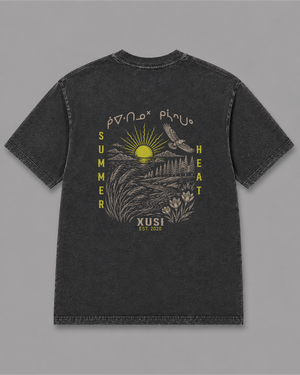
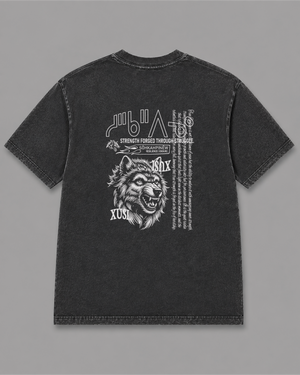
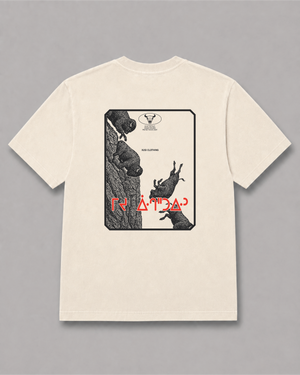
On the shore of Gander Lake, in a town built around one of the world's great transatlantic airports, Gander residents can order Indigenous-designed XUSI tees, hoodies and hats that we print in Saskatoon.
Gander averages more than four metres of snow a year, so our heavyweight hoodies work hard under a winter coat. They suit shovelling out, walking the town trails or cheering at the Steele Community Centre. The Revitalize Culture crewneck is a warm layer for long winter evenings, and it carries a Cree word and story. Our Black Oni long sleeve covers cool summer nights by Gander Lake. On milder days, a 100% cotton tee, Golden Era ringer or women's baby rib tee is enough. Our A-frame snapback fits a day watching planes near the airport.