
Indigenous Newfoundland and Labrador: Nations, Nunatsiavut and Community
An introduction to Newfoundland and Labrador: its history, its Nations and treaties, and Indigenous community life today, with sources.
About Newfoundland and Labrador
Newfoundland and Labrador joins a rugged island to a vast mainland region of forest, barrens and Arctic coastline. Three Indigenous peoples live here. The Innu, represented by Innu Nation since 1976, have reserves at Sheshatshiu and Natuashish; their land claim covers roughly 70 per cent of Labrador and reached an agreement-in-principle in 2011. The Labrador Inuit Land Claims Agreement, finalized in 2005, created the self-governing Nunatsiavut region, with Nain as its administrative capital, Hopedale as its legislative capital and Makkovik, Rigolet and Postville completing its five communities. On the island, Miawpukek First Nation at Conne River gained reserve status in 1987, and Qalipu First Nation, recognized as a band in 2011, is one of the largest in Canada though it has no reserve land. St. John’s is the capital, and fishing, offshore oil, mining and hydroelectricity support the economy.
Newfoundland and Labrador history
People have lived here for thousands of years. The Canadian Encyclopedia dates the Maritime Archaic to about 8000 to 3200 BCE, followed by Palaeo-Eskimo peoples. From about 2000 BCE, groups known to archaeologists as Recent Indians appeared. They were the ancestors of the Beothuk on the island and the Innu in Labrador. Norse explorers, including Leif Ericsson, built a temporary settlement at L'Anse aux Meadows at the end of the tenth century. John Cabot arrived in 1497, and Basque whalers worked the south coast of Labrador from the 1540s. The first English colony began at Cupers Cove, now Cupids, in 1610. At contact the Beothuk numbered perhaps 500 to 1,500 people. As settlements spread, they were pushed inland, away from coastal food sources. Violence, displacement and disease, especially tuberculosis, devastated them. Shawnadithit, who recorded her people's history, died in 1829. Mi'kmaq and Innu oral traditions challenge the idea that the Beothuk simply vanished. Cod shaped settler life for centuries. On July 2, 1992, the federal government declared a moratorium on the northern cod fishery after years of overfishing. About 25,570 people who fished for a living were left out of work.
Treaty and territory
Newfoundland and Labrador is home to the Inuit of Nunatsiavut, the Innu and the Mi’kmaq. The Labrador Inuit Land Claims Agreement created the Inuit self-governing region of Nunatsiavut in 2005.
Nearby: St. John’s · Happy Valley-Goose Bay · Sheshatshiu · Natuashish · Nain · Miawpukek First Nation
Regions of Newfoundland and Labrador
The province spans three physiographic regions. Labrador lies on the Canadian Shield, while the island belongs to the Appalachian region and the Eastern St. Lawrence Lowlands. On the island, the Long Range Mountains run along the west coast. The northeast coast is broken into bays, islands and headlands facing the Atlantic. The Great Northern Peninsula reaches north, and the Avalon Peninsula anchors the east. Port au Choix, on the Great Northern Peninsula, holds sites of Maritime Archaic and later Indigenous cultures. The Beothuk once lived along at least the south and northeast coasts. Mi'kmaq families, who first came from Nova Scotia and nearby areas through trade, built a community at Conne River. Labrador has its own distinct zones. Its northern coast is mountainous and deeply fjorded, with subarctic plants. Parks Canada runs Torngat Mountains National Park from an office in Nain. The southern coast is rugged and barren at the shore, with forest behind it, and the interior is a forested plateau. The Canadian Encyclopedia counts two Innu communities in Labrador today. The NunatuKavut Community Council represents Inuit across south and central Labrador. Farther north, the Nunatsiavut Government serves the Inuit of northern Labrador's five communities.
Indigenous Newfoundland and Labrador today
Indigenous organizations work across the province, from the capital to the Labrador coast. In St. John's, First Light works from Quidi Vidi Road with a motto of Guided by Culture, Grounded in Community. It offers Indigenous patient navigation, wellness counselling, transitional housing, justice supports and early learning. Its calendar has included National Indigenous Peoples Day, Orange Shirt Day, the Spirit Song Festival, Gathering of Voices and a Language and Culture Camp. It also runs a Centre for Performance and Creativity. In south and central Labrador, the NunatuKavut Community Council represents Inuit who describe the region as their homeland. It is advancing a comprehensive land claim with Canada through a Recognition of Indigenous Rights and Self-Determination process. The council is an affiliate of the Congress of Aboriginal Peoples and holds special consultative status with the UN Economic and Social Council. Todd Russell serves as its president. Beothuk history also remains part of public life. In 2019, the remains of two Beothuk individuals were brought home from Scotland. The Canadian Encyclopedia notes that the return was seen as a possible step toward reconciliation. In the far north, Torngat Mountains National Park describes itself as an Inuit homeland where Inuit welcome visitors.
Life in Newfoundland and Labrador
Just over half the province, 52.8 per cent, lived in urban areas in 2021. After St. John's, the largest centres are Corner Brook, Grand Falls-Windsor and Gander. Energy is the largest export sector. Churchill Falls, with more than 5,400 megawatts of capacity, is the second-largest hydroelectric plant in North America. Its Smallwood Reservoir is roughly one-third the size of Lake Ontario. Offshore, Hibernia, Terra Nova, White Rose and Hebron produce oil. Fisheries now lean toward snow crab, shrimp and surf clams, and iron ore makes up over half of mining value. National parks protect some of its most striking landscapes. Gros Morne National Park, a UNESCO World Heritage Site, protects the Tablelands, a rare outcrop of the Earth's mantle. Western Brook Pond is a land-locked fjord with waterfalls that drop 2,000 feet. In the Torngat Mountains, jagged peaks and fjords hold some of Earth's oldest rocks. Heritage sites include Signal Hill, Cape Spear and Red Bay.
Newfoundland and Labrador seasons and weather
The island is known for wind, fog and changeable weather, and Labrador has long, very cold winters. Warm hoodies and hats are useful nearly all year.
Communities in Newfoundland and Labrador
Keep learning in the XUSI Journal
- First Nations, Métis and Inuit: What’s the Difference?
- How to Write a Land Acknowledgement That Means Something
- Orange Shirt Day & the National Day for Truth and Reconciliation
- National Indigenous Peoples Day and History Month: A Guide
- All Journal articles
Newfoundland and Labrador questions
How do I order from Nain or another coastal Labrador community?
Place your order online and the shipping cost for your community is calculated at checkout. Orders of $90 or more ship free within Canada, and every package leaves Saskatoon within 1 to 3 business days.
Can a St. John’s group order custom shirts with an Innu, Inuit or Mi’kmaw design?
Yes. Custom screen printing starts at 10 garments, with up to 4 colours per design, and every order is quoted before printing. Design help is included, and we print in Saskatoon and ship to you.
What should I wear for a trip to Gros Morne National Park?
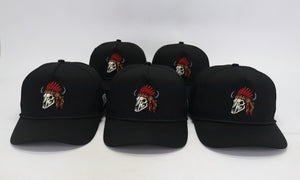
Parks Canada lists a 17-kilometre hike up Gros Morne Mountain, boat tours of Western Brook Pond and guided walks on the Tablelands. Pack a heavyweight cotton tee for warm stretches, the Black Oni long sleeve or a hoodie for wind on the water, and our A-frame snapback for sun.
Can a St. John's festival group order shirts with an Indigenous design?
Yes. Our custom screen printing starts at 10 garments, with up to 4 colours per design, and every order is quoted before printing. Design help is included, so a group can build artwork around its own Nation or event. We print in Saskatoon and ship to the island or Labrador.
Last reviewed . Facts on this page come from the sources listed below.
Indigenous clothing from XUSI
Even on the far Atlantic edge of the country, XUSI’s Indigenous-owned clothing is an order away. We print tees, hoodies and hats in Saskatoon and ship them to St. John’s, western Newfoundland and communities throughout Labrador.
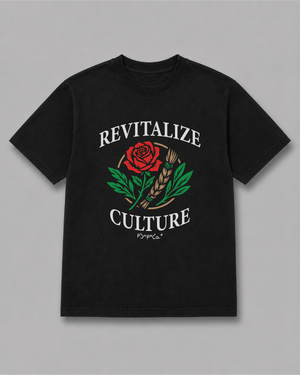
From the Avalon to the Torngats, this province asks for layers that handle wind, fog and cold. A heavyweight 100% cotton tee suits a clear summer hike up Gros Morne Mountain. When the fog rolls in over Signal Hill, pull a hoodie from our $59.95 to $89.95 range over it. On a boat tour of Western Brook Pond, the Black Oni long sleeve adds warmth against the breeze off the water. In Labrador's long winters, a hoodie or the Revitalize Culture crewneck works under a heavy parka. Our A-frame snapback keeps sun and drizzle off on a coastal trail. For a festival crew or a friendship centre group, custom screen printing starts at 10 garments.