
Indigenous Grand Falls-Windsor: Beothuk and Mi’kmaq Lands, Nations and Community
An introduction to Grand Falls-Windsor: its history, the Nations whose lands it sits on, and Indigenous community life today, with sources.
About Grand Falls-Windsor
Grand Falls-Windsor had 13,853 residents in the 2021 census, making it the main centre of central Newfoundland. The town joined two very different communities in 1991. Grand Falls began in 1905 as a planned company town, laid out on Garden City ideas. Windsor, first called Grand Falls Station, grew up beside the railway as housing for workers not employed by the company. For a century, the town's life revolved around a pulp and paper mill on the Exploits River. That mill made its last roll of newsprint in February 2009. Today the local economy leans on services, distribution, mining and aquaculture. The Exploits River still defines the town, home to Atlantic salmon and the festival named for them.
Grand Falls-Windsor history
The Beothuk once lived along Newfoundland's south and northeast coasts. At European contact in the 1500s, they numbered between 500 and 1,500 people. As settlements spread in the 1700s and 1800s, violence, disease and lost access to the coast pushed them inland. They were confined to inland areas such as the Exploits River system, where food and shelter were hard to find. In 1819, English fishers captured a Beothuk woman named Demasduit. While held, she helped build a dictionary of the Beothuk language. Shanawdithit, who recorded Beothuk history, died in 1829. Mi'kmaq and Innu oral traditions hold that Beothuk descendants married into other Indigenous nations. In 2019, the remains of Demasduit and Nonosabasut were returned to Canada from Scotland. In 1905 the Anglo-Newfoundland Development Company took a 99-year lease on vast timberlands. Its pulp and paper mill opened in 1909, powered by the falls and linked to the railway and the port at Botwood. Windsor became Newfoundland's second incorporated municipality in 1938, after St. John's. Grand Falls followed in 1961, and the two towns merged in 1991.
Treaty and territory
Grand Falls-Windsor lies in the Exploits River system, an inland homeland of the Beothuk people. Mi’kmaq people live here today, and the town is part of a ward of Qalipu First Nation.
Nearby: Bishop's Falls · Botwood · Badger · Buchans · Gander · Norris Arm
Indigenous Grand Falls-Windsor today
Mi'kmaq people are part of life in Grand Falls-Windsor. Qalipu First Nation was created in 2011 as a landless band for Mi'kmaq people in Newfoundland. Its members live across the island, and none live on a reserve. Grand Falls-Windsor is one of the areas represented in its nine electoral wards, alongside places such as Corner Brook and Gander Bay. Members elect a chief, two vice-chiefs and nine ward councillors. The demand for recognition was huge. About 105,000 people applied to join, far more than the government expected. After stricter rules in 2014, around 24,000 people were confirmed as founding members. Beothuk history is also remembered here. The town's provincial museum was renamed the Demasduit Regional Museum in 2021, out of respect for Demasduit. It was previously called the Mary March Provincial Museum. The museum presents exhibits on the Beothuk alongside geology, industry and natural history. Visitors learn there about the Beothuk who were pushed inland to this river system.
Life in Grand Falls-Windsor
The Exploits River is the heart of Grand Falls-Windsor. The Grand Falls Fishway helps Atlantic salmon climb past the falls. At the Salmonid Interpretation Centre, visitors can watch salmon and learn about the river's fish. The Exploits Valley Salmon Festival is held every year and brings well-known performers to town. It celebrates the river and the fish that return to it. The Demasduit Regional Museum tells the stories of the Beothuk, local geology, industry and natural history. The mill shaped the town for a century. Grand Falls was planned by the company along Garden City lines, while Windsor grew beside the tracks. The falls themselves once powered the mill. Services, distribution, mining and aquaculture now carry the local economy, with the port at Botwood close by.
Grand Falls-Windsor seasons and weather
Grand Falls-Windsor is inland, so it swings further between seasons than coastal Newfoundland. Winters average around -8°C, with about 275 cm of snow a year. July averages about 17°C. Bring a heavy hoodie for most of the year and a tee for summer days by the river.
More on the region: Indigenous Newfoundland and Labrador · all of Canada.
Keep learning in the XUSI Journal
- First Nations, Métis and Inuit: What’s the Difference?
- How to Write a Land Acknowledgement That Means Something
- Orange Shirt Day & the National Day for Truth and Reconciliation
- National Indigenous Peoples Day and History Month: A Guide
- All Journal articles
Grand Falls-Windsor questions
Do you ship to Grand Falls-Windsor and central Newfoundland?
Yes. Orders of $90 or more ship free to Grand Falls-Windsor and anywhere else in Canada. Smaller orders show the shipping cost at checkout. Every order is packed in Saskatoon and leaves our shop within 1 to 3 business days.
Can XUSI print custom shirts for a Grand Falls-Windsor team or group?
Yes. Custom screen printing starts at 10 garments, with up to 4 colours per design. Every order gets a full quote before anything is printed, and design help is included. We print in Saskatoon and ship the finished order to Grand Falls-Windsor.
Is XUSI connected to Qalipu First Nation or other groups in Newfoundland?
No. XUSI is a separate Indigenous-owned company founded in Saskatoon in 2020 by two brothers, on Treaty 6 territory. We have no partners, stockists or events in Newfoundland. Our designs often carry a Cree word, and we share the story behind each one on our meanings page.
Which XUSI pieces work for a Grand Falls-Windsor winter?
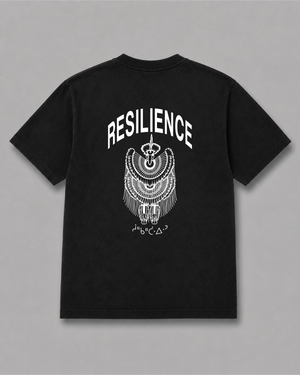
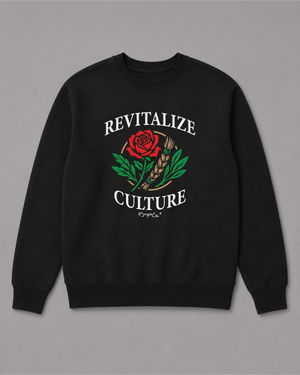
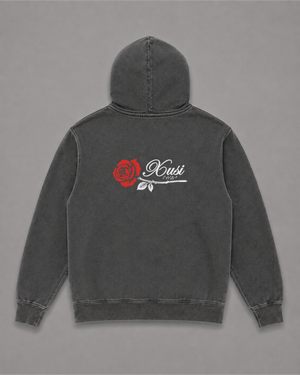
With about 275 cm of snow a year, the town needs warm layers. Start with our heavyweight 100% cotton tee or the Black Oni long sleeve at $54.95. Add a hoodie, priced from $59.95 to $89.95, or the Revitalize Culture crewneck for extra warmth under your coat.
Last reviewed . Facts on this page come from the sources listed below.
Indigenous clothing from XUSI
On the Exploits River, in country that was home to the Beothuk and is home to Mi'kmaq families today, Grand Falls-Windsor can order XUSI's Indigenous-designed tees, hoodies and hats from Saskatoon.
Grand Falls-Windsor sees more snow and colder winters than the coast, so our hoodies earn their keep from fall to spring. The Revitalize Culture crewneck layers well under a parka on a January day. In summer, our heavyweight 100% cotton tee suits a morning at the fishway. The Golden Era ringer tee is a relaxed pick for the Exploits Valley Salmon Festival. Our A-frame snapback keeps the sun off during a long day of fishing on the Exploits. The Black Oni long sleeve covers cool evenings by the river, when the air off the water turns crisp in late summer.