
Indigenous Halifax: K’jipuktuk, Nations and Community
An introduction to Halifax: its history, the Nations whose lands it sits on, and Indigenous community life today, with sources.
About Halifax
Halifax sits on Nova Scotia’s Atlantic coast around one of the world’s largest natural harbours. The Mi’kmaq name for the area, recorded as Jipugtug and today often written Kjipuktuk, is the source of the older English name Chebucto. The port handles well over a thousand vessels a year, and Canadian Forces Base Halifax, Dalhousie University and the regional health system are among the major employers. Students also attend Saint Mary’s, Mount Saint Vincent, the University of King’s College and NSCAD. Several Mi’kmaw First Nations hold reserve lands in the region, including Millbrook at Cole Harbour, Sipekne’katik at Wallace Hills and Acadia on Hammond Plains Road, while the Mi’kmaw Native Friendship Centre serves as a hub for the urban Indigenous community. Visitors often head to the Art Gallery of Nova Scotia, the Maritime Museum of the Atlantic and the Canadian Museum of Immigration at Pier 21.
Halifax history
People have lived around this harbour for roughly 13,000 years. The Mi'kmaq followed a seasonal round, fishing the coast in summer and hunting inland through the winter. In 1749 Colonel Edward Cornwallis arrived with about 2,500 settlers, most of them poor and recruited in England. The town was named for George Dunk, Earl of Halifax. Relations with the Mi'kmaq broke down quickly. Cornwallis put bounties on Mi'kmaq scalps, and the Mi'kmaq declared war that same year. Diplomacy followed. In 1752 Mi'kmaq chief Jean-Baptiste Cope signed the Halifax Treaty, one of the Peace and Friendship Treaties Britain made between 1725 and 1779. These treaties had no land or money provisions. Instead they protected hunting, fishing and land-use rights for the Nations' descendants. More chiefs signed a peace treaty with British officials in 1761. Halifax was incorporated as a city in 1841. In the mid-1800s, African Nova Scotians founded Africville on the city's edge. It was later demolished for industrial development and named a national historic site in 1996. The Halifax Explosion of 1917 remains one of the defining disasters in the city's story. On April 1, 1996, Halifax merged with neighbouring communities to form today's regional municipality.
Treaty and territory
Halifax, K’jipuktuk in Mi’kmaw, is in Mi’kma’ki, the ancestral and unceded territory of the Mi’kmaq, covered by the Peace and Friendship Treaties.
Nearby: Dartmouth · Bedford · Millbrook First Nation (Cole Harbour) · Sipekne’katik First Nation · Acadia First Nation
Indigenous Halifax today
The Mi'kmaw Native Friendship Centre has served urban Indigenous people and their families since 1973. It is a non-profit, charitable organization built around culture-focused programs. Its office sits at Brunswick and Cogswell streets downtown. Cultural programs include drum circles, language revitalization, traditional teachings, seasonal feasts and powwow dancing. The centre also offers tutoring, employment training, family support, food security, harm reduction, housing help and justice support. Treaty rights remain a living issue. In 1985 the Supreme Court's Simon decision upheld Mi'kmaq hunting rights under the 1752 Halifax Treaty. The Marshall decision in 1999 found that treaty hunting and fishing rights had never been extinguished. Between 2016 and 2023, Aboriginal title claims argued that these treaties never surrendered any land. Nova Scotia marks Treaty Day every October 1. In 2026, Canada recognized the 1726 treaty as a National Historic Event. The 1725 and 1726 treaties, initiated by Penobscot leader Sauguaaram, ended Dummer's War.
Life in Halifax
Halifax counted 439,819 people in the 2021 census. The city generates more than half of Nova Scotia's economy, led by trade, health care, education and public administration. The Halifax Citadel crowns the hill above downtown with a commanding view of the harbour. Interpreters recreate the 78th Highlanders and 3rd Brigade Royal Artillery as they were in 1869. The fort also houses an Army Museum and offers ghost tours. It belongs to the Halifax Defence Complex. That complex also includes Georges Island, the Prince of Wales Tower, Fort McNab and York Redoubt. Green space is close at hand, with the Public Gardens and Point Pleasant Park both among the city's best-known attractions. Neptune Theatre anchors the stage scene. The Africville site, now a national historic site, invites reflection on the city's past.
Halifax seasons and weather
Ocean air keeps Halifax winters damp and changeable, with snow, rain and wind often arriving in the same week. A hoodie under a shell jacket handles most of the year, and a warm hat earns its place from November to April.
More on the region: Indigenous Nova Scotia · all of Canada.
Keep learning in the XUSI Journal
- First Nations, Métis and Inuit: What’s the Difference?
- How to Write a Land Acknowledgement That Means Something
- Orange Shirt Day & the National Day for Truth and Reconciliation
- National Indigenous Peoples Day and History Month: A Guide
- All Journal articles
Halifax questions
Do you have a shop in Halifax where I can pick up an order?
Local pickup is offered only in Saskatoon. Orders to Halifax ship from Saskatoon and typically leave within 1–3 business days, with the shipping cost calculated at checkout.
Can a Halifax team order custom printed hoodies?
Yes. Custom screen printing starts at 10 garments, allows up to 4 colours per design, and every order is quoted before printing. Design help is included, the maximum screen size is 23x31 inches, and everything is printed in Saskatoon and shipped to you.
Could the Mi'kmaw Native Friendship Centre or a campus group order shirts for Treaty Day?
Yes. Custom screen printing starts at 10 garments, with up to 4 colours per design, and every order is quoted before printing. Design help is included, and we can lay out Mi'kmaw wording you supply. Plan ahead for October 1, since orders are printed in Saskatoon and then shipped.
Your designs use Cree words. Is that a fit for Mi'kmaw territory?
Many of our designs carry a Cree word and story, shared on our meanings page, because we are based in Saskatoon on Treaty 6 territory. Halifax is Mi'kmaw land under the Peace and Friendship Treaties. For Mi'kmaw words, a custom order with your community's wording is the respectful route.
Last reviewed . Facts on this page come from the sources listed below.
Indigenous clothing from XUSI
Looking for Indigenous clothing in Halifax? XUSI is an Indigenous-owned label out of Saskatoon, and our tees, hoodies and hats travel east to Kjipuktuk and the rest of the harbour city.
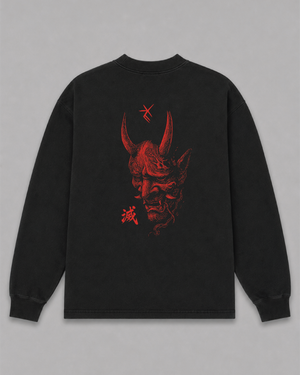
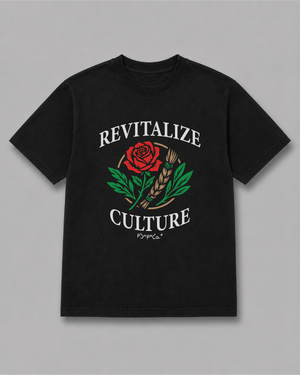
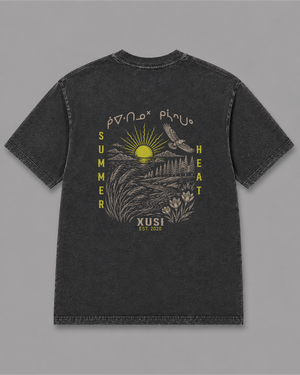
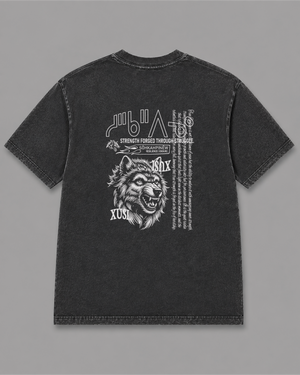
Halifax weather turns fast, so layers make sense here. We would pick a heavyweight 100% cotton tee for a July walk through the Public Gardens or along the harbour. On a foggy afternoon in Point Pleasant Park, the Black Oni long sleeve adds just enough warmth. When wind and rain sweep over the Citadel in November, a heavy hoodie goes under your shell. Students heading to class at Dalhousie or NSCAD might choose the Revitalize Culture crewneck, which carries a Cree word and story. An A-frame snapback handles a bright Treaty Day in October. The Golden Era ringer tee suits a summer night downtown.