
Indigenous Kelowna: Unceded syilx Territory, Nations and Community
An introduction to Kelowna: its history, the Nations whose lands it sits on, and Indigenous community life today, with sources.
About Kelowna
Kelowna sits on Okanagan Lake as the regional hub of the Central Okanagan. The syilx people are the first known inhabitants and continue to live here, and the city’s name comes from an Okanagan word for grizzly bear. Westbank First Nation, one of eight member bands of the Okanagan Nation Alliance, has governed itself under federal self-government legislation since 2005, with its two populated reserves beside West Kelowna on the west side of the lake. Its people speak nsyilxcən, an Interior Salish language. The Ki-Low-Na Friendship Society has served the urban Indigenous community since 1974. UBC’s Okanagan campus and Okanagan College each enrol more than 8,000 students. Internationally recognized wines, a tourism industry worth more than a billion dollars a year and a long orchard history shape the economy, and Kelowna is the third-largest metropolitan area in the province.
Kelowna history
Kelowna stands on the traditional, ancestral and unceded territory of the syilx/Okanagan people. The Okanagan Nation Alliance describes the syilx as a trans-boundary people, divided at the 49th parallel by the Canada–U.S. border. Westbank First Nation says its own traditional territory covers roughly 69,000 square kilometres. Oblate missionaries arrived in 1859 and built a mission on the site of the future city. The Father Pandosy Mission is now a provincial historic site. The townsite was laid out in 1892, and Kelowna incorporated as a city in 1905 with about 600 people. Sawmills, fruit-packing plants and canneries followed, and by 1910 Kelowna was known as the Orchard City. Canadian National rail service arrived in 1925. After the Second World War, veteran resettlement programs brought another wave of growth. On October 18, 1963, Westbank First Nation separated from the Okanagan Indian Band, and Norman Lindley became its first elected chief. The Okanagan Nation Alliance formed in 1981. The Okanagan Lake Bridge opened in 1958, and the William R. Bennett Bridge replaced it in 2008. Between 2016 and 2021, the population climbed from 127,390 to 144,576.
Treaty and territory
Kelowna is on the unceded territory of the syilx (Okanagan) people.
Nearby: Westbank First Nation · West Kelowna · Lake Country · Peachland · Vernon
Indigenous Kelowna today
The Okanagan Nation Alliance unites eight communities. They are the Okanagan, Upper Nicola, Westbank, Penticton, Osoyoos, Lower Similkameen and Upper Similkameen bands, plus the Colville Confederated Tribes. Each is represented on a Chiefs Executive Council. The Alliance has worked for more than 20 years to restore salmon spawning and rearing habitat in the Okanagan Basin. It promotes the Spirit of Syilx Unity Run and has scheduled a Walk for the Children on September 30. Across the lake, Westbank First Nation holds five reserves totalling about 5,340 acres. It has more than 900 members, about 60 per cent living on reserve, and over 11,000 non-member residents. Its Sncewips Heritage Museum shares artifacts, oral histories and contemporary art. As of September 2025, the Nation’s government employed 265 staff, and 32 per cent were Westbank members. In the city, Kelowna Museums operates on unceded syilx territory and offers nsyilxcən for Everyone language classes. It also runs Truth and Reconciliation programming with Wildrose Native Traditions. The Okanagan Heritage Museum tells the story of syilx culture alongside settler history. Tourism Kelowna encourages visitors to learn nsyilxcən phrases and support Indigenous-owned businesses.
Life in Kelowna
Okanagan Lake is known in nsyilxcən as kɬúsx̌nítkw, and much of Kelowna’s life happens along its shore. Tourism Kelowna points visitors to beaches, golf courses and the Knox Mountain trail network for mountain biking. The Okanagan Rail Trail follows an old CN corridor for more than 50 km between Kelowna and Coldstream. Over 20 km hug the shores of Wood and Kalamalka lakes. Its gentle grade and interpretive signs, some featuring Indigenous artwork, make it popular with walkers and cyclists. Southeast of the city, Myra-Bellevue Provincial Park protects part of the historic Kettle Valley Railway. Its Myra Canyon section has 16 wood-frame trestles, two steel bridges and two tunnels in 8.8 km. The route is part of the Trans Canada Trail. Kelowna Museums cares for more than 100,000 artefacts. Its Laurel Packinghouse is described as the oldest and largest packinghouse in British Columbia.
Kelowna seasons and weather
Kelowna gets dry, hot, sunny summers and cool, cloudy winters, so a breathable tee suits lake days while a hoodie handles crisp evenings and the grey months.
More on the region: Indigenous British Columbia · all of Canada.
Keep learning in the XUSI Journal
- First Nations, Métis and Inuit: What’s the Difference?
- How to Write a Land Acknowledgement That Means Something
- Orange Shirt Day & the National Day for Truth and Reconciliation
- National Indigenous Peoples Day and History Month: A Guide
- All Journal articles
Kelowna questions
Can a Kelowna business order custom printed shirts?
Yes, with a 10-garment minimum. Designs can have up to 4 colours, design help is included, and every order is quoted before printing. Printing happens in Saskatoon and the order is shipped to you.
Do orders to Kelowna ship free?
Orders of $90 or more ship free within Canada. For smaller orders, shipping is calculated at checkout.
What should I wear for the Myra Canyon trestles or the rail trail?
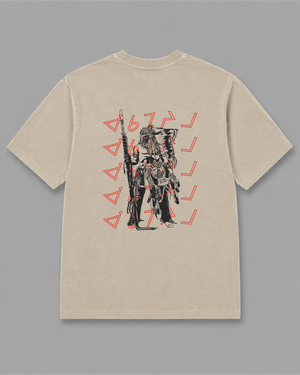
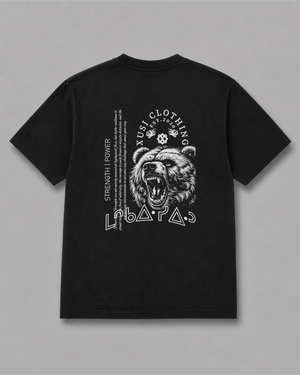
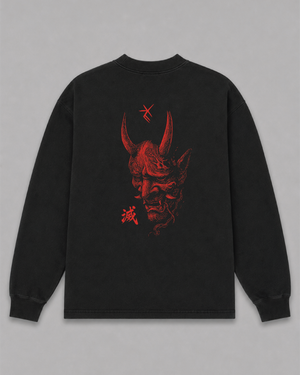
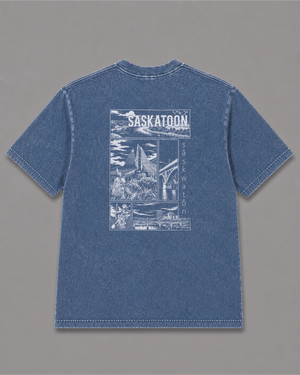
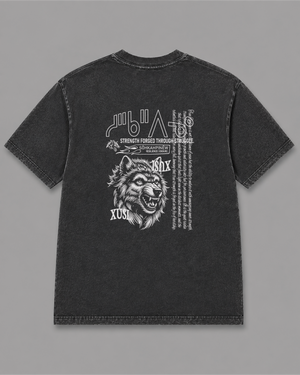
For summer rides and walks, our heavyweight 100% cotton tee, $49.95, has a generous fit, and an A-frame snapback, $44.95, shades your face. Canyon mornings can be cool, so our Black Oni long sleeve, $54.95, or a hoodie from $59.95 to $89.95 is worth packing.
Can a syilx community group or Kelowna run club order custom shirts for an event?
Yes. Our custom screen printing suits run days, walks and community gatherings. Orders start at 10 garments, with up to 4 colours per design, and every order is quoted before printing. We help with the design, print in Saskatoon and ship to Kelowna.
Last reviewed . Facts on this page come from the sources listed below.
Indigenous clothing from XUSI
Kelowna and the Central Okanagan can buy Indigenous clothing directly from XUSI, an Indigenous-owned company in Saskatoon that ships its hats, hoodies and tees over the Rockies.
Kelowna days often start on a trail and end by the lake, and we think our pieces fit that pattern. On a hot July ride along the Okanagan Rail Trail, our heavyweight cotton tee and an A-frame snapback handle the sun. For an early climb up the Knox Mountain network, the Black Oni long sleeve is a light layer. When fall colours reach the Myra Canyon trestles, one of our hoodies keeps the canyon wind off. On grey winter afternoons, the Revitalize Culture crewneck is an easy pick for a museum visit downtown. We ship every order from Saskatoon.