
Indigenous Mississauga: Mississaugas of the Credit Lands, Nations and Community
An introduction to Mississauga: its history, the Nations whose lands it sits on, and Indigenous community life today, with sources.
About Mississauga
West of Toronto in the Regional Municipality of Peel, Mississauga became a city in 1974 and is now the second-largest in the Greater Toronto Area. Its name honours the Mississaugas of the Credit, whose ancestors ceded the land through the Head of the Lake Treaty, No. 14, in 1806. At the midnight celebration of the new name on January 1, 1968, Chief Fred King of the Mississaugas of the Credit presented a medicine stick to the mayor, and the 1974 coat of arms includes a Mississauga figure. Huron-Wendat, Haudenosaunee and Anishinaabe peoples lived in the area for thousands of years before that. Toronto Pearson International Airport, established in the township in 1937, employs roughly 50,000 people, and companies such as Bell Canada and Canada Post keep major offices here. The Living Arts Centre is the main cultural venue, and the Credit River winds through the city on its way to Lake Ontario.
Mississauga history
The Mississaugas are part of the Anishinaabe, or Ojibwe, Nation. Their First Nation explains that the name comes from Missisakis, meaning many river mouths in Anishinaabemowin. Their territory once ran from Long Point on Lake Erie east to the Rouge River. The community centred on the mouth of the Credit River, where it meets Lake Ontario. The river's English name reflects that history. English fur traders extended credit to the Mississaugas, trusting them to repay their debts each spring. Peter Jones, known as Kahkewaquonaby, was born in 1802 to a Mississauga mother and a surveyor father. After converting to Christianity in 1823, he became the first Indigenous Methodist missionary to the Ojibwa. He was elected chief of two Ojibwa bands and argued forcefully for Indigenous land rights. With his brother John, he worked on early Bible translations into Ojibwa. By the 1840s, settlers far outnumbered the Mississaugas on the Credit. Talks about moving began in 1840. In May 1847, about 266 people relocated to 4,800 acres in Tuscarora Township, a gift from the Six Nations Confederacy. That land became New Credit. The First Nation bought it outright in 1903 for $10,000.
Treaty and territory
Mississauga is on the treaty lands and territory of the Mississaugas of the Credit First Nation, and the traditional territory of the Anishinaabe, Haudenosaunee and Huron-Wendat peoples.
Nearby: Mississaugas of the Credit First Nation · Brampton · Oakville · Milton · Toronto
Indigenous Mississauga today
The Mississaugas of the Credit First Nation now lives on a reserve of about 6,100 acres near Hagersville. It is all that remains of the Nation's historic territory. Membership is about 2,570, and nearly two-thirds of members live off reserve. In 2010 the Nation settled its Toronto Purchase and Brant Tract claims for $145 million. The Nation also helped launch the Moccasin Identifier project with Carolyn King. The project places moccasin markers across Canada as reminders of treaties and Indigenous relationships to the land. Its goal is to cover Canada in moccasins. In Mississauga, National Indigenous Peoples Day has become an annual gathering at Celebration Square. Heritage Mississauga described the 2025 edition as the fourth annual event, held with the Mississaugas of the Credit First Nation. The lineup included Inuk artist Tanya Tagaq, the Manitou Mkwa Singers and local artist MR. SAUGA. Hand drumming, throat singing, hip-hop, an artisan marketplace and food vendors filled the square. Heritage Mississauga also gathers Indigenous oral histories through its Voices of the Land project. It shares teaching resources, including a comic called Legend of the Credit Mission. Its land acknowledgement recognizes the Treaty Lands and Territory of the Mississaugas of the Credit.
Life in Mississauga
Mississauga had 717,961 residents in 2021, making it the seventh-largest city in Canada. It had just 234,975 people in 1975, and it is projected to reach 930,800 by 2051. The city itself joined older places together. Streetsville became a municipality in 1858 and Port Credit in 1914. Both merged with the Town of Mississauga in 1974. Beyond the airport, the city hosts major employers such as FedEx, General Mills, IMAX, Microsoft and Sobeys. The Paramount Fine Foods Centre is home to Raptors 905, the NBA G League team. The Small Arms Inspection Building recalls the city's Second World War industry. Sport has deep roots here. Tennis champion Bianca Andreescu, Olympic rower Silken Laumann and hockey goalie Johnny Bower all have ties to the city. On the waterfront, the Jim Tovey Lakeview Conservation Area is part of Heritage Mississauga's work on restoring shorelines and Indigenous placemaking.
Mississauga seasons and weather
Mississauga shares the Lake Ontario climate of the GTA: humid summers, changeable spring and fall, and cold winters with snow and ice. A hoodie paired with a shell or winter coat covers most of the year.
More on the region: Indigenous Ontario · all of Canada.
Keep learning in the XUSI Journal
- First Nations, Métis and Inuit: What’s the Difference?
- How to Write a Land Acknowledgement That Means Something
- Orange Shirt Day & the National Day for Truth and Reconciliation
- National Indigenous Peoples Day and History Month: A Guide
- All Journal articles
Mississauga questions
Can I send a XUSI hoodie as a gift to someone in Mississauga?
Yes. Enter their Mississauga address at checkout, where the shipping cost is calculated. Orders leave Saskatoon within 1–3 business days.
What if the size is wrong on an order shipped to Mississauga?
You can request a return within 30 days.
Can a Mississauga school order shirts for a treaty education project?
Yes. Our custom screen printing starts at 10 garments, with up to 4 colours per design, and every order is quoted before printing. Design help is included. If your class wants a design that references the Mississaugas of the Credit, we recommend working with the Nation on its imagery and wording.
What would you wear to National Indigenous Peoples Day at Celebration Square?
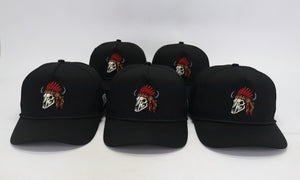
The celebration falls on June 21, often a warm and humid day by Lake Ontario. A heavyweight cotton tee or our women's baby rib tee keeps you comfortable outdoors. Add an A-frame snapback for sun while you browse the artisan marketplace and watch the performances.
Last reviewed . Facts on this page come from the sources listed below.
Indigenous clothing from XUSI
Mississauga, one of the biggest cities in the country, sits within easy reach of XUSI. The Indigenous-owned clothing brand ships tees, hoodies and hats from Saskatoon to homes across Peel Region.
Mississauga life runs from the Port Credit lakeshore to game nights downtown. We dress for the whole range. A heavyweight 100% cotton tee and an A-frame snapback suit a humid June 21 at Celebration Square. For a fall walk along the Credit River trails, add the Black Oni long sleeve. When winter brings snow and ice, a hoodie from our $59.95 to $89.95 range works under your coat on the commute. The Golden Era ringer tee is a relaxed pick for a Raptors 905 game. Many of our designs carry a Cree word and its story, a different tradition from the Anishinaabe history of the Credit River.