
Indigenous Ontario: Treaties, Nations and Community
An introduction to Ontario: its history, its Nations and treaties, and Indigenous community life today, with sources.
About Ontario
Ontario is Canada’s most populous province, bordered by four of the Great Lakes and Hudson Bay, with the Canadian Shield covering much of its north. The Canadian Encyclopedia counts 128 First Nations in the province, the majority of them Anishinaabe, with Cree communities in the north, Haudenosaunee nations in the south and east, and Lenape, Oji-Cree and Algonquin communities as well. The Ontario government notes that more than 40 treaties and land agreements cover the province, among them the Robinson-Superior and Robinson-Huron treaties of 1850, the James Bay Treaty (Treaty 9) of 1905 to 1906 and the Williams Treaties of 1923. Wiikwemkoong on Manitoulin Island is the largest reserve by area, and Six Nations of the Grand River is among the most populous. Toronto is the capital and Ottawa the national capital; the province’s economy spans finance, manufacturing, mining and agriculture.
Ontario history
People have lived in what is now Ontario for about 11,000 years, arriving as the last ice age ended. Pottery appeared by 1000 BCE. By 800 CE, the Wendat and Haudenosaunee living south of the Canadian Shield were well-established farmers. Étienne Brûlé and Samuel de Champlain travelled the Ottawa River in 1613 and reached the centre of the province in 1615. The French built fur trade alliances with the Wendat, Innu and Algonquin. Haudenosaunee raids between 1642 and 1649 dispersed the Wendat, and raids in 1650–51 scattered the Neutral. After the American Revolution, some 6,000 to 10,000 Loyalists arrived. The Constitutional Act of 1791 created Upper Canada, with John Graves Simcoe as its first lieutenant-governor. Land passed to the Crown through a long run of Upper Canada treaties. The Niagara Purchase of May 1781 covered a four-mile strip on the west side of the Niagara River. The Toronto Purchase was revisited in 1805, and that claim was settled with Canada in 2010 for $145 million. Ontario joined Confederation in 1867 as a founding province. Treaty 3 followed in 1873, and each Chief who signed was given a medal and a flag. The western boundary was confirmed at Lake of the Woods in 1889, at Manitoba's expense, and the final boundary was drawn in 1912.
Treaty and territory
Ontario is covered by more than 40 treaties and land agreements, from the Upper Canada treaties in the south to Treaty 9 in the north. It is home to Anishinaabe, Haudenosaunee, Cree, Lenape and Métis people, and has the largest Indigenous population of any province.
Nearby: Toronto · Ottawa · Thunder Bay · Sudbury · Six Nations of the Grand River · Wiikwemkoong Unceded Territory
Regions of Ontario
Ontario's treaty map roughly follows its geography. Across the south, dozens of Upper Canada treaties cover the Great Lakes and St. Lawrence lowlands, and about 92% of Ontarians live in that area. The McKee Purchase of 1790 is the southernmost, reaching Point Pelee. Treaty 45, signed at Manitowaning in 1836, covered most of Manitoulin Island. Wikwemikong did not sign the later Manitoulin Island Treaty of 1862. Mohawk communities received Crown grants after the American Revolution, near present-day Deseronto in 1784 and around Brantford and Caledonia in 1793. The St. Regis Purchase of 1847 covered a corridor near Cornwall. The Canadian Shield and the far north fall under larger treaties. The Robinson treaties were meant to open the Lake Superior and Lake Huron shores to mineral exploration. Northwestern Ontario around Kenora, Red Lake and Sioux Lookout sits in Treaty 3, which gained a Métis adhesion in 1875. A small northwestern corner belongs to Treaty 5, which mostly covers Manitoba and Saskatchewan. The 1929–30 adhesion extended Treaty 9 from the Albany River to Hudson Bay, making it the province's largest treaty area. More than 500,000 people live in the six treaty areas of Northern Ontario.
Indigenous Ontario today
Ontario has the largest Indigenous population of any province, although Indigenous people make up about 2.8% of its residents. The province counts 133 First Nations communities and seven historic Métis communities. Chiefs of Ontario is the advocacy organization supporting all 133 First Nations as they assert sovereignty and jurisdiction. It works with Anishinaabek, Mushkegowuk, Onkwehonwe and Lenape Peoples. Its direction comes from Chiefs in Assembly, a Leadership Council of Grand Chiefs, and an elected Regional Chief. The Métis Nation of Ontario was founded in 1993. Its registry holds more than 28,000 Métis citizens, and about 30 chartered community councils operate across the province. It runs more than 30 service access points, with branches for healing and wellness, education and training, and housing. The Métis Nation of Ontario Cultural Commission supports Métis culture. In towns and cities, Friendship Centres do much of the day-to-day work. The Ontario Federation of Indigenous Friendship Centres was founded in 1971 to support member centres. It delivers programs for children and youth, education, employment, health, homelessness and justice. It also offers Indigenous Cultural Competency Training.
Life in Ontario
Ontario covers more than 1 million square kilometres and spans two time zones. It stretches 1,691 km from north to south and 1,568 km from east to west. Forests cover about 66% of the province, and its more than 250,000 lakes hold about one-fifth of the world's fresh water. Algonquin Provincial Park, established in 1893, was Ontario's first provincial park. Its 7,635 square kilometres of maple hills, rocky ridges, bogs and lakes draw canoeists, trout anglers and moose watchers. Fall colour brings photographers, and winter brings cross-country skiing, snowshoeing and winter camping. More than 85% of Ontarians live in urban centres, and the Greater Golden Horseshoe alone holds over 9 million people. The province generates 37% of Canada's GDP. It is the second largest vehicle-producing jurisdiction in North America. Mining contributes over $14 billion a year, and the 2021 census counted 48,346 farms.
Ontario seasons and weather
Southern Ontario has humid summers and slushy, variable winters near the lakes, while the north gets deep, sustained cold. A hoodie and hat cover the damp southern shoulder seasons; northern winters call for serious layering.
Communities in Ontario
- Toronto
- Ottawa
- Hamilton
- London
- Thunder Bay
- Sudbury
- Mississauga
- Kitchener-Waterloo
- Windsor
- Kingston
- Sault Ste. Marie
- Kenora
- Timmins
- Barrie
- Brantford
- North Bay
- Peterborough
- Sioux Lookout
Keep learning in the XUSI Journal
- The Numbered Treaties, Explained
- Nêhiyawêwin: A Beginner's Guide to the Cree Language
- First Nations, Métis and Inuit: What’s the Difference?
- How to Write a Land Acknowledgement That Means Something
- All Journal articles
Ontario questions
Can I send a hoodie as a gift to someone in Ontario?
Yes. Just enter their Ontario address at checkout. Shipping is calculated there, orders of $90 or more ship free within Canada, and if the size is off, returns can be requested within 30 days.
What does a custom run for a Toronto Indigenous student association involve?
The minimum is 10 garments. Designs can have up to 4 colours and fit a screen of up to 23 by 31 inches, design help is included, and every order is quoted before printing. We print in Saskatoon and ship to Ontario.
Which XUSI pieces work for a canoe trip in Algonquin Park?
For paddling and portaging between Algonquin's lakes, a heavyweight 100% cotton tee ($49.95) handles warm afternoons. An A-frame snapback ($44.95) keeps the sun off your face on open water. Since the park is open in every season, pack a hoodie for cool evenings at an interior campsite.
Do your designs connect to Cree communities in northern Ontario?
Many of our designs carry a Cree word and the story behind it, which you can read on our meanings page. That can make a thoughtful gift for someone in one of the Mushkegowuk communities of Ontario's far north. Reading the story first helps you choose a word that means something to them.
Last reviewed . Facts on this page come from the sources listed below.
Sources for this page
- Ontario – The Canadian Encyclopedia
- Map of Ontario treaties and reserves – Government of Ontario
- Treaties – Government of Ontario
- About Ontario – Government of Ontario
- Algonquin Provincial Park – Ontario Parks
- About – Chiefs of Ontario
- About the MNO – Métis Nation of Ontario
- Ontario Federation of Indigenous Friendship Centres
Indigenous clothing from XUSI
In Ontario, from Toronto condos to Treaty 9 communities along James Bay, you can wear Indigenous-owned design. XUSI works out of Saskatoon, Saskatchewan, and ships its printed hoodies, tees and hats to every corner of the province.
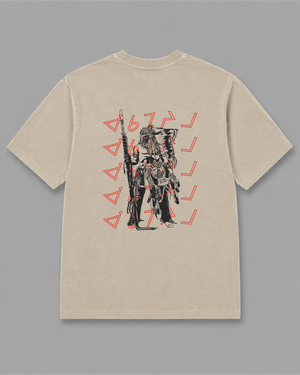
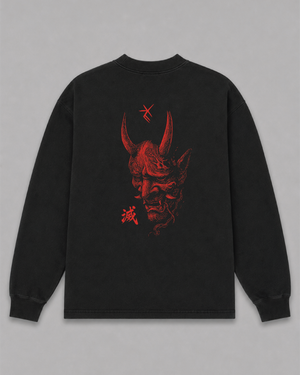
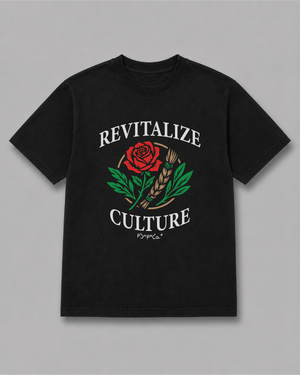
Ontario's seasons pull in different directions, and we build pieces that keep up. A heavyweight cotton tee handles a humid July in the Golden Horseshoe or a portage between Algonquin lakes. Its generous fit leaves room to layer. When the maples turn on the Shield, the Revitalize Culture crewneck suits fall-colour hikes and chilly campsite evenings. Up north, a hoodie becomes the base layer under a parka through long Thunder Bay and Timmins winters. An A-frame snapback shades you on open water during a canoe trip. The Black Oni long sleeve covers those damp weeks when the lakes are just losing their ice. For family spread across this huge province, a digital gift card saves guessing sizes.