
Indigenous Moncton: Mi’kma’ki, Nations and Community
An introduction to Moncton: its history, the Nations whose lands it sits on, and Indigenous community life today, with sources.
About Moncton
Moncton grew on a bend of the Petitcodiac River in southeastern New Brunswick, within Mi’kmaw territory. Twice a day, Bay of Fundy tides push a tidal bore up the river, a single wave that can reach half a metre to a metre and is best watched from Bore Park downtown. Long nicknamed the Hub of the Maritimes, the city built its economy on shipbuilding and the Intercolonial Railway before shifting toward distribution, telecommunications and technology. In 2002 Moncton became the first officially bilingual city in Canada, and Acadian culture is strong here. The Université de Moncton, founded in 1963, is a French-language institution whose law school was the first in the world to teach common law in French. Magnetic Hill is a well-known attraction. The nearest Mi’kmaw communities are Amlamgog (Fort Folly), southeast of the city, and Elsipogtog, farther north on the Kent County coast.
Moncton history
Moncton was founded on the traditional territory of the Mi'kmaq. The river that shapes the city carries a Mi'kmaw name: Petitcodiac has been translated as bends like a bow. Acadians were the first European settlers. Around 1733 they farmed a small community they called Le Coude, the elbow, after the river's sharp turn. In 1766, eight Pennsylvania German families arrived to re-establish farming there. Among them were the Steeves, Trites, Lutes and Wortman families, and they called their settlement The Bend. The city's current name was first used in the 1860s and honours Robert Monckton, a British commander. Shipbuilding set the pace in the mid-1800s. George and Joseph Salter opened a shipyard in 1849, and by 1850 the town had become a port of entry. Moncton incorporated in 1855. When shipbuilding collapsed, it gave up its civic charter in 1862. The railway revived it. In 1871 the Intercolonial Railway made Moncton its headquarters. The community reincorporated as a town in 1875 and became a city on April 23, 1890. In 2016 the city had 71,889 residents, within a greater region of 144,810.
Treaty and territory
Moncton is in Mi’kma’ki, the ancestral and unceded territory of the Mi’kmaq, covered by the Peace and Friendship Treaties.
Nearby: Dieppe · Riverview · Amlamgog (Fort Folly First Nation) · Elsipogtog First Nation · Tjipõgtõtjg (Buctouche First Nation)
Indigenous Moncton today
The 2021 census counted 2,080 Indigenous residents in Moncton, about 2.69 per cent of the city. The City has also commissioned its first Indigenous public art installation. The closest Mi'kmaw community is small but long-established. Fort Folly First Nation, near Dorchester, holds one reserve of about 56 hectares, set aside in 1840 under New Brunswick law. In June 2025 it counted 141 members, most of them living off reserve. Farther north in Kent County, Elsipogtog First Nation is much larger. Its registered population was 3,574 in April 2023. The community was formerly called the Big Cove Band, and its name means River of Fire. Its Richibucto 15 reserve dates from 1805. Its two reserves cover 17.72 square kilometres, and 2,736 members lived on reserve in 2023. Census data show that 56.9 per cent of residents speak Mi'kmaq. Elsipogtog drew national attention in 2013, when community members and supporters blocked roads to oppose shale gas exploration. In 2021 it won Kraft Hockeyville, bringing arena funding and an NHL preseason game in October 2022.
Life in Moncton
Moncton's weather has range. The record high reached 37.8°C on August 18 and 19, 1935, and the record low fell to −37.8°C on February 5, 1948. Sports and big events centre on the Avenir Centre, an 8,800-seat arena. It is home to the Moncton Wildcats of the Quebec Maritimes Junior Hockey League. The city has also hosted international competitions, including the 2026 NORCECA men's continental volleyball championship. For time outside, the Riverfront Trail forms part of the Trans Canada Trail. Centennial Park, Irishtown Nature Park and Jones Lake add more green space. Families head to the Magnetic Hill Zoo. Resurgo Place serves as the city's museum. The Moncton Market has hosted autumn Harvest Days, and the city has hosted the Legs for Literacy marathon in October.
Moncton seasons and weather
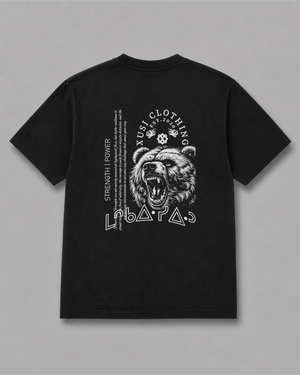
Winters in Moncton bring real cold and plenty of snow, while summers are warm and humid. A heavyweight hoodie and a hat cover the colder months, and tees carry you through July.
More on the region: Indigenous New Brunswick · all of Canada.
Keep learning in the XUSI Journal
- First Nations, Métis and Inuit: What’s the Difference?
- How to Write a Land Acknowledgement That Means Something
- Orange Shirt Day & the National Day for Truth and Reconciliation
- National Indigenous Peoples Day and History Month: A Guide
- All Journal articles
Moncton questions
How soon does an order leave for Moncton?
Orders ship from Saskatoon and generally leave within 1–3 business days. Shipping cost to New Brunswick is calculated at checkout, and orders of $90 or more ship free within Canada.
Can you print our Moncton event logo in more than one colour?
Designs can use up to 4 colours with a minimum of 10 garments, and every order is quoted before printing. We help with the design, print in Saskatoon on screens up to 23x31 inches, and ship the finished order to you.
Can a Moncton-area Mi'kmaw group or school order printed shirts in both English and French?
Yes. Custom screen printing starts at 10 garments, with up to 4 colours per design, and every order is quoted before printing. Your artwork can include text in any language you provide. Design help is included, and we ship the order from Saskatoon.
Does XUSI make designs in Mi'kmaw for customers in New Brunswick?
No. Our designs carry Cree words, each with its story on our meanings page, because we are a Indigenous-owned company based in Saskatoon. We do not speak for Mi'kmaw culture. A Mi'kmaw group near Moncton that wants its own design can work with us through custom screen printing.
Last reviewed . Facts on this page come from the sources listed below.
Indigenous clothing from XUSI
Moncton shoppers can wear a piece of the Prairies: XUSI designs and prints in Saskatoon as an Indigenous-owned company, then ships its hats, tees and hoodies to the Hub of the Maritimes.
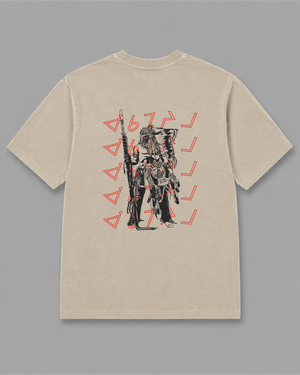
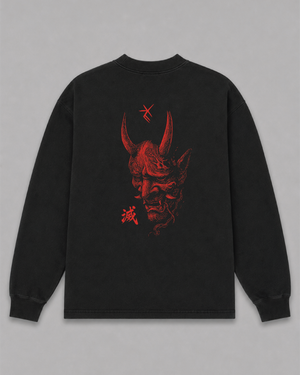
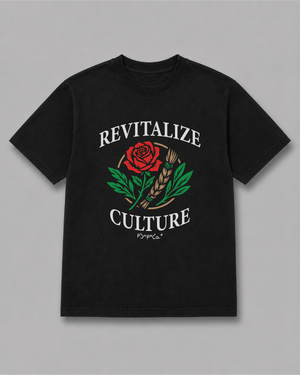
Moncton's mix of river wind, winter snow and humid summers calls for flexible layers, and we'd plan around them. On a cold walk along the Riverfront Trail to catch the tidal bore, a heavyweight hoodie and a toque do the work. At a Wildcats game in the Avenir Centre, our Revitalize Culture crewneck fits right in. Summer mornings at the Moncton Market suit a Golden Era ringer tee and an A-frame snapback. The Black Oni long sleeve is a smart layer for an October Harvest Days visit when the air turns crisp.