
Indigenous Sudbury: Robinson-Huron Treaty, Nations and Community
An introduction to Sudbury: its history, the Nations whose lands it sits on, and Indigenous community life today, with sources.
About Sudbury
Formed on January 1, 2001, when the former Regional Municipality of Sudbury and its towns merged, Greater Sudbury covers a broad sweep of lakes, rock and forest in northeastern Ontario. Mining built the city, and its regreening of damaged land and lakes since the late 1970s has earned worldwide recognition. Science North and Dynamic Earth anchor tourism, and the Big Nickel is a familiar landmark. Laurentian University, Cambrian College and Collège Boréal provide post-secondary education. The lands are covered by the Robinson-Huron Treaty of 1850, and two signatory nations neighbour the city: Atikameksheng Anishnawbek, west near Lively, and Wahnapitae First Nation on Lake Wahnapitei. Chief Shawenekezhik signed the treaty on behalf of his people. N’Swakamok Native Friendship Centre traces its roots to 1967 and the Nickel Belt Indian Club, and it has owned its downtown Elm Street building since 1982.
Sudbury history
People have lived in the Sudbury area for at least 9,000 years. For centuries before European contact, Anishinaabemowin-speaking peoples, including Algonquin and Ojibwa bands, held the region. The Robinson-Huron Treaty was signed at Sault Ste. Marie on September 9, 1850. Crown commissioner William Robinson negotiated with chiefs including Shinguakonse, a War of 1812 veteran who helped found Garden River First Nation. The treaty covers the land east of Georgian Bay and along the north shore of Lake Huron. Ontario notes the Crown wanted to open the area to mineral exploration and mining. It was one of two Robinson Treaties that year, alongside the Robinson-Superior Treaty. Sault Ste. Marie, North Bay and Kirkland Lake also lie within the Robinson-Huron area. The town itself began with the Canadian Pacific Railway. In the winter of 1882 and 1883, about 3,350 workers arrived, and the first buildings were up by that March. The Canadian Copper Company formed in 1886. In 1902 it merged with Orford Refining to create the International Nickel Company. The population, just 2,027 in 1901, doubled each decade through the 1930s.
Treaty and territory
Greater Sudbury is on the traditional territory of the Atikameksheng Anishnawbek, covered by the Robinson-Huron Treaty of 1850.
Nearby: Atikameksheng Anishnawbek · Wahnapitae First Nation · Sagamok Anishnawbek · Espanola · Markstay-Warren
Indigenous Sudbury today
Atikameksheng Anishnawbek, about 19 kilometres west of the city, has 1,720 members. Its people descend from the Ojibway, Algonquin and Odawa Nations. About 80 per cent of members live off reserve, and most of those live in Greater Sudbury. The Nation calls Anishinabemowin the strength of the Nation and builds its programs around Mino Bimaadiziwin, the Good Life. It runs education, health, youth, family and Elder programs. Wahnapitae First Nation, an Ojibway Anishinabek community on Lake Wahnapitei, has more than 170 residents and over 700 members around the world. In the 2021 census, 11 per cent of Greater Sudbury residents identified as Indigenous. The city's land acknowledgement also honours Métis, Inuit and other Indigenous peoples, and the city recognizes the National Day for Truth and Reconciliation. Laurentian University calls itself tricultural, serving English, French and Indigenous communities. It offers more than 30 programs with Indigenous content, from certificates to full degrees. Its School of Indigenous Relations, Indigenous Student Affairs office and Indigenous Sharing and Learning Centre support students on campus.
Life in Sudbury
Greater Sudbury had 166,004 residents in 2021. French is a big part of daily life, with 22.6 per cent of residents reporting it as their mother tongue. The city sits on one of the world's great geological features. The Sudbury Basin was formed by a large meteorite impact about 1.8 billion years ago. It measures roughly 60 by 30 kilometres and holds major deposits of nickel, copper and platinum. Those deposits made the city a world centre of mining. By 1915 Sudbury mines supplied 80 per cent of the world's nickel. Sudbury has also become a model for environmental recovery. Between 1978 and 2017, regreening work restored more than 3,400 hectares of damaged land. Over the same years, 9.7 million trees were planted across the city.
Sudbury seasons and weather
Sudbury’s inland location brings cold, snowy winters and short, warm summers. A heavy hoodie under a parka is common from November to April, and a light layer helps on cool summer evenings by the lake.
More on the region: Indigenous Ontario · all of Canada.
Keep learning in the XUSI Journal
- First Nations, Métis and Inuit: What’s the Difference?
- How to Write a Land Acknowledgement That Means Something
- Orange Shirt Day & the National Day for Truth and Reconciliation
- National Indigenous Peoples Day and History Month: A Guide
- All Journal articles
Sudbury questions
What does it cost to ship a XUSI order to Sudbury?
Shipping is calculated at checkout. If your order totals $90 or more, it ships free within Canada, including to Greater Sudbury.
Can our Sudbury workplace get a logo printed on hoodies?
Yes. Screen printing starts at 10 garments, with up to 4 colours per design and a maximum screen size of 23x31 inches. Every order gets a full quote before anything is printed, and design help is included.
Could a Laurentian Indigenous student group order custom hoodies?
Yes. Custom screen printing starts at 10 garments, with up to 4 colours per design, and every order is quoted before printing. Design help is included. We print in Saskatoon and ship the finished order to Greater Sudbury, which suits a student association, a residence floor or a program cohort.
Do XUSI designs use Anishinaabemowin?
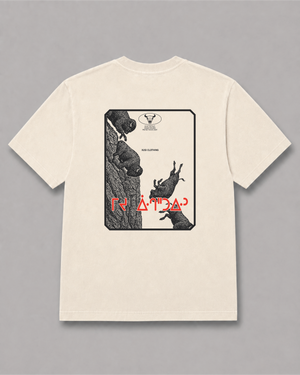
Many of our designs carry a Cree word, since XUSI is a Indigenous-owned brand from Saskatoon. The story behind each word is on our Meanings page. Sudbury's Nations, Atikameksheng Anishnawbek and Wahnapitae, have their own Anishinaabe language and culture, and our designs speak from ours.
Last reviewed . Facts on this page come from the sources listed below.
Indigenous clothing from XUSI
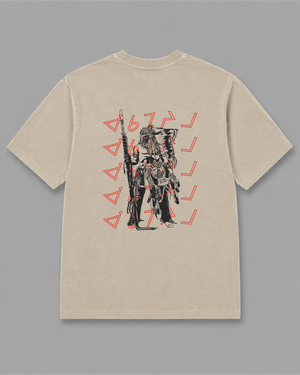
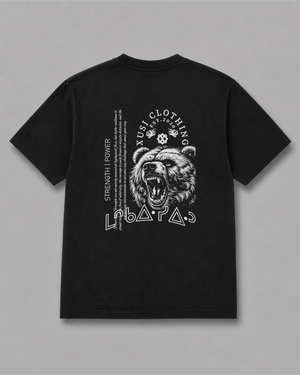
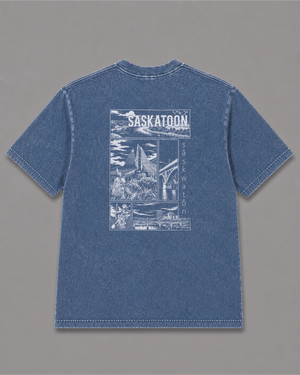
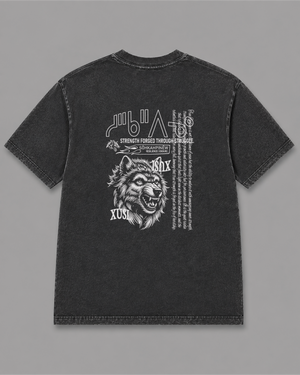
Greater Sudbury customers can have XUSI tees, hoodies and hats mailed right to their door. Everything leaves from Saskatoon, where this Indigenous-owned brand makes its home.
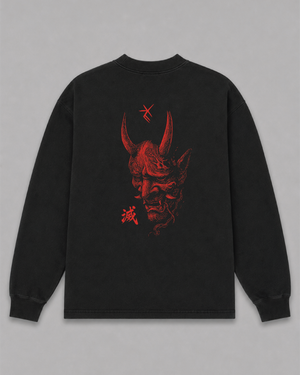
Sudbury is a rock-and-lake city with real winters. Paddling a local lake on a July weekend, keep it light with a generous-fit cotton tee. A snapback blocks the sun off the water. The Black Oni long sleeve is a good match for fall hikes over the Shield rock and regreened hills. Crossing the Laurentian campus in a January snowfall, tuck our Revitalize Culture crewneck under your parka. A Golden Era ringer suits a summer afternoon downtown. Our Saskatoon shop can also print custom hoodies for Sudbury groups, from a student association to a mine crew or a minor hockey team.