
Indigenous Thunder Bay: Robinson-Superior Treaty, Nations and Community
An introduction to Thunder Bay: its history, the Nations whose lands it sits on, and Indigenous community life today, with sources.
About Thunder Bay
Facing Lake Superior, with the Sleeping Giant, or Nanabijou, stretched across the bay on the Sibley Peninsula, Thunder Bay is northwestern Ontario’s largest city and one of Canada’s busiest ports. It lies on Anishinaabe territory covered by the Robinson-Superior Treaty of 1850, beside Fort William First Nation, and has the highest proportion of Indigenous residents among major Canadian cities. Health care, education and public administration are key employers today. Lakehead University and Confederation College serve students from across the north. Nishnawbe Aski Nation, representing 51 First Nations in Treaty 9 and Treaty 5 territory, keeps its administrative offices in the city. The Fort William First Nation Powwow takes place each summer at Anemki Wajiw, also known as Mount McKay, and Anishinaabe Keeshigun celebrates culture and language every August. The Thunder Bay Indigenous Friendship Centre also serves the urban community.
Thunder Bay history
People have lived at the head of Lake Superior for a very long time. About 10,000 years ago, at the end of the last glaciation, hunters followed caribou herds into the Thunder Bay area. The Ojibway of Fort William First Nation signed the Robinson-Superior Treaty and still live on the lake's western shore. The fur trade came early. In 1683, French trader Daniel Dulhut built Fort Caministigoyan beside the Kaministiquia River. In 1803 the North West Company built Fort William, the first permanent European settlement on the bay. Until 1821, it served as the company's key inland headquarters. A second town grew just to the north. Engineer Simon Dawson set up a camp there in 1869, and a year later it became Prince Arthur's Landing. In 1883 it was renamed Port Arthur, when the Canadian Pacific Railway built its first grain elevator there. For decades, the two towns grew side by side along the bay. In 1970, Fort William and Port Arthur were joined as the city of Thunder Bay. Fort William First Nation has since renewed its 1988 band membership code as part of a five-year constitutional development plan.
Treaty and territory
Thunder Bay is on the traditional territory of the Anishinaabe of Fort William First Nation, covered by the Robinson-Superior Treaty of 1850.
Nearby: Fort William First Nation · Red Rock Indian Band · Oliver Paipoonge · Shuniah · Neebing
Indigenous Thunder Bay today
Many young people from northern First Nations come to Thunder Bay for high school. The Northern Nishnawbe Education Council was founded in 1978 on the principle that Indigenous people should be able to self-determine their youth's education. It operates Dennis Franklin Cromarty High School in the city, alongside Pelican Falls First Nations High School and the Wahsa Distance Education Centre. It serves young people from Sioux Lookout District First Nations who study away from their home reserves, and oversees boarding homes for them. At Lakehead University, the Indigenous Student Services Centre supports students on the Thunder Bay campus. The university also runs the Niijii Indigenous Mentorship program, a Global Indigenous Speakers Series and an Indigenous Content Requirement. Fort William First Nation describes its mission as promoting the physical, mental, emotional and spiritual well-being of its people. It manages Anemki Wajiw through its property management department and says its sovereignty rests in its relationship with the land. Indigenous art has a public home here too. The Thunder Bay Art Gallery focuses on contemporary work by Indigenous and Northern Ontario artists. Its permanent collection holds more than 1,800 works, including pieces by Norval Morrisseau.
Life in Thunder Bay
Thunder Bay counted 108,843 people in the 2021 census. Health care and social assistance, retail, education and public administration employ the most residents. Fur trade history is easy to explore. Fort William Historical Park has 50 reconstructed buildings and structures, including an Anishinaabe encampment. It is also home to the David Thompson Astronomical Observatory, one of the largest publicly accessible telescopes in central Canada. Nearby, Kakabeka Falls Provincial Park was established in 1957. Its 40-metre falls are the second highest in Ontario, on the historic route of the voyageurs. The Kaministiquia River has cut deep into the rock there, exposing ancient fossils at the base of the falls. The Thunder Bay Art Gallery opened in 1976 as one of 26 national exhibition centres. It welcomes more than 30,000 visitors a year, and a new waterfront gallery marks its next chapter. The Thunder Bay Historical Museum and the Founders' Museum add more local history.
Thunder Bay seasons and weather
Winters on the north shore of Lake Superior are long and cold, and the big lake can keep spring and early summer cool. Expect to wear a hoodie well into June and to add serious insulation from November onward.
More on the region: Indigenous Ontario · all of Canada.
Keep learning in the XUSI Journal
- First Nations, Métis and Inuit: What’s the Difference?
- How to Write a Land Acknowledgement That Means Something
- Orange Shirt Day & the National Day for Truth and Reconciliation
- National Indigenous Peoples Day and History Month: A Guide
- All Journal articles
Thunder Bay questions
Can I order XUSI hoodies to Thunder Bay?
Yes. Orders ship from Saskatoon, leaving within 1–3 business days, with shipping cost calculated at checkout. Spend $90 or more and shipping within Canada is free.
Is there a pickup option closer to Thunder Bay?
Local pickup is available only in Saskatoon, so Thunder Bay orders are shipped to you.
Can Dennis Franklin Cromarty or another Thunder Bay school order custom shirts?
Yes. Custom screen printing starts at 10 garments, with up to 4 colours per design, and every order is quoted before printing. Design help is included. We print in Saskatoon and ship to Thunder Bay, so give yourself extra time before graduation or a tournament.
Does XUSI make Anishinaabemowin designs for Thunder Bay?
Our designs carry Cree words, shared with their stories on our meanings page, because we are a Indigenous-owned company from Saskatoon. We do not make Anishinaabemowin designs or speak for Anishinaabe culture. A Thunder Bay group that wants its own design can use our custom printing, which includes design help.
Last reviewed . Facts on this page come from the sources listed below.
Sources for this page
Indigenous clothing from XUSI
On the shore of Lake Superior, Thunder Bay is a natural home for a warm hoodie, and XUSI ships them there along with tees and hats. The brand is Indigenous-owned and based in Saskatoon.
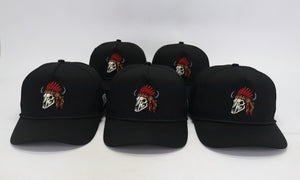
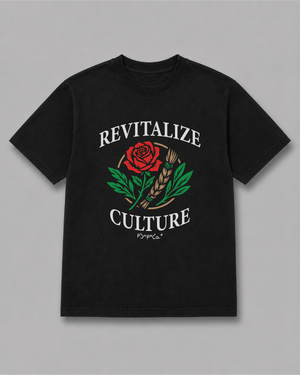
Lake Superior sets the rhythm of a Thunder Bay year, and we'd dress for it in layers. On a windy walk along the waterfront or a visit to Kakabeka Falls, a heavyweight hoodie keeps the lake chill off. When summer finally warms up for powwow season at Anemki Wajiw, a heavyweight cotton tee and an A-frame snapback make sense. The Black Oni long sleeve suits a cool evening at Fort William Historical Park or the observatory. For Lakehead or Confederation students facing a long winter, the Revitalize Culture crewneck is a warm layer under a parka.