
Indigenous Timmins: Treaty 9, Nations and Community
An introduction to Timmins: its history, the Nations whose lands it sits on, and Indigenous community life today, with sources.
About Timmins
Timmins took shape after the Porcupine gold rush, when Benjamin Hollinger, Sandy McIntyre and others made large discoveries in 1909. Incorporated as a town in 1912 and named for Mattawa merchant Noah Timmins, it became a city through amalgamation in 1973. The Hollinger, McIntyre and Dome mines built its early prosperity, and copper mining at the Kidd operations broadened the base from the 1960s. Northern College has a Timmins campus, and Collège Boréal and Université de Hearst share another. The city sits on the traditional lands of Anishinaabe and Mushkegowuk Cree peoples. The Timmins Native Friendship Centre, started in 1974 as a safe gathering place, provides cultural, health, education and recreation programs. Wabun Tribal Council, which serves Brunswick House, Chapleau Ojibwe, Flying Post, Matachewan and Mattagami First Nations, runs its operational office in Timmins and hosts cultural events through the year.
Timmins history
Timmins lies within Treaty 9, the James Bay Treaty, made in 1905 and 1906. Duncan Campbell Scott and Samuel Stewart represented Ottawa, and Daniel G. MacMartin, a mining specialist, represented Ontario. The Canadian Encyclopedia notes that the terms were explained in Ojibwe and Cree by Hudson's Bay Company staff or missionaries, with no real negotiation. In 1905, communities including Moose Factory, Fort Albany and New Post signed first. The 1906 signings included Matachewan, Mattagami, Flying Post, New Brunswick House, Chapleau and Abitibi. Each person received a one-time payment of $8 and a $4 annual annuity. The treaty's stated aim was to open northern Ontario to settlement, mining, lumbering and trade. Adhesions in 1929 and 1930 added about 331,500 square kilometres, and the treaty came to cover more than two-thirds of Ontario. Its original Ontario area had been about 233,100 square kilometres. Prospectors arrived in the Porcupine area in 1906, three years before the big gold finds. In 1911 fire destroyed the nearby town of South Porcupine. Timmins began as a company town and was officially incorporated on January 1, 1912.
Treaty and territory
Timmins is on Treaty 9 territory, the lands of the Cree and Anishinaabe (Ojibwe), and the homeland of the Métis.
Nearby: Mattagami First Nation · Matachewan First Nation · Iroquois Falls · Cochrane · Black River-Matheson
Indigenous Timmins today
The City of Timmins acknowledges the traditional territories of Mattagami, Flying Post and Matachewan First Nations. It names Ojibway, Cree, Oji-Cree, Algonquin and Métis peoples as part of the community. The Timmins Museum's acknowledgement also includes Inuit. To guide its reconciliation work, the city set up an Indigenous Advisory Council. Its Indigenous Engagement Framework rests on three themes. They are meeting humanitarian needs, acting on the Truth and Reconciliation Commission's recommendations, and building economic partnerships with neighbouring Indigenous communities. The city has signed a Memorandum of Understanding with Mushkegowuk Council based on open dialogue, mutual respect and cooperation. The city also directs residents to supports such as the national residential school crisis line. It works with the Métis Nation of Ontario, the Timmins Native Friendship Centre and the Ojibway and Cree Cultural Centre. Tourism Timmins lists Indigenous experiences alongside its arts, culture and outdoor adventures, making them part of how the city presents itself to visitors.
Life in Timmins
Timmins had 41,145 residents in the 2021 census, slightly down from 41,788 in 2016. It sits along the Mattagami River, about 290 kilometres northwest of Greater Sudbury, surrounded by lakes and rivers. Mining remains a focus. The McIntyre Community Centre hosts the Northeastern Ontario Mines and Minerals Symposium on October 7 and 8, 2026. The Timmins Museum: National Exhibition Centre is free and open all year. It includes the Hollinger House historic site, archives and virtual reality experiences. Outdoors, the choices run through every season. Tourism Timmins groups its outdoor adventures into ten categories. They include ATV riding, biking, fishing, hunting and paddling, and the city has three golf courses. Winter brings snowmobiling, downhill skiing at Mount Jamieson Resort and cross-country trails with the Porcupine Ski Runners.
Timmins seasons and weather
Timmins has long, snowy winters that regularly dip well below minus 20 degrees Celsius, and short, warm summers. A thick hoodie under an insulated coat is standard winter wear.
More on the region: Indigenous Ontario · all of Canada.
Keep learning in the XUSI Journal
- The Numbered Treaties, Explained
- Treaty Annuity Payments and Treaty Days, Explained
- Nêhiyawêwin: A Beginner's Guide to the Cree Language
- First Nations, Métis and Inuit: What’s the Difference?
- All Journal articles
Timmins questions
Is shipping to Timmins free?
It is once your order reaches $90, since orders at that amount ship free within Canada. Below that, the cost is calculated at checkout.
How long before my Timmins order leaves Saskatoon?
Orders leave within 1–3 business days.
Could a Timmins Indigenous organization or mine crew order custom printed hoodies?
Yes. Custom screen printing starts at 10 garments, with up to 4 colours per design, and every order is quoted before printing. Design help is included. We print in Saskatoon and ship the finished order to Timmins, which suits a program team, a workplace crew or an event.
Do XUSI designs use Cree words that people in the Timmins area might recognize?
Many of our designs carry a Cree word, and the story behind each one is on our Meanings page. Many of our designs carry a Cree word, with its story on our Meanings page. The Meanings page explains exactly what each design says.
Last reviewed . Facts on this page come from the sources listed below.
Indigenous clothing from XUSI
XUSI ships to Timmins, the gold-mining hub of northeastern Ontario. Tees, hoodies and hats from the Indigenous-owned Saskatoon label can be ordered online and sent north.
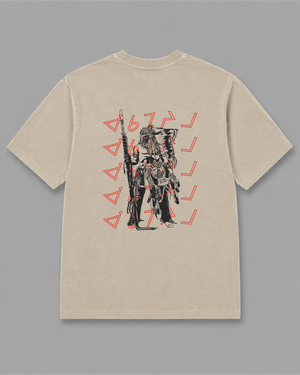
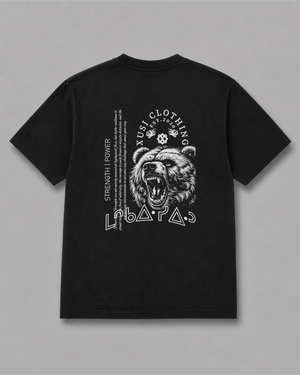
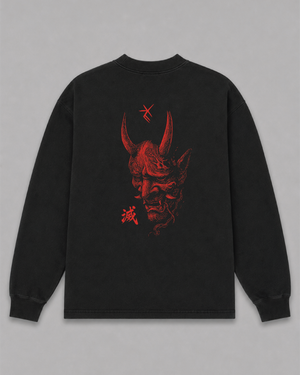
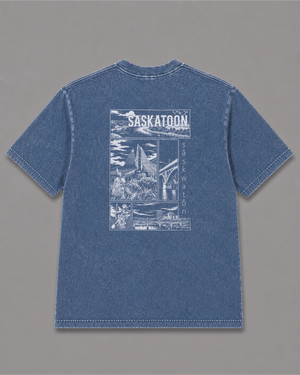
Timmins winters are long, so layering is a habit. Heading out on the Porcupine Ski Runners trails on a frosty morning, a hoodie makes a warm mid-layer. After a day on the snowmobile, the Revitalize Culture crewneck is cozy for dinner back in town. Once the Mattagami River opens for paddling, switch to a breathable heavyweight tee and pull a snapback low against the summer sun. Cool fall evenings on one of the city's three golf courses suit the Black Oni long sleeve. For Timmins groups, we print custom hoodies in Saskatoon, whether for a mine crew, a youth hockey team or a cultural program.