
Indigenous Vancouver: Unceded Territory, Nations and Community
An introduction to Vancouver: its history, the Nations whose lands it sits on, and Indigenous community life today, with sources.
About Vancouver
The City of Vancouver acknowledges that it sits on the unceded traditional territories of the xʷməθkʷəy̓əm (Musqueam), Sḵwx̱wú7mesh Úxwumixw (Squamish Nation) and səlilwətaɬ (Tsleil-Waututh) Nations. Located on the Burrard Peninsula between Burrard Inlet and the Fraser River, it is Canada’s most densely populated city and home to the country’s largest port. Film and television production is so active that the region is nicknamed Hollywood North. The University of British Columbia and Simon Fraser University anchor higher education, and the Museum of Anthropology at UBC holds important collections of Northwest Coast Indigenous art and belongings. The Vancouver Aboriginal Friendship Centre Society provides programs for the large urban Indigenous community. Stanley Park, covering about 405 hectares, sits next to downtown, and the surrounding mountains and temperate rainforest give the city its distinctive setting.
Vancouver history
The Canadian Encyclopedia says the Squamish, Musqueam and Tsleil-Waututh peoples settled here more than 8,000 years ago. Musqueam ancestors lived throughout the Fraser River estuary, and c̓əsnaʔəm is one of their major village sites. Their name, xʷməθkʷəy̓əm, comes from məθkʷəy̓, a flowering plant that once grew throughout their territory. The Squamish Nation notes that some of its village sites date back 3,000 years. Spanish explorer José María Narváez arrived in 1791. George Vancouver and Spanish expeditions followed in 1792. Fort Langley was established in 1827, and New Westminster was founded in 1859. Vancouver was incorporated on April 6, 1886. Just two months later, on June 13, the Great Fire destroyed much of the new town, and residents rebuilt quickly. The Canadian Pacific Railway's terminus arrived in 1887. Growth came in waves. The Klondike Gold Rush of 1897 and 1898 brought prosperity. After the First World War, the Panama Canal opened new trade routes to the port. The 1930s brought heavy unemployment, which ended when wartime shipbuilding took off. Expo 86 and the 2010 Winter Olympics later reshaped the city with major new infrastructure.
Treaty and territory
Vancouver is on the unceded territories of the xʷməθkʷəy̓əm (Musqueam), Sḵwx̱wú7mesh (Squamish) and səlilwətaɬ (Tsleil-Waututh) Nations.
Nearby: xʷməθkʷəy̓əm (Musqueam) · səlilwətaɬ (Tsleil-Waututh Nation) · Sḵwx̱wú7mesh Úxwumixw (Squamish Nation) · Burnaby · North Vancouver · Richmond
Indigenous Vancouver today
Vancouver became a City of Reconciliation on July 8, 2014. Council adopted a framework for working with the three host Nations and urban Indigenous communities. In October 2022 council approved a strategy to put the UN Declaration on the Rights of Indigenous Peoples into practice. Its five-year action plan began in June 2024. The city signed the Sen̓áḵw Services Agreement with the Squamish Nation in May 2022. In June 2023 it adopted the Sḵwx̱wú7mesh Protocol to guide how the two governments work together. For the tenth anniversary, Squamish artist Aaron Nelson Moody (Splash) designed a new reconciliation logo with Coast Salish elements. Musqueam has more than 1,300 members, many living on the reserve south of Marine Drive near the mouth of the Fraser. Its traditional language is hən̓q̓əmin̓əm̓. The Tsleil-Waututh, whose name means People of the Inlet, centre their community on Burrard Inlet between Maplewood Flats and Deep Cove. In their words, "When the tide went out, the table was set." In 2000 the Squamish Nation created X̱ay Temíxw, a land use plan for its territory.
Life in Vancouver
The 2021 census counted 662,248 people in the city and 2,642,825 in the metro area. That makes Vancouver the largest city in British Columbia and the eighth largest in Canada. The three host Nations' territories reach far beyond the city. Squamish lands cover 6,732 square kilometres, from Point Grey to the headwaters of the Elaho River near Whistler. Tsleil-Waututh territory spans about 1,865 square kilometres, north to Mount Garibaldi and east to Coquitlam Lake. Stanley Park, the city's first and largest park, is a stretch of West Coast rainforest ringed by the Seawall. It holds Canada's largest aquarium, beaches, gardens and a collection of First Nations totem poles. The city describes it as Vancouver's most beloved urban park, open from 6 a.m. to 10 p.m. daily.
Vancouver seasons and weather
Vancouver’s oceanic climate brings mild but very wet winters and cool summers, so a hoodie that layers under a rain shell gets far more use than a heavy parka.
More on the region: Indigenous British Columbia · all of Canada.
Keep learning in the XUSI Journal
- First Nations, Métis and Inuit: What’s the Difference?
- How to Write a Land Acknowledgement That Means Something
- Orange Shirt Day & the National Day for Truth and Reconciliation
- National Indigenous Peoples Day and History Month: A Guide
- All Journal articles
Vancouver questions
Does XUSI have a shop in Vancouver?
Orders ship from Saskatoon, which is the only place local pickup is offered. Shipping to Vancouver is calculated at checkout.
Can Vancouver organizations order large custom prints?
Custom screen printing goes up to a 23x31 inch screen, with up to 4 colours per design and a 10-garment minimum. Every order gets a full quote before anything is printed, design help is included, and orders are printed in Saskatoon and shipped to you.
Do XUSI designs use Coast Salish art or languages?
XUSI is an Indigenous-owned brand from Saskatoon, and many of our designs carry a Cree word, with the story on our Meanings page. Vancouver sits on Musqueam, Squamish and Tsleil-Waututh lands, whose art and languages belong to those Nations. Many of our designs carry a Cree word, with its story on our Meanings page.
Can a Vancouver reconciliation committee or school order shirts with our own design?
Yes. Custom screen printing starts at 10 garments, with up to 4 colours per design, and every order is quoted before printing. Design help is included. We print in Saskatoon and ship the order to Vancouver, so a committee or school can match for its next event.
Last reviewed . Facts on this page come from the sources listed below.
Indigenous clothing from XUSI
On the West Coast, Vancouver shoppers can order from XUSI, an Indigenous-owned brand that packs its tees, hoodies and hats in Saskatoon and ships them to the city’s neighbourhoods.
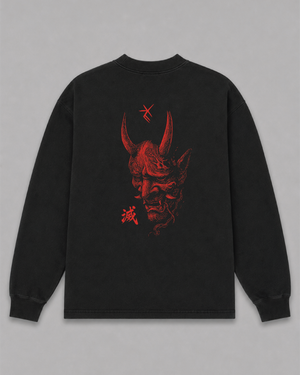
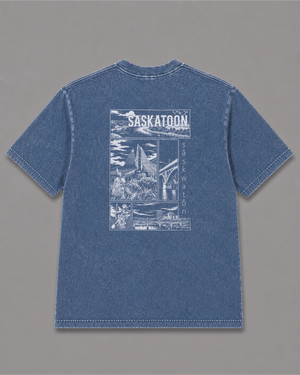
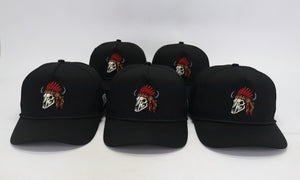
Vancouver weather rewards layering over bulk. On a grey morning ride along the Stanley Park Seawall, a hoodie under a light shell keeps you warm without overheating. The Black Oni long sleeve is right for damp spring walks in the park's rainforest. When the sun finally breaks over English Bay, swap down to our generous-fit cotton tee and add a snapback. For an evening out downtown, the Revitalize Culture crewneck dresses up well. Our Saskatoon print shop can also ship custom runs to the coast for a Vancouver running club, a school team or a volunteer crew.