


Indigenous Yarmouth: Keespukwitk, Nations and Community
An introduction to Yarmouth: its history, the Nations whose lands it sits on, and Indigenous community life today, with sources.
About Yarmouth
Yarmouth had 6,829 residents in the 2021 census, living on about 10.6 square kilometres. The town sits at the western tip of Nova Scotia. Fishing and processing drive the economy, especially lobster, scallops and herring. Manufacturing includes ambulances, textiles and wood products. The CAT high-speed ferry links Yarmouth with Maine, making the town a key entry point for visitors. Wasoqopa'q First Nation, also called Acadia First Nation, has its Yarmouth 33 reserve about 3.2 kilometres east of town. Acadian communities spread along the nearby shores. The region is part of the UNESCO Southwest Nova Biosphere Reserve. It was also named North America's first Starlight Reserve for its dark, clear skies.
Yarmouth history
The Mi'kmaq lived in this part of Mi'kma'ki long before Europeans arrived. They called the area Keespukwitk, which sources give as Lands End, for its place at the tip of the peninsula. Samuel de Champlain later named the harbour Port Fourchu. French Acadians started a fishing community called Tebouque in the mid-1600s. Between 1725 and 1779, Britain signed Peace and Friendship Treaties with the Mi'kmaq and neighbouring nations. The treaties protected hunting, fishing and land use and did not transfer land. On June 9, 1761, a ship with three families from Sandwich, Massachusetts, arrived to found the town. Acadian families also settled the area in the 1760s. Yarmouth became a major shipbuilding centre in the 1800s. From 1874 to 1885, it was the second-largest port of registry in Canada after Saint John. Local inventor John Patch was an early developer of the screw propeller. The town was incorporated in 1890. Mi'kmaw reserves in the region go back to the 1800s. Gold River and Wildcat were created in 1820, and Ponhook Lake in 1843. The Yarmouth 33 reserve was established on June 8, 1887.
Treaty and territory
Yarmouth is in Mi’kma’ki, the ancestral land of the Mi’kmaq, who call this area Keespukwitk. It is covered by the Peace and Friendship Treaties signed in the 1700s.
Nearby: Wasoqopa'q First Nation (Yarmouth 33) · Tusket · Pubnico · Port Maitland · Cape Forchu · Digby
Indigenous Yarmouth today
Wasoqopa'q First Nation, also known as Acadia First Nation, was formally established in 1967. It holds five Mi'kmaq reserves across southwestern Nova Scotia, including Yarmouth 33 just east of town. In 2015, 223 members lived on reserve and 1,288 lived off reserve. The Yarmouth 33 reserve covers about 27.7 hectares and is home to 157 people. The First Nation runs several businesses, including gaming centres and gas stations. In 2019, it announced plans for a Hilton hotel on its Yarmouth reserve. Across the province, the Mi'kmaq Rights Initiative, Kwilmu'kw Maw-klusuaqn, works on implementing treaty rights with governments. It takes direction from 13 Mi'kmaw chiefs through a Made-in-Nova Scotia Process. Its work covers fisheries, forestry, archaeology, lands and cultural tourism. Through the Mi'kmaq Forestry Initiative, it has secured more than 50,000 acres of forest. In 1999, the Supreme Court's Marshall decision confirmed that Peace and Friendship Treaty harvesting rights had never been extinguished.
Life in Yarmouth
Yarmouth is known for the sea. Lobster, scallops and herring support the town, and Living Wharves programs let visitors meet fishers and learn traditional skills. Tusket Island tours head out on lobster boats to share Acadian fishing heritage. The Cape Forchu Lighthouse, with its distinctive apple-core design, marks the harbour entrance. The Firefighters' Museum of Nova Scotia and the Yarmouth County Museum and Archives hold local history. The Victorian-era Pelton-Fuller House offers a look inside a grand home from that era. Port Maitland Beach Provincial Park offers a nearby beach day. At night, the region's Starlight Reserve status draws stargazers. The annual Seafest festival celebrates the town's ties to the ocean. Nearby Pubnico is home to Le Village historique acadien de la Nouvelle-Écosse.
Yarmouth seasons and weather
Yarmouth has a humid continental climate with cool summers and mild winters for Canada. The sea shapes the weather here, with around 191 days of fog a year and about 1,290 millimetres of precipitation. Damp air means layers matter more than heavy cold gear. A hoodie over a tee covers most days on the waterfront.
More on the region: Indigenous Nova Scotia · all of Canada.
Keep learning in the XUSI Journal
- First Nations, Métis and Inuit: What’s the Difference?
- How to Write a Land Acknowledgement That Means Something
- Orange Shirt Day & the National Day for Truth and Reconciliation
- National Indigenous Peoples Day and History Month: A Guide
- All Journal articles
Yarmouth questions
How does shipping to Yarmouth work?
Orders of $90 or more ship free to Yarmouth and anywhere in Canada. Orders under $90 show the shipping cost at checkout. Every order leaves our Saskatoon shop within 1 to 3 business days.
Can you print shirts for a Yarmouth team, crew or community group?
Yes. Custom screen printing starts at 10 garments, with up to 4 colours per design. Every order gets a full quote before anything is printed, and design help is included. We print in Saskatoon and ship your order to Yarmouth.
Does XUSI sell at Seafest or in any Yarmouth store?
No. We have no booth, stockist or store in Yarmouth or elsewhere in Nova Scotia. Outside our online shop, our only retail presence is at Wanuskewin near Saskatoon. Yarmouth customers order online, and orders over $90 ship free.
What should I wear for Yarmouth's foggy, damp weather?
Yarmouth sees fog on about 191 days a year. Our heavyweight hoodies, priced from $59.95 to $89.95, layer well over a cotton tee. The Black Oni long sleeve at $54.95 is a good choice for cool, misty summer evenings on the waterfront.
Last reviewed . Facts on this page come from the sources listed below.
Indigenous clothing from XUSI
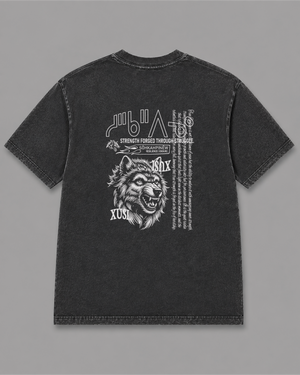
At Nova Scotia's foggy western tip, where lobster fishing anchors the economy and the Cape Forchu light marks the harbour, Yarmouth folks can wear Indigenous-designed XUSI tees, hoodies and hats printed in Saskatoon.
With around 191 foggy days a year, Yarmouth weather rewards a heavyweight hoodie over one of our 100% cotton tees. That combination works on damp mornings at the Living Wharves or on the walk out to Cape Forchu. Our Black Oni long sleeve fits cool summer evenings of stargazing. The Revitalize Culture crewneck adds warmth for winter by the harbour, and it carries a Cree word and story. For Seafest or a sunny day at Port Maitland Beach, try a Golden Era ringer or women's baby rib tee. An A-frame snapback helps with glare off the water.