
Indigenous Winnipeg: Treaty 1, Nations and Community
An introduction to Winnipeg: its history, the Nations whose lands it sits on, and Indigenous community life today, with sources.
About Winnipeg
Winnipeg grew up around The Forks, where the Red and Assiniboine rivers meet, a place that served as a trading centre long before European contact. The city lies in Treaty 1 territory, signed in 1871, and is recognized as the birthplace of the Métis people. Among major Canadian cities it has the highest proportion of Indigenous residents. Each year the Manito Ahbee Festival celebrates Indigenous arts, culture and music with powwow competitions, a marketplace and live performances. The Canadian Museum for Human Rights and the Manitoba Museum anchor the cultural scene, while the Winnipeg Art Gallery holds the world’s largest public collection of contemporary Inuit art. Students can choose the University of Manitoba, founded in 1877 as Western Canada’s first university, the University of Winnipeg, Université de Saint-Boniface or Canadian Mennonite University. Health care, retail and manufacturing are among the largest parts of a diversified economy.
Winnipeg history
Parks Canada traces 6,000 years of history at the meeting of the Red and Assiniboine. The area is the traditional land of the Anishinaabeg, Nehiyawak, Ininiwak, Anisininewuk, Dakota Oyate and Denesuline, and the homeland of the Red River Métis. The city's name comes from a Cree term for murky water, a reference to Lake Winnipeg. La Vérendrye ordered Fort Rouge built here in 1738. By 1862 a commercial core was forming around McKenney's general store at Portage and Main. In August 1869 Canada began re-surveying the Métis river-lot farms into square lots. That November Louis Riel and the Métis blocked the new lieutenant-governor from entering. A provisional government then negotiated terms with Ottawa, and the Manitoba Act created the province on May 12, 1870. On August 3, 1871, leaders met at the Stone Fort, Lower Fort Garry, to conclude Treaty 1. Anishinaabe and Swampy Cree leaders, among them Red Eagle (Henry Prince) and Yellow Quill, took part. Reserves were set at 160 acres per family of five. The written text omitted the plows, cattle and clothing that had been promised aloud. Ottawa recognized those "outside promises" only on April 30, 1875. The Canadian Pacific Railway's completion in 1885 set off a boom. By 1911 Winnipeg was Canada's third-largest city. The 1919 General Strike and the Depression brought hard years after that.
Treaty and territory
Winnipeg is on Treaty 1 territory, the traditional lands of the Anishinaabe, Cree, Oji-Cree, Dakota and Dene peoples, and the homeland of the Red River Métis. It has one of the largest urban Indigenous populations in Canada.
Nearby: Selkirk · St. Andrews · East St. Paul · Headingley · Brokenhead Ojibway Nation
Indigenous Winnipeg today
The Manitoba Métis Federation has its head office on Henry Avenue in Winnipeg. Founded in 1967, it describes itself as the Red River Métis national government. Its self-government treaty with Canada was ratified in October 2025. The federation runs housing, child care, youth and employment programs, and issues harvester cards. Its affiliate Louis Riel College recently opened its first campus. Since March 1999, the Southern Chiefs' Organization has spoken for Nations across the south of the province. It represents 33 Anishinaabe and Dakota Nations with more than 92,000 citizens. Its head office is on Swan Lake First Nation, and it keeps two sub-offices in Winnipeg. At The Forks, Parks Canada offers a tour called One Heart, Two Rivers, Four Directions that explores Indigenous connections to the site. Inuit art has a home here too. The Winnipeg Art Gallery's Qaumajuq holds close to 14,000 pieces by more than 2,000 Inuit artists. Indigenous language keepers from across Inuit Nunangat named the centre. The gallery says Qaumajuq means "it is bright, it is lit" in Inuktitut.
Life in Winnipeg
Winnipeg counted 749,607 residents in the 2021 census, up from 705,244 in 2016. The city remains headquarters for Canada's grain industry. Aerospace, finance and information technology add to a diverse economy. Sport runs deep. The Blue Bombers won the Grey Cup ten times between 1935 and 1993. The NHL's Jets left in 1996 and came back in 2011. The arts scene includes the Royal Winnipeg Ballet, the Manitoba Theatre Centre and the Winnipeg Symphony Orchestra. Qaumajuq, designed by architect Michael Maltzan, features a glass-walled Visible Vault that lets visitors see stored works up close. The Forks National Historic Site is free and open all year. Families come for the Red Chair photo spots and Fort Parka, a play area with a splash pad.
Winnipeg seasons and weather
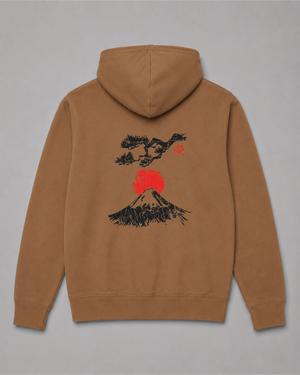
Winnipeg has a continental climate with severe, frigid winters and warm summers. Plan on a heavy hoodie under a winter coat and a warm hat for the cold months, and a simple tee once summer arrives.
More on the region: Indigenous Manitoba · all of Canada.
Keep learning in the XUSI Journal
- The Numbered Treaties, Explained
- Treaty Annuity Payments and Treaty Days, Explained
- Nêhiyawêwin: A Beginner's Guide to the Cree Language
- First Nations, Métis and Inuit: What’s the Difference?
- All Journal articles
Winnipeg questions
Can I pick up my XUSI order somewhere in Winnipeg?
Local pickup is offered only in Saskatoon, so Winnipeg orders are shipped. They leave Saskatoon within 1–3 business days, and the shipping cost is calculated at checkout.
Does XUSI print custom shirts for Winnipeg teams and organizations?
Yes. Custom screen printing starts at 10 garments, with up to 4 colours per design, and every order is quoted before printing. Design help is included, and finished pieces are printed in Saskatoon and shipped to you.
Could a Red River Métis youth group or a Winnipeg First Nations organization order custom apparel?
Yes. Our custom screen printing starts at 10 garments, with up to 4 colours per design, and every order is quoted before printing. Design help is included. We print in Saskatoon and ship the finished order to Winnipeg, which suits a youth program, a conference team or event volunteers.
Which Indigenous language appears on XUSI designs?
Many of our designs carry Cree words, reflecting XUSI's roots in Saskatoon. Each Cree word comes with its story on our Meanings page, so Winnipeg customers know what they are wearing. Winnipeg is home to many Anishinaabe, Dakota and Métis people, and we respect that our designs speak from one tradition among many.
Last reviewed . Facts on this page come from the sources listed below.
Indigenous clothing from XUSI
Looking for Indigenous clothing in Winnipeg? XUSI is an Indigenous-owned label from Saskatoon, and our tees, hoodies and hats travel east across the Prairies to doorsteps throughout the city.
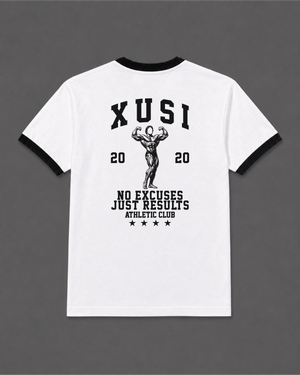
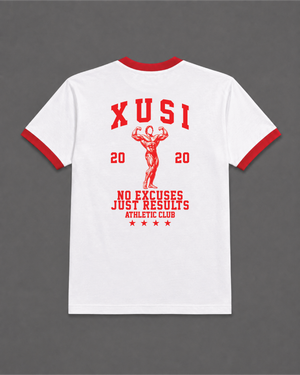
Winnipeg dressing is all about the swing between seasons. On a sticky July afternoon at the Fort Parka splash pad, a roomy cotton tee and a snapback keep parents cool. A Golden Era ringer fits a summer stroll where the Red meets the Assiniboine. Once football weather turns cold at a Blue Bombers game, pull a hoodie over a long sleeve. On a January night downtown for the Jets, tuck the Revitalize Culture crewneck under your parka. Winnipeg groups can also order custom hoodies from our Saskatoon print shop, whether for a Métis youth program or a community hockey team.