
Indigenous Nunavut: Inuit, the Nunavut Agreement and Community
An introduction to Nunavut: its history, its Nations and treaties, and Indigenous community life today, with sources.
About Nunavut
Nunavut became Canada’s newest territory on April 1, 1999, created out of the eastern Northwest Territories under the Nunavut Agreement, the land claims agreement ratified in 1993. It spans more than two million square kilometres of the mainland and Arctic Archipelago, much of it treeless tundra over permafrost. Inuit form the large majority of residents, and Inuktitut, Inuinnaqtun, English and French are official languages. The territory is organized into three regions, Qikiqtaaluk, Kivalliq and Kitikmeot, and its capital is Iqaluit on Baffin Island. Communities are not connected by road to southern Canada, so goods arrive by air or seasonal sealift. Mining, traditional harvesting, commercial fisheries, arts and crafts, tourism and government make up the economy, and Inuit art from places like Kinngait is known around the world.
Nunavut history
People have lived on this land for thousands of years. The Dorset culture hunted sea mammals here about 2,500 years ago, and Inuit oral tradition remembers them as the Tuniit. Around 1,000 years ago the Thule arrived, maritime hunters with kayaks, umiaq boats and harpoons. They built lasting villages of stone and whalebone. Martin Frobisher reached Baffin Island in the late 1570s and claimed it for Queen Elizabeth I. American, English and Scottish whalers followed from the late 1700s, and by 1840 they had shore stations in Cumberland Sound. To assert sovereignty, the RCMP opened posts at Pond Inlet and Craig Harbour in 1922. In the 1950s Ottawa moved Inuit families from Inukjuak, in northern Quebec, to Grise Fiord and Resolute. Construction of the DEW Line in 1955 pulled more people into settled communities and wage work. The push for self-government built through votes. In a 1982 plebiscite, 80 per cent of eastern Arctic voters backed dividing the Northwest Territories. A boundary vote passed in 1992, and 84.7 per cent of voters approved the land claim. The agreement brought $1.17 billion in federal compensation over 14 years.
Treaty and territory
Nunavut was created in 1999 under the Nunavut Land Claims Agreement, the largest land claim settlement in Canadian history. Most Nunavummiut are Inuit.
Nearby: Iqaluit · Rankin Inlet · Cambridge Bay · Arviat · Baker Lake · Kinngait
Regions of Nunavut
Each of Nunavut's three regions has its own Regional Inuit Association, a Designated Inuit Organization under the Nunavut Agreement. The Qikiqtani Inuit Association, headquartered in Iqaluit, speaks for 13 communities. They are Arctic Bay, Clyde River, Grise Fiord, Igloolik, Iqaluit, Kimmirut, Kinngait, Pangnirtung, Pond Inlet, Qikiqtarjuaq, Resolute Bay, Sanikiluaq and Sanirajak. The association represents 51 per cent of Inuit in the territory. It manages about 356,000 square kilometres, close to half of all Inuit Owned Lands. The Kivalliq Inuit Association, based in Rankin Inlet, serves seven communities on the west coast of Hudson Bay and inland. They are Arviat, Whale Cove, Rankin Inlet, Chesterfield Inlet, Baker Lake, Coral Harbour and Naujaat. The Kitikmeot Inuit Association serves five communities in the central Arctic: Cambridge Bay, Kugluktuk, Gjoa Haven, Kugaaruk and Taloyoak. It had more than 6,500 registered members as of 2020. It works in Inuinnaqtun and Inuktitut as well as English and French. Under the land claim, Inuit hold surface title to 318,084 square kilometres. They also own both surface and subsurface rights to another 37,883 square kilometres.
Indigenous Nunavut today
Nunavut had 36,858 residents at the 2021 census, and 30,865 of them were Inuit. Inuktitut or Inuinnaqtun is the mother tongue of 65.1 per cent of Nunavummiut. Nunavut Tunngavik Incorporated makes sure the promises of the Nunavut Agreement are kept. It oversees land, water and wildlife matters and holds both governments to their obligations. Three Regional Inuit Associations work alongside it as Designated Inuit Organizations. Nunavut Arctic College runs Community Learning Centres in all 25 communities, where adult educators offer assessments and career guidance. Its main campuses are Nunatta in Iqaluit, Kivalliq in Rankin Inlet and Kitikmeot in Cambridge Bay. The Piqqusilirivvik Inuit Cultural Learning Centre in Clyde River teaches Inuit culture. Rankin Inlet celebrated the first graduates of the college's Practical Nurse Program in 2023-2024. Arts carry Nunavut's name around the world. The Canadian Encyclopedia counts about 3,100 people working in arts and crafts. Printmaker Kenojuak Ashevak and throat singer Tanya Tagaq, who won the 2014 Polaris Music Prize, are among its best-known artists. Each year Iqaluit hosts the Alianait Arts Festival, which brings live music and performance from across Inuit Nunangat.
Life in Nunavut
Nunavut covers 1,936,113 square kilometres of land, about 21 per cent of Canada. In the north of the Arctic Archipelago, peaks approach 2,000 metres. Auyuittuq National Park, on southeastern Baffin Island, takes an Inuktitut name that Parks Canada translates as the land that never melts. Its Akshayuk Pass is a 100-kilometre corridor of glaciers, fiords and river valleys. Hikers, skiers and mountaineers set out from Pangnirtung or Qikiqtarjuaq. Inuit and Parks Canada manage the park jointly under the Nunavut Agreement. Mining is a major employer. Gold comes from Meadowbank and Hope Bay, and iron ore from Baffinland's Mary River project. Char, shrimp and turbot fisheries add to the economy. Sport has deep roots too. The Arctic Winter Games, held every two years since 1970, mix traditional northern games with modern sports.
Nunavut seasons and weather
Nunavut is Arctic: winters are long, dark and extremely cold with strong winds, and summers are short and cool. Our hoodies and hats work best as layers under proper Arctic outerwear.
Communities in Nunavut
Keep learning in the XUSI Journal
- First Nations, Métis and Inuit: What’s the Difference?
- How to Write a Land Acknowledgement That Means Something
- Orange Shirt Day & the National Day for Truth and Reconciliation
- National Indigenous Peoples Day and History Month: A Guide
- All Journal articles
Nunavut questions
Can I order from a Nunavut hamlet that is only reachable by air?
Yes. Enter your address and the shipping cost is calculated at checkout. Orders of $90 or more ship free within Canada, and all orders leave Saskatoon within 1 to 3 business days.
Can an Iqaluit school print shirts with syllabics in the design?
Yes. Our design help can work with syllabics. Custom orders start at 10 garments, with up to 4 colours per design and a maximum screen of 23 by 31 inches, and every order is quoted before it is printed and shipped from Saskatoon.
Can a Nunavut hamlet council or Inuit association order shirts in Inuktitut or Inuinnaqtun?
Yes. Our custom screen printing starts at 10 garments, with up to 4 colours per design, and every order is quoted before printing. Send us your text in syllabics or Roman orthography, and our design help will lay it out. Everything is printed in Saskatoon and shipped north.
Could a team heading to the Arctic Winter Games get matching hoodies?
Yes. A team order needs at least 10 garments, and designs can use up to 4 colours. Every order gets a full quote before anything is printed, and design help is included. Orders leave Saskatoon within 1 to 3 business days, so plan early before travel.
Last reviewed . Facts on this page come from the sources listed below.
Indigenous clothing from XUSI
Nunavummiut looking for Indigenous-owned apparel can order from XUSI in Saskatoon. We ship our graphic tees, hats and heavy hoodies to Iqaluit, Rankin Inlet, Cambridge Bay and hamlets across all three regions.
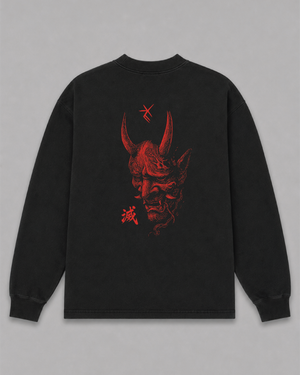
A Nunavut year runs from dark winter to the brief, cool summer. We see our pieces as the layers under proper Arctic gear. A heavy hoodie sits well under a parka on a cold walk across town. Our warmest hoodies also suit a spring day out on the land. In summer, a heavyweight 100% cotton tee works for evenings at the Alianait Arts Festival in Iqaluit. The Black Oni long sleeve adds a light layer for hiking toward Akshayuk Pass. An A-frame snapback helps with the glare off snow and water in spring.