
Indigenous Yukon: First Nations, Agreements and Community
An introduction to Yukon: its history, its Nations and treaties, and Indigenous community life today, with sources.
About Yukon
Yukon takes its name from a Gwich’in word for “great river,” a nod to the Yukon River that flows through the territory. Mountains, boreal forest and tundra cover the land, and about 70 per cent of residents live in Whitehorse, the capital. Fourteen First Nations call Yukon home, and 11 of them are self-governing under final and self-government agreements built on the 1993 Umbrella Final Agreement. The Canadian Encyclopedia lists eight Indigenous languages: Gwich’in, Hän, Upper Tanana, Northern Tutchone, Southern Tutchone, Tagish and Kaska, all Athapaskan, plus Tlingit. Each summer, the Adäka Cultural Festival, whose name means “coming into the light” in Southern Tutchone, showcases First Nations arts at the Kwanlin Dün Cultural Centre on the Whitehorse riverfront. Tourism is the largest private-sector employer, and mining has shaped the territory since the Klondike Gold Rush.
Yukon history
The Canadian Encyclopedia calls Yukon one of the youngest parts of Canada for European settlement, yet the oldest continuously inhabited part of North America. Evidence from the Old Crow basin suggests people arrived by 10,000 BCE or earlier. Na-Dene peoples, including the Tutchone, Tagish, Teslin and Gwich’in, lived on salmon, caribou and other game. The Hudson’s Bay Company made its first lasting contact in the 1840s. On August 17, 1896, George Carmack, Skookum Jim and Tagish Charley found gold on Bonanza Creek. Dawson soon became the largest Canadian city west of Winnipeg. In June 1898, Yukon became a separate territory with Dawson as its capital. The Alaska Highway was built in 1942, with 1,014 km running through Yukon via Watson Lake and Whitehorse. For the first time, the permanent non-Indigenous population outnumbered Indigenous peoples. The capital moved to Whitehorse in 1953. On February 14, 1973, Southern Tutchone leader Elijah Smith presented Together Today for Our Children Tomorrow to Prime Minister Pierre Trudeau in Ottawa. That statement opened land claim talks that shaped the territory’s modern governance. An October 2001 transfer agreement and the 2003 Yukon Act then moved land and resource management to the territory.
Treaty and territory
Yukon is home to 14 First Nations, most of which have signed modern land claim and self-government agreements under the 1993 Umbrella Final Agreement.
Nearby: Whitehorse · Dawson City · Kwanlin Dün First Nation · Carcross/Tagish First Nation · Vuntut Gwitchin First Nation · Haines Junction
Regions of Yukon
Yukon’s regions are shaped by mountains and rivers. The St. Elias and Coast mountains line the southwest, and Kluane National Park and Reserve protects Southern Tutchone cultural heritage there. In the north, the Ogilvie Mountains give way to the Porcupine Plateau, and permafrost is continuous north of the Porcupine River. The Vuntut Gwitchin First Nation lives in this far northern country at Old Crow, above the Arctic Circle. Archaeological finds in the Old Crow basin are among the oldest signs of people in North America. In the south, the Alaska Highway runs 1,014 km through Yukon via Watson Lake and Whitehorse. Whitehorse, the capital, sits on this corridor beside the Yukon River. Across these regions, land and governance rest largely on the Umbrella Final Agreement and each Nation’s own final agreement. Some Indigenous lands also cross territorial borders. The Yukon government lists transboundary groups such as Dease River First Nation and Acho Dene Koe First Nation. The Gwich’in Tribal Council and Inuvialuit Regional Corporation are on that list too.
Indigenous Yukon today
Yukon’s self-government agreements arrived in waves. Champagne and Aishihik, Na-Cho Nyäk Dun, Teslin Tlingit Council and Vuntut Gwitchin finalized theirs in 1993. Little Salmon/Carmacks and Selkirk followed in 1997, and Tr’ondëk Hwëch’in in 1998. Ta’an Kwäch’än, Kluane and Kwanlin Dün signed between 2002 and 2005, and Carcross/Tagish completed the list in 2006. White River, Liard and Ross River Dena Council are still governed under the Indian Act. The Yukon government also lists transboundary groups with interests in the territory, including the Tetlit Gwich’in Council, Taku River Tlingit and Tahltan Central Government. In Whitehorse, the Skookum Jim Friendship Centre has worked for First Nations well-being since 1962. It runs after-school tutoring, youth employment, youth justice and traditional parenting programs, plus drop-in basketball and a beginner hockey program called Little Jims Hockey. Yukon University teaches across 13 campuses in the territory, and its Indigenous YukonU initiative supports reconciliation work. Far to the north, the Vuntut Gwitchin First Nation governs from Old Crow. It is a fly-in community above the Arctic Circle, closely tied to the Porcupine caribou herd.
Life in Yukon
Mount Logan, at 5,959 m, is the highest mountain in Canada and the second highest in North America. It rises in Kluane National Park and Reserve, about 160 km west of Whitehorse. The park protects peaks, valley glaciers and Southern Tutchone cultural heritage. The Yukon River system drains more than 65 per cent of the territory. Boreal forest of white spruce and lodgepole pine covers about 57 per cent of the land. Yukon holds some of North America’s largest populations of grizzly bears and Dall sheep. In Whitehorse, the Whitehorse Rapids Fish Hatchery protects what is described as the world’s longest Chinook salmon migration. Silver and lead production began at Keno Hill in 1913, and the Faro lead-zinc mine ran from 1969 to 1998. Hydroelectric dams produced 94 per cent of Yukon’s electricity in 2009.
Yukon seasons and weather
Winters are long, dark and very cold, while summers are short with nearly constant daylight. Heavy hoodies and warm hats are essentials, and a tee is enough only for a few summer weeks.
Communities in Yukon
Keep learning in the XUSI Journal
- First Nations, Métis and Inuit: What’s the Difference?
- How to Write a Land Acknowledgement That Means Something
- Orange Shirt Day & the National Day for Truth and Reconciliation
- National Indigenous Peoples Day and History Month: A Guide
- All Journal articles
Yukon questions
Do you ship to Old Crow or other remote Yukon communities?
We ship anywhere in Canada. The cost to your community is shown at checkout, orders of $90 or more ship free within Canada, and your order leaves Saskatoon within 1 to 3 business days.
Can our Yukon First Nation order printed hoodies for a cultural festival?
Yes. Custom screen printing has a 10-garment minimum, up to 4 colours per design, a maximum screen of 23 by 31 inches, and every order is quoted before printing. We help with the design and ship from Saskatoon.
What should I order for a Yukon winter?
For long, cold Yukon winters, we suggest a heavier hoodie from our range, priced $59.95 to $89.95, worn under a parka. Our A-frame snapback, $44.95, suits milder spring days. Our heavyweight 100% cotton tee has a generous fit, so it layers easily underneath without feeling tight.
Can a Yukon First Nation or friendship centre program order shirts with its own design?
Yes. Our custom screen printing is built for groups, with a 10-garment minimum and designs of up to 4 colours. Every order gets a full quote before anything is printed, and design help is included. Everything is printed in Saskatoon and shipped north to you.
Last reviewed . Facts on this page come from the sources listed below.
Sources for this page
- Yukon – The Canadian Encyclopedia
- Together Today for Our Children Tomorrow – The Canadian Encyclopedia
- Self-Governing First Nations in Yukon – The Canadian Encyclopedia
- Find out about Yukon First Nations – Government of Yukon
- Skookum Jim Friendship Centre
- About Yukon University
- Kluane National Park and Reserve – Parks Canada
- Vuntut Gwitchin First Nation
Indigenous clothing from XUSI
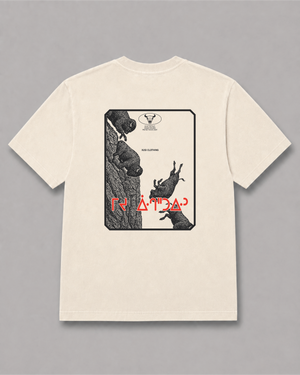
Yukoners can wear Indigenous-owned design from the prairies: XUSI, based in Saskatoon, ships its tees, hats and warm hoodies north to Whitehorse, Dawson City, Old Crow and communities along the Alaska Highway.
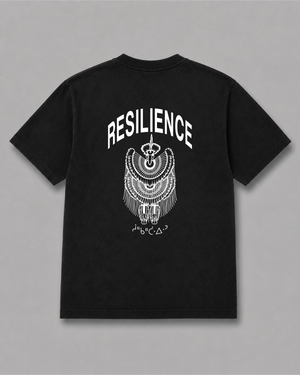
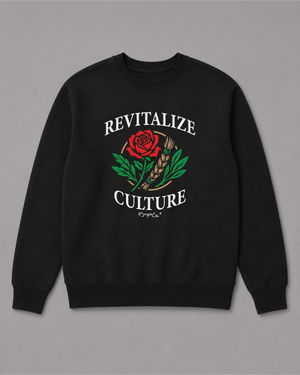
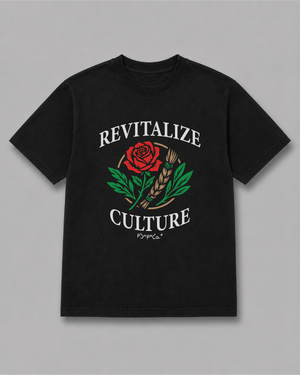
Yukon seasons change fast, so we like pieces that layer. On a dark January afternoon in Whitehorse, one of our heavier hoodies works as the warm middle layer under a parka. The Black Oni long sleeve suits shoulder-season paddles on the Yukon River, when mornings still bite. For summer hikes toward Kluane’s glaciers under the midnight sun, our heavyweight cotton tee and an A-frame snapback keep things simple. The Revitalize Culture crewneck is a good choice for evenings around a fire at a lake cabin. We ship everything from Saskatoon, so it reaches you from Watson Lake to Old Crow.