
Indigenous Meadow Lake: Treaty 6, Nations and Community
An introduction to Meadow Lake: its history, the Nations whose lands it sits on, and Indigenous community life today, with sources.
About Meadow Lake
Meadow Lake sits on the western shore of the shallow lake that gives it its name, in northwest Saskatchewan where meadow land gives way to mixed-wood forest. It became Saskatchewan’s 14th city in 2009 and serves a trading area well beyond its own population. Forestry, agriculture and tourism are the economic pillars; a pulp mill opened in 1992, and NorSask Forest Products is owned by the Meadow Lake Tribal Council. That council, formed in 1981, unites nine Cree and Dene nations: Birch Narrows, Buffalo River, Canoe Lake, Clearwater River, English River, Flying Dust, Makwa Sahgaiehcan, Ministikwan Lake and Waterhen Lake. Flying Dust First Nation, adjacent to the city, signed Treaty 6 in 1889. North of town, Meadow Lake Provincial Park covers 1,600 square kilometres and about two dozen lakes linked by the Waterhen River, and the Beaver and Meadow rivers also cross the area.
Meadow Lake history
Fur traders knew this water as Lac des Prairies. In 1799 Peter Fidler of the Hudson's Bay Company built Bolsover House here, the post the city counts as its beginning. Fidler's journey followed a trade frontier that Peter Pond had pushed west from Fort Dauphin in 1775. The first settler, Cyprien Morin, was born in 1834 in the English River District. He moved his family to Meadow Lake in 1873 and ran a Hudson's Bay Company post. Survey crews came next. In 1881 they marked out a sixteen-section reserve north of the lake, and in 1888 they surveyed a future townsite to the west. After the Cree adhesion to Treaty 6, the Meadow Lake Band was formed, and Métis families arrived to settle. A huge forest fire in 1919 devastated the fur country but opened land for homesteads. The railway reached Meadow Lake in 1931, the same year it became a village on August 29. It was made a town on February 1, 1936. By 1955 about 2,000 people lived here, and a monument to Peter Fidler went up in Elk's Park that year. Meadow Lake marked its 75th birthday in 2011.
Treaty and territory
Meadow Lake is on Treaty 6 territory, near Treaty 10, and in the homeland of the Métis. The Meadow Lake Tribal Council represents Cree and Dene First Nations in the region.
Nearby: Flying Dust First Nation · Waterhen Lake First Nation · Ministikwan Lake Cree Nation · Canoe Lake Cree First Nation · Beauval · Green Lake
Indigenous Meadow Lake today
Flying Dust First Nation, the Cree community beside the city, has 1,257 members. About 512 live on reserve and 745 live elsewhere. Highway 55 runs through the reserve, which has a K-4 school, a health centre, a youth centre and a hockey arena. The Nation farms and runs a sand and gravel operation on 12,000 acres. Flying Dust hosted the 2003 Saskatchewan First Nations Summer Games. It has held an annual powwow since 2005. Indigenous tourism operators there include Cree North Adventures and Tawaw Cabins. The Meadow Lake Tribal Council, renamed in 1996, delivers child and family services, youth development, elder services and education. Its health work includes the Mistahey Musqua Treatment Centre, a dialysis unit and an Indigenous Birth Support Worker Program. MLTC Industrial Investments handles the council's business side. In town, the North West Friendship Centre works to improve life for Indigenous people in Meadow Lake. Its programs include Miyo-Pimatisiwin, described as seeking the good life, and Healthy Babies Right from the Start. It also runs family violence services with an emergency receiving home.
Life in Meadow Lake
Meadow Lake sits about 156 kilometres north of North Battleford and 246 kilometres northeast of Lloydminster. It is the gateway to the northwest's lakes and forest. The big draw is the Boreal Trail in Meadow Lake Provincial Park. At 135 kilometres, it is the only year-round destination backpacking trail in Saskatchewan's provincial parks. Hikers can take a day trip or a multi-day trek, with markers roughly every kilometre. Thirteen backcountry campsites line the route. Each has a pit toilet, a grill and bear-proof food storage, and the park asks campers to follow Leave No Trace. On Flying Dust land, guided outings and cabin stays offer another way into the bush. The community's hockey arena and fitness centre keep sport close to home. Flying Dust also owns businesses in gravel, fuel and sports training, adding to the area's forestry and farm economy.
Meadow Lake seasons and weather
Winters are long and cold with plenty of snow in the surrounding forest, and summers are warm around the lakes. Heavy hoodies and warm hats are standard for more than half the year.
More on the region: Indigenous Saskatchewan · all of Canada.
Keep learning in the XUSI Journal
- Treaty 6 and Saskatoon: Where XUSI Comes From
- The Numbered Treaties, Explained
- Métis History in Saskatchewan: Places to Learn and Visit
- Residential Schools in Saskatchewan: Where to Start Learning
- All Journal articles
Meadow Lake questions
Can the Meadow Lake area get free shipping?
Yes, on orders of $90 or more, which ship free within Canada. Otherwise shipping is calculated at checkout. Orders leave Saskatoon within 1 to 3 business days.
Our school near Meadow Lake wants shirts with Cree and Dene words. Can you help?
Yes. Design help is included with custom screen printing. The minimum order is 10 garments with up to 4 colours per design, and every order is quoted before it is printed in Saskatoon and shipped to you.
Could a Flying Dust powwow committee or MLTC program order printed shirts?
Yes. Our custom screen printing starts at 10 garments, allows up to 4 colours per design, and every order is quoted before printing. Design help is included, and we can lay out Cree or Dene text you provide. Everything is printed in Saskatoon and shipped to you.
What should I pack from XUSI for a trip on the Boreal Trail?
Pack for changing weather. A heavyweight cotton tee works for warm afternoons, and a hoodie handles cool nights at a backcountry site. Since the trail stays open all year, winter hikers may want our warmest hoodie as a mid-layer under a proper shell.
Last reviewed . Facts on this page come from the sources listed below.
Indigenous clothing from XUSI
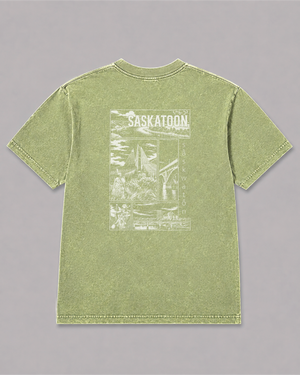
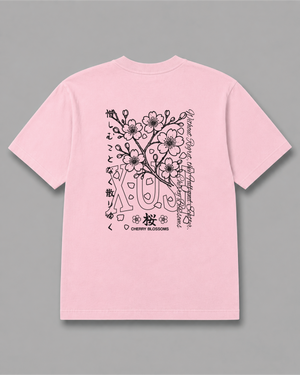
Up in the northwest of the province, Meadow Lake can get Indigenous-owned clothing shipped from XUSI in Saskatoon. We send tees, hoodies and hats to the city and to the Cree and Dene nations around it.
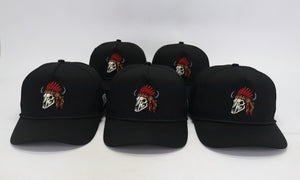
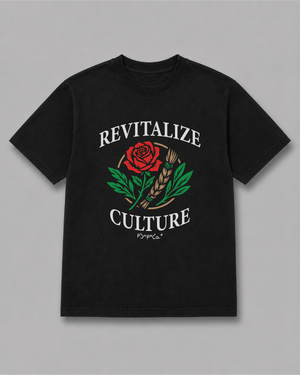
Life around Meadow Lake moves between forest, lake and rink. We think a heavy hoodie is the right call for cold mornings at the arena, fall walks in the forest and snowy weeks on the Boreal Trail. For summer backpacking or a powwow weekend at Flying Dust, a heavyweight 100% cotton tee in a generous fit breathes well in the heat. The Black Oni long sleeve helps keep bugs off your arms at a lakeside campsite. Add an A-frame snapback for sun on the water. The Revitalize Culture crewneck, with its Cree word and story, fits a region whose tribal council unites Cree and Dene nations.