
Indigenous North Battleford: Treaty 6, Nations and Community
An introduction to North Battleford: its history, the Nations whose lands it sits on, and Indigenous community life today, with sources.
About North Battleford
North Battleford occupies the north bank of the North Saskatchewan River where the Battle River joins it, roughly 140 kilometres northwest of Saskatoon. The town site was laid out in 1905 after the Canadian Northern Railway crossed the river, and it became a city in 1913. Across the valley, the older town of Battleford was named capital of the North-West Territories in 1876, the same year the North-West Mounted Police built the post now preserved as Fort Battleford National Historic Site. Parks Canada notes the fort’s ties to Treaty 6 negotiations and the events of 1885. Today North Battleford is a distribution centre for mixed farming and forestry in the northwest. The Battlefords Agency Tribal Chiefs, based in the city, serves seven member nations: Ahtahkakoop, Moosomin, Mosquito Grizzly Bear’s Head Lean Man, Red Pheasant, Saulteaux, Stoney Knoll and Sweetgrass.
North Battleford history
The Battlefords sit at the heart of Treaty 6 history. Parks Canada records that Chief Sweetgrass and other leaders asked for a treaty as early as 1871. When it came, Treaty 6 included a medicine chest on each reserve, farming help and aid in times of disease or famine. Some chiefs held out for better terms. Lucky Man and Little Pine signed in 1879, and Big Bear signed in 1882. The police post at Battleford grew quickly. It opened with 12 men and 16 horses, and by 1885 it held 200 men and 107 horses. That was the largest Mounted Police presence in the West. On May 2, 1885, about 400 Canadian troops attacked a camp of roughly 1,500 Indigenous people at Cut Knife Hill. Chief Poundmaker convinced the warriors not to pursue the retreating soldiers, which saved many lives. He was still convicted of treason-felony in Regina that August. He served one year at Stony Mountain Penitentiary and died four months after his release. On November 27, 1885, eight Indigenous men were hanged at Battleford. Parks Canada calls it the largest mass hanging in Canadian history. North Battleford's own growth was slow until the Second World War. In the decade after the war, its population doubled.
Treaty and territory
North Battleford is on Treaty 6 territory and the homeland of the Métis, surrounded by First Nations communities including those of the Battlefords Agency Tribal Chiefs.
Nearby: Battleford · Red Pheasant Cree Nation · Sweetgrass First Nation · Moosomin First Nation · Saulteaux First Nation · Poundmaker Cree Nation
Indigenous North Battleford today
Indigenous life in North Battleford is closely tied to the First Nations that surround it. On May 23, 2019, the Prime Minister went to Poundmaker Cree Nation to exonerate Chief Poundmaker. The statement apologized for his treason-felony conviction and recognized him as a peacemaker committed to honouring Treaty 6. In the city, the Battleford Indian and Métis Friendship Centre works from 103rd Street. Its programs include youth enrichment, daycare, Seniors Helping Seniors, a Reaching Homes program and urban programming for Indigenous people. The centre has described plans for a 51-spot multicultural daycare with extended hours. Its stated aim is simple: to help everyone who walks through its doors. Art is another link between the city and the surrounding First Nations. Allen Sapp was born in 1928 on the Red Pheasant reserve in north central Saskatchewan and was raised by his grandmother, Maggie Soonias. He painted Cree family and community life from his childhood, including the hard years of the Great Depression. He was appointed an Officer of the Order of Canada in 1987. The Allen Sapp Gallery, The Gonor Collection, opened in North Battleford in 1989. It works to build understanding between Indigenous and non-Indigenous people through his paintings.
Life in North Battleford
North Battleford counted 13,888 residents in the 2011 census and serves as a hub for the whole northwest. The Canadian Encyclopedia describes it as a distribution centre for mixed farming, lumbering and fishing areas. Early businesses and residents relocated from old Battleford once the rail line arrived. The Western Development Museum tells the story of Saskatchewan farming and rural life. Its heritage farm and village bring that history to life. The Cochin Lighthouse is a well-known regional landmark. Sport and leisure fill out the calendar. Score Golf Magazine named the North Battleford Golf and Country Club one of its top 10 public courses to play in 2014. The Battlefords Co-op Aquatic Centre has a wave pool, two waterslides and a lazy river. The NationsWEST Field House holds two indoor fields, each with seating for 250 spectators. Winter brings snow sports, and summer brings camping and water activities across the region.
North Battleford seasons and weather
The Battlefords get cold, snowy winters and warm summers, with wind funnelling through the river valleys. A good hoodie and a toque cover most of the year.
More on the region: Indigenous Saskatchewan · all of Canada.
Keep learning in the XUSI Journal
- Treaty 6 and Saskatoon: Where XUSI Comes From
- The Numbered Treaties, Explained
- Métis History in Saskatchewan: Places to Learn and Visit
- Residential Schools in Saskatchewan: Where to Start Learning
- All Journal articles
North Battleford questions
Can a Battlefords organization order printed shirts for summer games?
Yes. We screen print orders of 10 garments or more, with up to 4 colours per design, and every order is quoted before printing. Design help is free, and orders are printed in Saskatoon and shipped to North Battleford.
Since you are close by, can I pick up in North Battleford?
Pickup is only offered in Saskatoon. North Battleford orders ship within 1 to 3 business days, and orders of $90 or more ship free within Canada.
Do you have designs that connect to Treaty 6?
North Battleford sits in Treaty 6 territory, and so does our home in Saskatoon. Many of our designs carry a Cree word with a story explained on our meanings page. If your group wants a design tied to Treaty 6 history, our custom screen printing includes design help, starting at 10 garments.
What would suit a school visit to Fort Battleford National Historic Site?
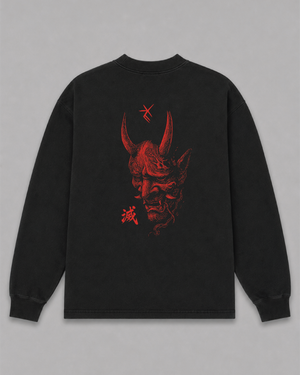
Dress for the day's weather, since the Battlefords can swing from warm to cold. In spring or fall, our Black Oni long sleeve over a heavyweight cotton tee works well. On a cold day, one of our hoodies layers easily under a jacket. A class can also order matching custom shirts from 10 pieces.
Last reviewed . Facts on this page come from the sources listed below.
Sources for this page
- North Battleford – The Canadian Encyclopedia
- History – Fort Battleford National Historic Site, Parks Canada
- Prime Minister delivers a statement of exoneration for Chief Poundmaker
- Battleford Indian & Métis Friendship Centre – Aboriginal Friendship Centres of Saskatchewan
- The Life and Art of Allen Sapp – Allen Sapp Gallery
- Destination Battlefords
Indigenous clothing from XUSI
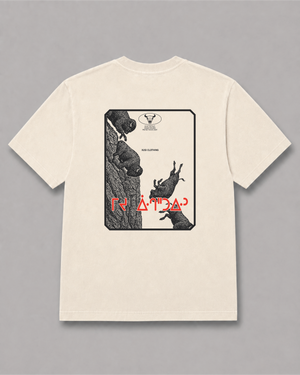
North Battleford sits about two hours from our Saskatoon studio, and XUSI ships there often. Order Indigenous-owned tees, hoodies and hats online and we will mail them to the Battlefords and nearby First Nations.
Life around the Battlefords moves between river valley trails, ball diamonds, lake weekends and cold winter rinks. We think a heavyweight 100% cotton tee is right for a July round at the golf course or a day at a lake campsite. For a school trip to Fort Battleford or Poundmaker Cree Nation in fall, add the Black Oni long sleeve. Once winter wind comes up the North Saskatchewan valley, a heavier hoodie from our $59.95 to $89.95 range earns its place. The Golden Era ringer tee is a relaxed choice for an evening at the field house. Many of our designs carry Cree words, a language with deep roots in the First Nations around the city. Since we print in Saskatoon, custom team orders for the Battlefords are made just down the road.