
Indigenous Cold Lake: Treaty 6, Nations and Community
An introduction to Cold Lake: its history, the Nations whose lands it sits on, and Indigenous community life today, with sources.
About Cold Lake
Cold Lake is a northeastern Alberta city about 300 km northeast of Edmonton, near the Saskatchewan boundary, on the shore of the lake that shares its name. The present city formed on October 1, 1996, when the Town of Cold Lake, the Town of Grand Centre and Medley, the community at Canadian Forces Base Cold Lake, merged. The air force base and the Cold Lake oil sands anchor the economy, and the base hosts the international air training exercise Maple Flag. The lake has long been home to the Dënesųłı̨né: Cold Lake First Nations, known in Chipewyan as Łue Chok Tué, is the only Chipewyan community to sign Treaty 6 and governs five reserves. The Hudson’s Bay Company opened a trading post around 1877 to trade with the Chipewyan. Kinosoo Beach draws summer visitors, and an air force museum displays vintage aircraft. Cold Lake Métis Settlement and Elizabeth Métis Settlement are also in the region.
Cold Lake history
The Canadian Encyclopedia places Cold Lake on the traditional territory of Cree, Denesuline and Métis peoples. The Cree name for the lake, Kinosoo, refers to a big fish from Cree legend. Settlers later named it for its deep, cold water. Cold Lake First Nations describe how their ancestors first chose land along Willow Point and the Cold Lake shore when Treaty 6 was signed. After 1885, they were falsely labelled rebels during the Resistance. A reserve of 73 square miles was surveyed in 1902. In 1913 Alexi Janvier became Chief after a three-week consensus assembly. An influenza epidemic in 1919 took about half the community. Non-Indigenous settlement began in the early 1900s and sped up in the 1930s. Prairie farmers moved north to escape the Depression. Cold Lake became a town in 1955 and a city in 2000. Construction of the air weapons range began in 1952. It covers about 11,750 square kilometres across the Alberta–Saskatchewan border. The range took in traditional hunting grounds at Primrose Lake. Cold Lake First Nations reached a settlement over those lost lands in 1991.
Treaty and territory
Cold Lake is on Treaty 6 territory, the lands of the Cree and Dene, and the homeland of the Métis. Cold Lake First Nations is in the area.
Nearby: Cold Lake First Nations · Elizabeth Métis Settlement · Bonnyville · Cherry Grove · Ardmore
Indigenous Cold Lake today
Cold Lake First Nations have about 3,000 members, and more than 1,300 live on reserve. They describe the Denesųłiné as a nation of about 30 tribes, reaching from Yellowknife to Cold Lake. Their traditions include fine hide work, moose-hide jackets and birch bark crafts. Women and Elders historically held central roles. The Nation runs an on-reserve primary school, a daycare, a health centre, and Dene wellness, Elders and language programs. In the city, the Cold Lake Native Friendship Centre grew out of a satellite of the Bonnyville centre. It incorporated in 1988 and took its current name in 1999. It works for about 15,000 Indigenous people across the city, the Métis settlements and nearby reserves. Its free Soup and Bannock Thursday meal is a regular gathering point. The centre also offers counselling, youth programs and career help. It shares residential school survivor stories and brings cultural awareness sessions to schools and businesses. Across the border, the range also affected Canoe Lake Cree Nation, which reached a settlement in 1997.
Life in Cold Lake
Cold Lake had 15,661 residents in the 2021 census. The lake itself covers more than 92,000 acres and reaches 100 metres deep. Walleye, northern pike, yellow perch and burbot are common catches. Its lake trout set Alberta’s angling record in 1929 with a 52.5-pound fish. A 2022 feature named Cold Lake one of Canada’s top ice fishing spots. In summer, anglers use boat launches along the southern shore. Cold Lake Provincial Park, mountain bike trails and hiking paths round out the outdoor options. More than 200 bird species live in the area, along with moose, black bears and lynx. Imperial Oil began heavy oil production nearby in 1985. 4 Wing flies two operational CF-18 squadrons and two training squadrons. The air base reached its 50-year milestone in 2004.
Cold Lake seasons and weather
Winters by the lake are long and bitterly cold, so a warm hoodie under a heavy parka and a good hat are essential. Summers are warm enough for beach days in a tee.
More on the region: Indigenous Alberta · all of Canada.
Keep learning in the XUSI Journal
- Treaty 6 and Saskatoon: Where XUSI Comes From
- The Numbered Treaties, Explained
- Treaty Annuity Payments and Treaty Days, Explained
- Nêhiyawêwin: A Beginner's Guide to the Cree Language
- All Journal articles
Cold Lake questions
I’m posted at the Cold Lake base. Can I order a gift for family elsewhere in Canada?
Yes. Orders ship from Saskatoon within 1–3 business days to addresses across Canada, free when the order is $90 or more. If something doesn’t fit, a return can be requested within 30 days.
Can a Cold Lake community group get custom printed apparel?
Groups can order screen printing with a 10-garment minimum, up to 4 colours per design, and every order is quoted before printing. Design help is included, and the apparel is printed in Saskatoon and shipped to Cold Lake.
Can a Dene language or culture program in Cold Lake order shirts with its own words?
Yes. Send us your wording and we will help lay out the design, up to 4 colours per print. Runs start at 10 garments, and every order is quoted before printing. Please confirm spellings with your own speakers, because we print exactly what you approve.
Our unit at 4 Wing is posted elsewhere next year. Can we still order custom shirts?
Yes. We are not connected with the base, but any group can order custom printing. We need at least 10 garments, with up to 4 colours per design. We print in Saskatoon and can ship to your address anywhere in Canada.
Last reviewed . Facts on this page come from the sources listed below.
Indigenous clothing from XUSI
XUSI ships Indigenous-owned clothing, from tees and hoodies to hats, out of its Saskatoon home to Cold Lake, the lakeside city close to the Saskatchewan border in northeastern Alberta.
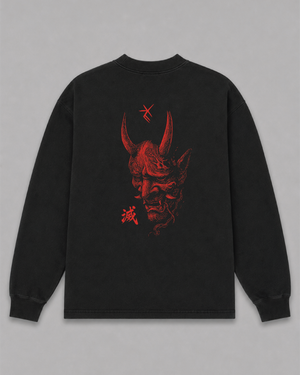
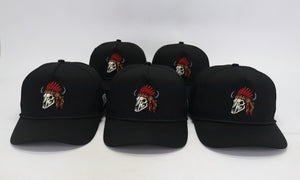
Cold Lake life moves between the base, the oil patch and the water, and we design for all three. A heavyweight cotton tee and an A-frame snapback suit a July day chasing walleye from the southern launches. When wind picks up across a lake this big, a Black Oni long sleeve adds cover without bulk. Ice fishing season calls for our heaviest hoodie under insulated outerwear, and a crewneck works for shack days out of the wind. A Golden Era ringer tee is easy for Soup and Bannock Thursday or an evening in town.