
Indigenous Estevan: Treaty 4, Nations and Community
An introduction to Estevan: its history, the Nations whose lands it sits on, and Indigenous community life today, with sources.
About Estevan
Estevan sits on the northeast bank of the Souris River, about 16 km north of the Canada–United States border and roughly 186 km southeast of Regina. Railway settlement began in the 1890s, and the name comes from the telegraphic address of George Stephen, first president of the Canadian Pacific Railway. Energy defines the local economy: coal mining, coal-fired power generation, oil and natural gas operate alongside agriculture, and oilfield development in the 1950s nearly doubled the population within two years. Southeast College provides post-secondary training in the region, while the Estevan Art Gallery and Museum and the Souris Valley Museum cover art and local history. Long before settlement, First Nations hunted and traded across this country for thousands of years; the Assiniboine were the dominant people by the early 1800s, and nearby la Roche Percée held spiritual significance for Indigenous peoples.
Estevan history
Estevan's story runs along old travel routes. A trade corridor known as the Warriors Trail crossed this area and appeared on La Vérendrye's map of 1734. Indigenous people had been drawn here to hunt and trade for about 10,000 years. In 1873 the British-American Boundary Commission set up a survey camp called Woodend, near Long Creek and the Souris River. The next year, Commissioner G.A. French led the North-West Mounted Police through the same spot. His column counted 275 officers, 310 horses and 114 Red River carts driven by 20 Métis men. Treaty 4 was signed in 1874, and Ocean Man First Nation adhered to it in 1875. Its reserve was set up near present-day Stoughton. In 1901 the federal government wrongfully merged Ocean Man with White Bear and Pheasant Rump, and people were moved to White Bear. The Soo Line railway was completed in 1894. Estevan became a village in 1899, had 596 residents by 1905 and was proclaimed a town in 1906. Coal shaped its early years. In September 1931, miners at Bienfait struck for recognition of the Mine Workers' Union of Canada. On September 29, three miners were killed when their demonstration in Estevan was violently suppressed. Estevan became a city on March 1, 1957.
Treaty and territory
Estevan is on Treaty 4 territory, the lands of the Cree, Saulteaux (Anishinaabe), Nakota, Dakota and Lakota peoples, and the homeland of the Métis.
Nearby: Bienfait · Roche Percée · Lampman · Oxbow · Ocean Man First Nation · Pheasant Rump Nakota First Nation
Indigenous Estevan today
Indigenous presence in Estevan today is closely linked to the Treaty 4 First Nations of the southeast. On June 10, 2018, Chief Ira MacArthur of Pheasant Rump Nakota Nation raised the Treaty 4 flag in front of Affinity Place. Mayor Roy Ludwig attended and reminded the crowd that the treaty signed in 1874 is still honoured. Chief MacArthur noted that surrounding First Nation communities live and shop in Estevan and are part of the local economy. The flag was gifted to City Hall for future display. Ocean Man First Nation marked its own milestone in 2022. Its people had been moved to White Bear after the 1901 amalgamation, and Ocean Man regained recognition as a First Nation in 1989. For decades, though, its standing as an original Treaty 4 band was disputed. On February 23, 2022, Canada formally recognized Ocean Man as a Treaty 4 First Nation. Chief Connie Big Eagle and Minister Marc Miller signed the agreement in Regina. Chief Big Eagle said Canada finally recognized what Ocean Man had always maintained. The Nation has said it plans to pursue settlement claims for past injustices.
Life in Estevan
Power generation sets Estevan apart. Two coal-fired generating plants in the area produce half of Saskatchewan's electricity. The Estevan station opened in 1930, Boundary Dam was built between 1957 and 1970, and the Shand station followed in 1992. The city also serves as a regional hub for health care, education, retail and recreation. Boundary Dam is the only hot water return dam in Saskatchewan. Tourism Estevan says it is the only place in Western Canada to catch largemouth bass. Walleye, yellow perch and northern pike swim there and in the Rafferty Reservoir. Hunters come for pheasants, sharp-tailed grouse and Hungarian partridge. Woodlawn Regional Park opened in 1962, just south of the city on the Souris River. Flooding in 2011 nearly destroyed it, and it reopened in 2013 with a second site at Boundary Dam. Visitors paddle the river in rented canoes and kayaks, camp, hike and play its 18-hole championship golf course.
Estevan seasons and weather
Winters here are cold, long and dry, so an insulated jacket over a heavyweight hoodie makes sense from late fall to early spring. Summers are warm and short, and the city is noted for abundant sunshine, which makes a brimmed hat worthwhile.
More on the region: Indigenous Saskatchewan · all of Canada.
Keep learning in the XUSI Journal
- Treaty 4 Explained: The 1874 Qu'Appelle Treaty
- The Numbered Treaties, Explained
- Métis History in Saskatchewan: Places to Learn and Visit
- Residential Schools in Saskatchewan: Where to Start Learning
- All Journal articles
Estevan questions
Can an Estevan hockey team or school club order custom printed shirts?
Yes. XUSI screen prints custom orders with a 10-garment minimum, up to 4 colours per design, and every order is quoted before printing. Design help is included, and the finished pieces are printed in Saskatoon and shipped to you in Estevan.
How much will shipping to Estevan cost?
The shipping cost is calculated at checkout, and any order of $90 or more ships free within Canada. Orders leave Saskatoon within 1–3 business days.
Can a group from a nearby Treaty 4 Nation order shirts for a community event?
Yes. Our custom screen printing starts at 10 garments with up to 4 colours per design. Every order gets a full quote before anything is printed, and design help is included. We can work with your group on artwork that reflects your Nation, then print in Saskatoon and ship it to southeast Saskatchewan.
What XUSI pieces work for fishing or hunting trips around Estevan?
For summer days on Boundary Dam or the Rafferty Reservoir, a heavyweight cotton tee and our A-frame snapback keep you comfortable in the sun. For fall bird hunting, the Black Oni long sleeve makes a good base layer. On cold mornings, add one of our hoodies under your outer jacket.
Last reviewed . Facts on this page come from the sources listed below.
Sources for this page
- Estevan – The Encyclopedia of Saskatchewan
- Estevan Coal Miners' Strike 1931 – The Canadian Encyclopedia
- Treaty Four Flag Raised in Estevan – DiscoverEstevan
- Historical day: Ocean Man recognized as official Treaty 4 First Nation – DiscoverEstevan
- Hunting & Fishing – Tourism Estevan
- Woodlawn – Saskatchewan Regional Parks
Indigenous clothing from XUSI
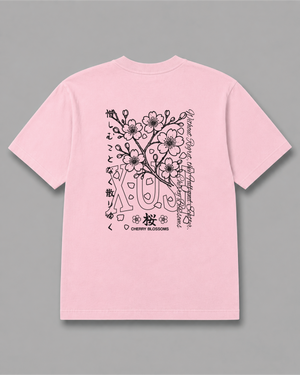
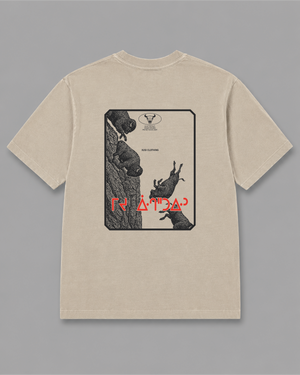
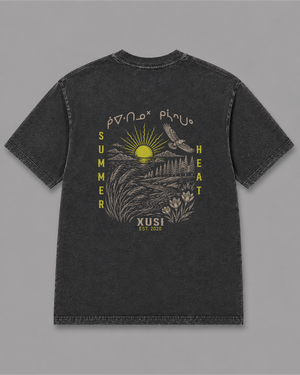
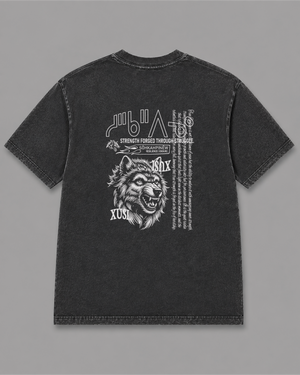
Shopping for Indigenous clothing in Estevan? XUSI, an Indigenous-owned label from Saskatoon, sends its tees, hoodies and hats to the Souris River city and the rest of southeast Saskatchewan.
Estevan's year swings from bright prairie summers to long, dry winters, and we build around both. A heavyweight 100% cotton tee and an A-frame snapback suit a July morning chasing largemouth bass on Boundary Dam. For a paddle down the Souris River from Woodlawn, the Golden Era ringer tee is light and easy. When fall brings pheasant season, layer the Black Oni long sleeve under a vest for cool mornings in the fields. Through the coldest months, a hoodie from our $59.95 to $89.95 range works under a work jacket on a plant or oilfield shift. For a team at Affinity Place or a community group from a nearby Nation, our custom screen printing starts at 10 garments.