
Indigenous Wetaskiwin: Treaty 6, Nations and Community
An introduction to Wetaskiwin: its history, the Nations whose lands it sits on, and Indigenous community life today, with sources.
About Wetaskiwin
Wetaskiwin is a central Alberta city about 70 km south of Edmonton, served by Highway 2A, Highway 13 and a main rail line. Its name comes from the Cree wītaskiwinihk, the hills where peace was made, recalling a peace agreement between the Cree and Blackfoot nations. The community began in 1891 as Siding 16 on the Calgary and Edmonton Railway, drew many Scandinavian homesteaders, became a town in 1902 and a city in 1906. Farming, ranching, agricultural processing and regional distribution drive the economy, and the city is widely known for its long-running slogan, Cars cost less in Wetaskiwin. Museums include the Reynolds-Alberta Museum, which traces transportation and agricultural technology, the Wetaskiwin and District Heritage Museum and the Alberta Central Railway Museum. Just south lies Maskwacis, home to the Ermineskin, Samson, Louis Bull and Montana Cree nations, all Treaty 6 signatories, as well as Maskwacis Cultural College and an annual powwow.
Wetaskiwin history
The peace that gave Wetaskiwin its name has a date. The Canadian Encyclopedia records that the Cree and Blackfoot made a treaty at the Peace Hills in 1867, after a long battle. The city's own acknowledgement describes this land as an ancestral gathering place. It names the Cree, Blackfoot, Métis, Nakota Sioux, Iroquois, Dene, Ojibway, Saulteaux and Anishinaabe peoples. Today it lies within Treaty 6 territory. The railway siding that started the town was followed by a surveyed townsite in 1892. In 1906, the year Wetaskiwin became a city, a Canadian Pacific branch line was built eastward from it. Wheat farming and cattle ranching drove the early decades. The Ermineskin Indian Residential School once operated at nearby Maskwacis. On January 1, 2014, the community long known as Hobbema was renamed Maskwacis, a Cree name meaning bear hills. Local memory is well kept. The city's heritage archives hold photographs by Carl Walin dating from 1919 to 1956. The Stan Reynolds collection includes original negatives from before 1900, and the Daisy Lucas collection documents early pioneers and their organizations.
Treaty and territory
Wetaskiwin is on Treaty 6 territory, the lands of the Cree and other nations, and the homeland of the Métis. The four Cree Nations of Maskwacîs are just to the south.
Nearby: Maskwacis · Millet · Ponoka · Camrose · Pigeon Lake
Indigenous Wetaskiwin today
The Cree nations of Maskwacis are Wetaskiwin's closest neighbours. In 2016, Samson Cree Nation counted 3,373 people, Ermineskin Cree Nation 2,457, Louis Bull Tribe 1,177 and Montana First Nation 630. Samson Cree Nation describes its mission as improving quality of life for its people while respecting the Cree language. The Nation keeps offices in Edmonton, Calgary and Ma-Me-O Beach. Peace Hills Trust and Peace Hills Insurance are among its affiliated businesses, alongside Samson Management Limited. Its calendar has included a celebrations initiation and traditional powwow. Maskwacis Cultural College calls itself a centre of excellence in academics and Cree Indigenous knowledge. It runs schools of Indigenous arts, business, education and social work, plus adult education. It also operates a Cree Syllabics Centre to support Cree curriculum development. In the city itself, the Wetaskiwin and District Heritage Museum is marking 40 years of preserving local stories. It describes itself as a gathering place that serves the Maskwacis Cree Four Nations as well as the wider community. Maskwacis was also once home to the Hobbema Hawks, a junior A hockey team.
Life in Wetaskiwin
Machines are a big part of Wetaskiwin's identity. The Reynolds-Alberta Museum opened in 1992 to celebrate Alberta's mechanical heritage. Its collection runs from cars and airplanes to tractors and industrial machines. Canada's Aviation Hall of Fame sits right beside it. The museum has hosted a Metal Art Show and Sale and vehicle restoration workshops. The city had 12,525 residents in the 2011 census, up from 11,689 in 2006. It keeps its own municipal airport, one weekly newspaper and two radio stations. For everyday recreation, the Manluk Centre houses the regional aquatics and fitness facility. The city also maintains parks, trails and community gardens. Distribution, agricultural processing and tourism now sit alongside the farming and ranching roots. The city lies 68 kilometres south of Edmonton, within easy reach of the capital region.
Wetaskiwin seasons and weather
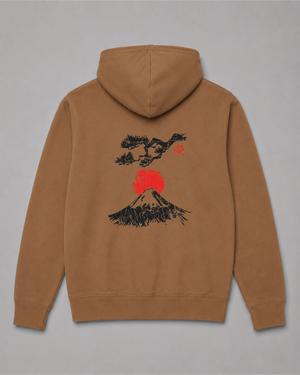
Wetaskiwin sees cold, snowy winters and warm summers, so a heavy hoodie layered under a coat covers most of the year, with tees for the hottest months.
More on the region: Indigenous Alberta · all of Canada.
Keep learning in the XUSI Journal
- Treaty 6 and Saskatoon: Where XUSI Comes From
- The Numbered Treaties, Explained
- Treaty Annuity Payments and Treaty Days, Explained
- Nêhiyawêwin: A Beginner's Guide to the Cree Language
- All Journal articles
Wetaskiwin questions
Can a Wetaskiwin sports team or club order printed hoodies?
Yes, with a minimum of 10 garments. Designs can have up to 4 colours, design help is included, and every order is quoted before printing. Hoodies are printed in Saskatoon and shipped to Wetaskiwin.
What if I order from Wetaskiwin and need to return something?
You can request a return within 30 days. Shipping is calculated at checkout, and orders of $90 or more ship free within Canada.
Does XUSI make designs in Cree that would suit families in Wetaskiwin and Maskwacis?
Many of our designs carry a Cree word and its story, shared on our meanings page. Cree is the language of the four Maskwacis nations, and Maskwacis Cultural College runs a Cree Syllabics Centre. We are a Indigenous-owned, Indigenous-owned company based in Saskatoon, also on Treaty 6 territory.
Could a Wetaskiwin car club order custom shirts for a show?
Yes. Custom screen printing starts at 10 garments, with up to 4 colours per design, and every order is quoted before printing. Design help is included, so a club logo or vintage vehicle can be adapted for print. We print in Saskatoon and ship to Wetaskiwin.
Last reviewed . Facts on this page come from the sources listed below.
Indigenous clothing from XUSI
Wetaskiwin, south of Edmonton, is among the central Alberta cities that receive tees, hoodies and hats from XUSI, an Indigenous-owned brand designing and shipping from Saskatoon.
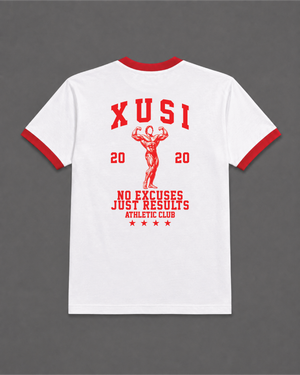
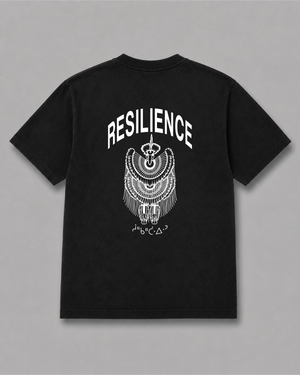
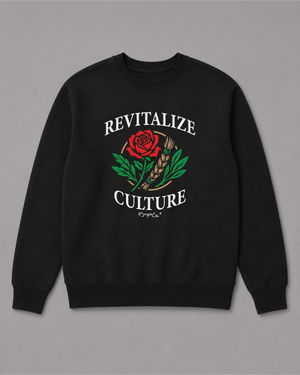
Wetaskiwin's love of engines and open road shapes how we'd picture our pieces here. For a summer car show or a day at the Reynolds-Alberta Museum, a Golden Era ringer tee and an A-frame snapback feel right. When fall brings harvest on the surrounding farmland, the Black Oni long sleeve works under a jacket. For a winter hockey night or a snowy walk on the city's trails, a heavyweight hoodie under your coat handles the cold. For a Maskwacis powwow in summer, the Revitalize Culture crewneck is ready for the cool evening.