
Indigenous Charlottetown: Epekwitk, Nations and Community
An introduction to Charlottetown: its history, the Nations whose lands it sits on, and Indigenous community life today, with sources.
About Charlottetown
Charlottetown occupies a low point of land where the Hillsborough and North rivers meet, opening to a broad harbour on the Northumberland Strait. The Mi’kmaq call the island Epekwitk, and Indigenous peoples have lived here for thousands of years. The city is known as the Birthplace of Confederation because it hosted the 1864 Charlottetown Conference, though the province did not join Canada until 1873. As the provincial capital, government is the largest employer, followed by tourism, health care, retail and a growing biotechnology sector. The University of Prince Edward Island and Holland College are both based here, and the Confederation Centre of the Arts has staged Anne of Green Gables–The Musical since 1965. The island’s two Mi’kmaw First Nations, Lennox Island and Abegweit, are members of the Mi’kmaq Confederacy of PEI; Abegweit includes the communities of Scotchfort, Morell and Rocky Point.
Charlottetown history
Mi’kmaw roots on Epekwitk run deep. Lennox Island First Nation says archaeology and oral tradition place its ancestors on the shores of Malpeque Bay 12,000 years ago. In 1720, an expedition sent by the Comte de Saint-Pierre set up Port-la-Joye, west of the entrance to Charlottetown Harbour. Parks Canada calls it the first permanent European settlement on Île Saint-Jean. The site is now Skmaqn–Port-la-Joye–Fort Amherst National Historic Site. A Grand Alliance between the Mi’kmaq and the French was forged there. It was one of only two places in North America where that alliance was celebrated each year with speeches, gifts and feasting. British forces took the post in 1758, and it became the scene of a major deportation of French and Acadian settlers. In 1768, Nova Scotia’s chief surveyor, Charles Morris, laid out a new town site on the harbour. It was named for Charlotte, wife of King George III. In 1769, Britain separated St. John’s Island from Nova Scotia and made the little town its capital. Charlottetown was incorporated in 1855. In 1875, the federal government gave the city 40 acres of land that became Victoria Park.
Treaty and territory
Charlottetown is on Epekwitk, part of Mi’kma’ki, the unceded territory of the Mi’kmaq, covered by the Peace and Friendship Treaties.
Nearby: Stratford · Cornwall · Abegweit First Nation (Scotchfort) · Abegweit First Nation (Rocky Point) · Lennox Island First Nation
Indigenous Charlottetown today
The Mi’kmaq Confederacy of PEI works toward self-determination for its member communities, Abegweit and Lennox Island. Its programs cover education, employment, health, Indigenous justice and resource management. The Indigenous Sport Circle PEI and the Family PRIDE program also run through the Confederacy. With the PEI Museum and Heritage Foundation, it has offered a Mi’kmaq Storytelling Series at Basin Head Provincial Park. It also helped create a practice directive on Indigenous cultural safety and anti-racism with the PEI College of Nursing and Midwifery. The Native Council of PEI has its main office in Charlottetown and a second office in Portage. It describes itself as the self-governing authority for all off-reserve Indigenous people on Epekwitk. Its monthly event calendars use Mi’kmaw month names, such as Wikumkewiku’s for September. Lennox Island First Nation calls itself the first and largest Mi’kmaq band on Epekwitk. About 450 people live on its 540-hectare island in Malpeque Bay. The Nation worked with Parks Canada and other partners to establish Pituamkek National Park Reserve. Across the harbour from downtown, the grassy ruins at Skmaqn–Port-la-Joye–Fort Amherst help visitors learn about the early Mi’kmaw–French alliance.
Life in Charlottetown
Charlottetown had 38,809 residents in the 2021 census, and its metropolitan area had 78,858. Province House is home to the provincial legislature. The Confederation Centre of the Arts opened in 1964 as Canada’s national memorial to the Fathers of Confederation. The Charlottetown Festival is billed as the largest musical theatre festival in Atlantic Canada. Old Home Week is a nine-day fair with livestock shows, live music and a carnival. Food is a big draw. Oysters, mussels and lobster star at the PEI International Shellfish Festival in September, and the Fall Flavours Festival follows into October. Along the waterfront boardwalk, lobster boats and sailboats tie up side by side. The local economy includes fish and seafood processing, beverages, dairy and meat products. Biotechnology and information technology firms add to the mix.
Charlottetown seasons and weather
Island winters are snowy and windy, and spring warms slowly because of the surrounding sea. Summer is mild, so a hoodie is handy for cool evenings on the harbour.
More on the region: Indigenous Prince Edward Island · all of Canada.
Keep learning in the XUSI Journal
- First Nations, Métis and Inuit: What’s the Difference?
- How to Write a Land Acknowledgement That Means Something
- Orange Shirt Day & the National Day for Truth and Reconciliation
- National Indigenous Peoples Day and History Month: A Guide
- All Journal articles
Charlottetown questions
Do you ship to Prince Edward Island?
Yes. Orders ship from Saskatoon to Charlottetown and usually leave within 1–3 business days. Shipping is calculated at checkout, and orders of $90 or more ship free within Canada.
How large can a custom print be for a Charlottetown club?
The maximum screen size is 23x31 inches. Designs can use up to 4 colours, the minimum order is 10 garments, and every order is quoted before it is printed in Saskatoon and shipped to you.
What should I wear for the PEI Shellfish Festival or Fall Flavours?
September and October evenings on the harbour can turn cool. Our Black Oni long sleeve, $54.95, is a good base, and a hoodie from our $59.95 to $89.95 range layers over it. On a warm afternoon, our heavyweight 100% cotton tee, $49.95, and an A-frame snapback, $44.95, are enough.
Can a Mi’kmaw sport or youth program on the Island order custom team shirts?
Yes. Our custom screen printing suits teams and programs, with a 10-garment minimum and up to 4 colours per design. Every order gets a full quote before anything is printed, and design help is included. As an Indigenous-owned shop, we print in Saskatoon and ship to Charlottetown.
Last reviewed . Facts on this page come from the sources listed below.
Indigenous clothing from XUSI
On Epekwitk, or Prince Edward Island, you can order from XUSI, a Saskatoon brand run by Indigenous owners. We ship tees, hoodies and hats right to Charlottetown.
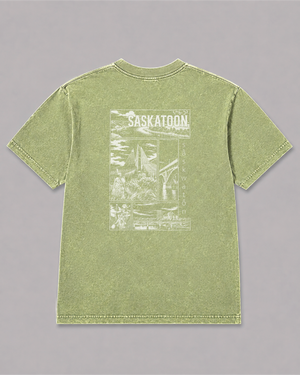
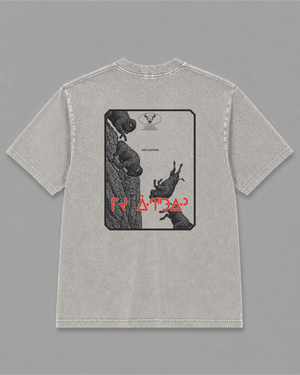
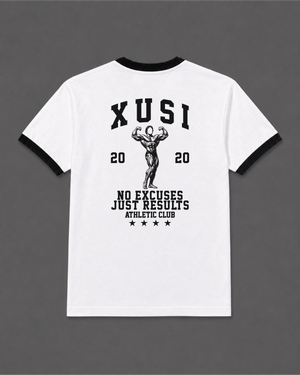
Charlottetown life follows the harbour and the seasons, and we think our pieces fit right in. For a sunny August day at Old Home Week, our heavyweight cotton tee and an A-frame snapback are easy picks. The Golden Era ringer tee suits a summer night at the Charlottetown Festival. When the Shellfish Festival arrives in September, the Black Oni long sleeve handles breezy evenings by the water. On a windy walk through Victoria Park in November, one of our hoodies keeps the chill out. Every order ships from Saskatoon to the Island.