
Indigenous Fort Smith: Treaty 8, Nations and Community
An introduction to Fort Smith: its history, the Nations whose lands it sits on, and Indigenous community life today, with sources.
About Fort Smith
Fort Smith had 2,248 residents in the 2021 census. It sits on the Slave River at the Alberta–NWT border, about 724 air kilometres north of Edmonton. Its Chipewyan name, Thebacha, is given as beside the rapids. About 63% of residents identify as Indigenous, including First Nations, Métis and Inuit people. English, Chipewyan, Cree and several other Indigenous languages are spoken here. Fort Smith was the territory's first administrative centre and served as the seat of government until 1967. It was incorporated as a town in 1966. Today it is a centre for education and government, home to Aurora College's Thebacha Campus. It is also the gateway to Wood Buffalo National Park, Canada's largest national park.
Fort Smith history
Indigenous peoples established the portage at Fort Smith long before fur traders arrived. The route bypassed four sets of rapids on the Slave River. They are Cassette Rapids, Pelican Rapids, Mountain Rapids and the Rapids of the Drowned. The portage linked the Prairies with the Mackenzie River valley. The Hudson's Bay Company opened a trading post here in 1874. It was named for Donald Smith, an HBC governor later known as Lord Strathcona. Treaty 8 was first signed on June 21, 1899, at Lesser Slave Lake, with adhesions through 1915. It covers about 841,487 square kilometres, including part of the Northwest Territories. The Klondike gold rush pushed Canada to seek the treaty. The Cree, Denesuline and other signatories understood their hunting rights to be unrestricted. The printed text added a clause on regulations, and game laws were enforced against them from 1916. Fort Smith became the first administrative centre of the Northwest Territories. Wood Buffalo National Park was established in 1922 and run from Fort Smith. Prospectors passed through during Yellowknife's gold rushes. The town incorporated in 1966, the same year the road to Hay River was completed. Yellowknife became the territorial capital in 1967.
Treaty and territory
Fort Smith is in Treaty 8 territory, the traditional homeland of Salt River First Nation, Smith’s Landing First Nation and the Fort Smith Métis people.
Nearby: Salt River First Nation · Fitzgerald, Alberta · Fort Chipewyan · Hay River · Fort Resolution · Wood Buffalo National Park
Indigenous Fort Smith today
Salt River First Nation is a Treaty 8 Nation headquartered in Fort Smith, with members who identify as Cree Dënesųłı̨né. The Nation had 1,002 members in 2019, most living off reserve. It is led by Chief Toni Heron. In April 2019, Salt River opened a $16.7 million business and conference centre in town. The building's shape reflects the Nation's territory as seen from above. The Town of Fort Smith acknowledges Salt River First Nation, Smith's Landing First Nation and the Fort Smith Métis people. Its acknowledgement commits to unity in the spirit of Truth and Reconciliation. Aurora College's Thebacha Campus is based in Fort Smith. The college describes its work as rooted in Northern land, tradition, community and people. It emphasizes land-based learning and Indigenous knowledge, with programs such as Environment and Natural Resources Technology. The town notes that the college is transforming into a polytechnic university. Wood Buffalo National Park lies in the traditional territory of the Dene, Cree and Métis. The park's administration was based in Fort Smith, and Parks Canada runs a visitor centre in town.
Life in Fort Smith
Fort Smith is a river town. Pelicans nest on the Slave River rapids in summer, and kayakers take on the whitewater. The Northern Life Museum and the museum ship Radium King share the town's history. Wood Buffalo National Park, established in 1922, is right next door. It is Canada's largest national park and a UNESCO World Heritage Site since 1983. It protects the world's largest herds of wood bison and breeding grounds for whooping cranes. It is also the world's largest Dark Sky Preserve, with strong northern lights viewing from fall through spring. In town, residents use a centennial arena, a memorial pool and a public library. The town also promotes paddling, hiking and biking. Housing here is among the most affordable in the Northwest Territories.
Fort Smith seasons and weather
Fort Smith has a subarctic climate with long, cold winters. January averages about −22 degrees, while July averages close to 17 degrees. The town gets roughly 142 cm of snow a year. It holds both the territory's record high and record low temperatures. A heavyweight hoodie and toque are everyday gear for much of the year.
More on the region: Indigenous Northwest Territories · all of Canada.
Keep learning in the XUSI Journal
- The Numbered Treaties, Explained
- Treaty Annuity Payments and Treaty Days, Explained
- First Nations, Métis and Inuit: What’s the Difference?
- How to Write a Land Acknowledgement That Means Something
- All Journal articles
Fort Smith questions
Do you ship XUSI clothing to Fort Smith?
Yes. Orders of $90 or more ship free to Fort Smith and anywhere else in Canada. Orders under $90 show the shipping cost at checkout. Every order leaves our Saskatoon shop within 1 to 3 business days.
Can you print custom shirts for a Fort Smith team or community group?
Yes. Custom screen printing starts at 10 garments, with up to 4 colours per design. Every order gets a full quote before anything is printed, and design help is included. We print everything in Saskatoon and ship the finished order to you in Fort Smith.
Is Fort Smith on Treaty 8 land?
Yes. Fort Smith is in Treaty 8 territory, the homeland of Salt River First Nation, Smith's Landing First Nation and Fort Smith Métis people. Our own shop is on Treaty 6 land in Saskatoon, and many of our designs carry Cree words. You can read the stories behind them on our meanings page.
What should I wear to watch the northern lights near Fort Smith?
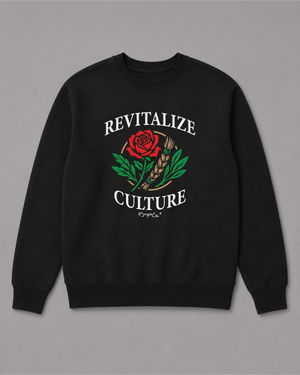
Aurora viewing in Wood Buffalo's Dark Sky Preserve happens from fall through spring, often in deep cold. We suggest the Black Oni long sleeve as a base, with a heavyweight hoodie or Revitalize Culture crewneck over it. Add a parka, warm boots, mitts and a toque for long nights outside.
Last reviewed . Facts on this page come from the sources listed below.
Indigenous clothing from XUSI
Beside the Slave River rapids at the edge of Wood Buffalo National Park, Fort Smith residents can wear Indigenous-designed tees, hoodies and hats from XUSI, shipped from our Saskatoon print shop.
Fort Smith winters average about −22 degrees in January, so we think in heavy layers. The Black Oni long sleeve under a heavyweight hoodie makes sense for aurora watching in the Dark Sky Preserve. For a game at the centennial arena, our Revitalize Culture crewneck keeps you warm in the stands. In summer, a heavyweight cotton tee suits a paddle near the rapids or a hike in Wood Buffalo. An A-frame snapback blocks the long northern sun while you watch pelicans on the river. Aurora College students can wear a Cree-word tee to class and share its story.