
Indigenous Sioux Lookout: Treaty 3, Nations and Community
An introduction to Sioux Lookout: its history, the Nations whose lands it sits on, and Indigenous community life today, with sources.
About Sioux Lookout
Sioux Lookout counted 5,839 residents in the 2021 census, up 10.8 per cent from 2016. The municipality, which includes Hudson, covers about 378 square kilometres. Most homes sit near Pelican Lake, which overlooks the downtown. Lac Seul and Minnitaki Lake spread out nearby, fed by the English River. Lakes, forest and the rugged Canadian Shield surround the town. The municipality calls itself the Hub of the North. It links 29 remote northern communities to health care and essential services by air, rail, road and water. In 2021, 2,090 residents identified as Indigenous, including 1,885 First Nations people and 190 Métis. Services provide about 68 per cent of local jobs, with forestry and transportation following.
Sioux Lookout history
Anishinaabe people have lived on these lakes and rivers since long before the town existed. Local tradition holds that Sioux Mountain, above the town, served the Ojibwe as a lookout point. From there, people watched the horizon to protect their communities. The town takes its name from that story, and a sentinel appears on the local newspaper's masthead. The area lies within Treaty 3. Lac Seul First Nation, an Ojibwe community that signed Treaty 3, borders the town to the northwest. Sioux Lookout was incorporated in 1912 as a terminal on the National Transcontinental Railway. The Hudson's Bay Company ran a fur-trade post in town from 1933 to 1937. In 1929, Ontario Hydro built a dam at Ear Falls that raised Lac Seul. The flooding turned Kejick Bay into an island and split a Lac Seul community in two. From 1952 to 1967, a radar station near town formed part of the Pinetree Line during the Cold War. In 2010, the Sioux Lookout Meno Ya Win Health Centre opened. It blends mainstream care with traditional Indigenous health practices. It serves northern communities across an area described as larger than France.
Treaty and territory
Sioux Lookout is within Treaty #3 territory, homeland of the Anishinaabe, and borders Lac Seul First Nation, an Ojibwe community that signed Treaty 3.
Nearby: Lac Seul First Nation · Hudson · Slate Falls Nation · Cat Lake First Nation · Dryden · Ear Falls
Indigenous Sioux Lookout today
First Nations life shapes much of Sioux Lookout today. The Sioux Lookout First Nations Health Authority, based on Queen Street, serves 33 First Nation communities across Treaties 3, 5 and 9. Its mission is to build a strong health system for the Anishinabe. It offers patient travel support, accommodations, diabetes and cancer screening, and mental health services through Nodin. It also gives hiring priority to First Nation employees where it can. The Nishnawbe-Gamik Friendship Centre operates on King Street, within Treaty #3 territory. Lac Seul First Nation includes three communities: Frenchman's Head, Kejick Bay and Whitefish Bay. Frenchman's Head is road-accessible, about 40 kilometres from town. Lac Seul belongs to both the Independent First Nations Alliance and Nishnawbe Aski Nation. In 2017, the municipality signed the Sioux Lookout Friendship Accord with Cat Lake, Lac Seul, Slate Falls and Kitchenuhmaykoosib Inninuwug First Nations. The accord supports shared work on community management and in-community skills training. It also backs the Sioux Lookout Mining Centre of Excellence.
Life in Sioux Lookout
Sioux Lookout is known for water, forest and Canadian Shield rock in every direction. Pelican Lake sits right at the edge of downtown, and Lac Seul and Minnitaki Lake open up beyond it. The English River feeds this chain of lakes, and water routes remain one of the ways people reach town. The Blueberry Festival has run each summer since 1983. It celebrates local heritage and summer tourism with sporting events, markets and live performances. The town is also a transportation centre. Its airport, rail line and highways move people and supplies between the south and 29 remote northern communities. Health care, services, forestry and transportation drive the local economy. The Meno Ya Win Health Centre, opened in 2010, draws patients from across the north.
Sioux Lookout seasons and weather
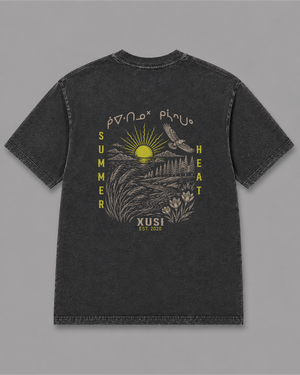
Sioux Lookout has a humid continental climate with deep winter cold. The town has recorded −46.1°C in February 1966 and 39.4°C in the summers of 1931 and 1936. Winter here means real layers, a warm hat and good mitts. Summer on the lakes can be hot, so a light tee earns its place too.
More on the region: Indigenous Ontario · all of Canada.
Keep learning in the XUSI Journal
- The Numbered Treaties, Explained
- Treaty Annuity Payments and Treaty Days, Explained
- First Nations, Métis and Inuit: What’s the Difference?
- How to Write a Land Acknowledgement That Means Something
- All Journal articles
Sioux Lookout questions
How does shipping to Sioux Lookout work?
Orders of $90 or more ship free to Sioux Lookout and anywhere in Canada. Orders under $90 show the shipping cost at checkout. Every order leaves our Saskatoon shop within 1 to 3 business days.
Can you print shirts for a Sioux Lookout team or community group?
Yes. Custom screen printing starts at 10 garments, with up to 4 colours per design. Every order gets a full quote before anything is printed, and design help is included. We print in Saskatoon and ship the finished order to you.
Can a fly-in community served through Sioux Lookout order from XUSI?
Yes. We ship anywhere in Canada from Saskatoon, and orders over $90 ship free. Shipping costs for smaller orders appear at checkout. We cannot promise delivery times to remote communities, since those depend on the carrier after the order leaves our shop.
Does XUSI sell at the Blueberry Festival or in any Sioux Lookout store?
No. We do not have a booth, stockist or store in Sioux Lookout. Outside our online shop, our only retail presence is at Wanuskewin near Saskatoon. Sioux Lookout customers order online, and we ship from Saskatoon.
Last reviewed . Facts on this page come from the sources listed below.
Indigenous clothing from XUSI
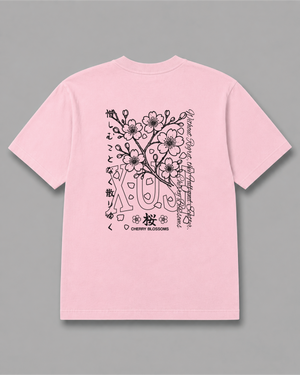
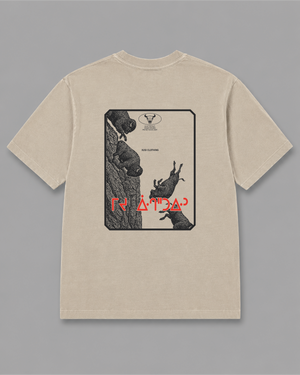
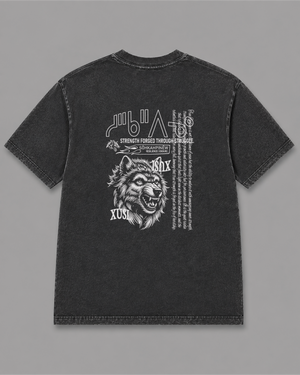
On the Canadian Shield lakes of northwestern Ontario, Sioux Lookout folks and visitors from the northern communities can order Indigenous-designed XUSI tees, hoodies and hats that we print in Saskatoon and ship east.
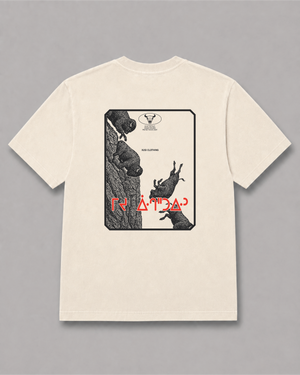
Sioux Lookout winters have hit −46°C, so our heavyweight hoodies belong under a parka for ice fishing on Pelican Lake. The Revitalize Culture crewneck makes a warm layer for travel days at the airport, and it carries a Cree word and story. Our Black Oni long sleeve covers cool fall mornings on the water around Lac Seul. During the Blueberry Festival, a 100% cotton tee, Golden Era ringer or women's baby rib tee keeps things easy in the summer heat. An A-frame snapback helps with glare off the lakes on long summer days.