


Indigenous Vernon: Unceded syilx Territory, Nations and Community
An introduction to Vernon: its history, the Nations whose lands it sits on, and Indigenous community life today, with sources.
About Vernon
Vernon is the largest city in the North Okanagan, with 44,519 residents in the 2021 census and 67,086 in its wider metro area. It sits about 380 metres above sea level, cradled by three lakes and dry grassland hills. The Syilx people lived around these lakes long before settlement, moving with the seasons to follow food sources. The Okanagan Indian Band, one of seven member nations of the Syilx Okanagan Nation, holds its main reserve at the head of Okanagan Lake. Today Vernon serves as a regional centre for trade, health care and services across the valley. Okanagan College runs a Vernon campus, and the city is close to Silver Star Mountain Resort and the beaches of Kalamalka Lake. Cattle ranches and fruit orchards shaped the valley's early economy.
Vernon history
The Syilx people, part of the wider Interior Salish family, lived around the North Okanagan lakes long before newcomers arrived. They called the spot where Swan Lake Creek narrows Nintle Moos Chin, described as the jumping-over place. Fur traders followed David Stuart, who explored the area for the Pacific Fur Company in 1811. Missionaries gave the area the name Priest's Valley around 1859. Gold finds at Cherry Creek in 1863 brought more settlers into the hills. In 1876, British Columbia and Canada created the Joint Indian Reserve Commission to allot reserves. The Syilx Nation's own timeline records that later reserves were assigned without community consent. No treaty was ever signed, and the land remains unceded. The townsite was called Centreville in 1885, then renamed Vernon in 1887. The name honours Forbes George Vernon, a provincial politician who helped build Coldstream Ranch. The Shuswap and Okanagan Railway reached town in 1891, and Vernon incorporated as a city on December 30, 1892. The sternwheeler SS Aberdeen began service on Okanagan Lake in 1893. The Grey Canal irrigation system followed in 1906, feeding orchards across the benches. In 1974, local bands occupied the Indian Affairs office in Vernon, which led to its closure and relocation.
Treaty and territory
Vernon sits in the unceded traditional territory of the Syilx Okanagan Nation, at the head of Okanagan Lake where the Okanagan Indian Band has its main reserve. No historic treaty was signed here.
Nearby: Coldstream · Okanagan Indian Band (Head of the Lake) · Armstrong · Lake Country · Enderby · Lumby
Indigenous Vernon today
The Okanagan Indian Band is based at the head of Okanagan Lake and manages seven reserves covering about 11,282 hectares. It has roughly 2,030 members, split fairly evenly between on-reserve and off-reserve life. The band runs health care, social services and early childhood programs for its people. The band belongs to the Okanagan Nation Alliance, alongside Westbank, Penticton, Osoyoos, Upper and Lower Similkameen and Upper Nicola. In 1987 the Okanagan Nation Declaration was signed at Komasket Park at the Head of the Lake. That same park now hosts the band's annual Komasket Powwow, held for the fourth time in June 2026. It is free and open to families who come to watch the Grand Entry. In town, the North Okanagan Friendship Center Society has served people since May 1977. It began as the United Native Nations Friendship Society and now offers cultural workshops, youth programs and housing for young adults. At Okanagan College's Vernon campus, the Kalamalka Indigenous Garden shares knowledge of traditional foods and medicines. Studio sisp̓l̓k̓ offers gallery shows and walking tours centred on Syilx art, language and storytelling. North of town, Splatsin guides lead hikes at the Enderby Cliffs.
Life in Vernon
Vernon is best known for its lakes. Kalamalka Lake is known for its beaches and water sports, while the head of Okanagan Lake lies at the city's edge. Swan Lake Creek's narrow stretch runs through downtown. The local economy grew on cattle ranches and fruit orchards, and it now mixes lumber, farming, light manufacturing and tourism. Vernon also works as the marketing and distribution hub for the North Okanagan. In winter, attention turns uphill to Silver Star Mountain Resort. The resort hosted a FIS Cross-Country World Cup in 1991 and remains a draw for skiers. Golfers head to courses such as Predator Ridge. The city is building a new Active Living Centre, expected to open in fall 2026. Museums, galleries, a performing arts centre and a science centre round out life in town.
Vernon seasons and weather
Vernon has warm, sometimes hot summers, with July highs averaging around 26 degrees. Winters are cold, with daytime highs near freezing and a little over 90 cm of snow a year. The valley is fairly dry, with about 425 mm of precipitation annually. A tee works for lake days, while a hoodie and toque handle crisp mornings and ski days up the mountain.
More on the region: Indigenous British Columbia · all of Canada.
Keep learning in the XUSI Journal
- First Nations, Métis and Inuit: What’s the Difference?
- How to Write a Land Acknowledgement That Means Something
- Orange Shirt Day & the National Day for Truth and Reconciliation
- National Indigenous Peoples Day and History Month: A Guide
- All Journal articles
Vernon questions
Do you ship XUSI clothing to Vernon, BC?
Yes. Orders of $90 or more ship free to Vernon and anywhere else in Canada. Smaller orders show the shipping cost at checkout. Every order leaves our Saskatoon shop within 1 to 3 business days.
Can you print custom shirts for a Vernon team or community group?
Yes. Our custom screen printing starts at 10 garments, with up to 4 colours per design. Every order gets a full quote before anything is printed, and design help is included. We print everything in Saskatoon and ship it to you in Vernon.
Is Vernon on treaty land?
No historic treaty covers Vernon. The city sits in unceded Syilx Okanagan territory, and the Okanagan Indian Band holds its main reserve at the head of Okanagan Lake. Our own shop in Saskatoon is on Treaty 6 land, and many of our designs carry Cree words with stories you can read on our meanings page.
What should I wear to Silver Star after a day in the valley?
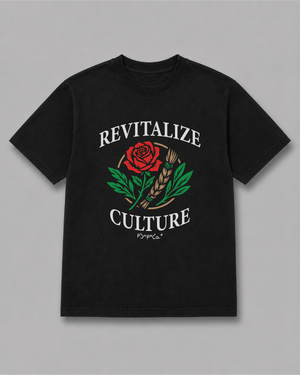
Vernon's valley floor can be mild while the mountain is snowy and cold, so layers matter. We suggest a heavyweight cotton tee as a base, with a hoodie or our Revitalize Culture crewneck over it. Add your ski shell and a warm hat, and you can peel back once you are back in town.
Last reviewed . Facts on this page come from the sources listed below.
Sources for this page
Indigenous clothing from XUSI
From the head of Okanagan Lake to the ski trails of Silver Star, Vernon folks can wear Indigenous-designed tees, hoodies and hats from XUSI, shipped straight from our Saskatoon print shop.
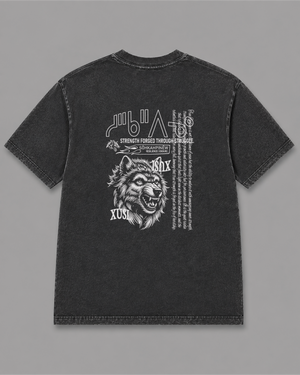
Vernon swings from hot beach days on Kalamalka Lake to snowy runs at Silver Star, so we think in layers here. Our heavyweight cotton tee handles a July afternoon on the sand and holds its shape through a summer of washes. As evening cools the grassland hills, a hoodie comes out for evenings by Okanagan Lake. An A-frame snapback keeps the sun off during orchard picking or a round at the golf course. For ski season, the Revitalize Culture crewneck layers well under a shell jacket. Heading to the Komasket Powwow in June, a Cree-word tee is a quiet way to carry a story of your own.