
Indigenous Whitehorse: Kwanlin Dün and Ta’an Kwäch’än Lands, Nations and Community
An introduction to Whitehorse: its history, the Nations whose lands it sits on, and Indigenous community life today, with sources.
About Whitehorse
Whitehorse lies along the Yukon River about 87 km north of the British Columbia border, on a river plain backed by a steep escarpment. It began as a stopping point in 1898 for Klondike stampeders dealing with Miles Canyon and the Whitehorse Rapids, and replaced Dawson as territorial capital in 1953. The city is home to most Yukoners, and government, transportation, mining and tourism shape its economy. The Kwanlin Dün First Nation and the Ta’an Kwäch’än Council are the local First Nations, and archaeological evidence shows Indigenous occupation going back at least 2,500 years. The Kwanlin Dün Cultural Centre stands on the riverbank downtown, and the Adäka Cultural Festival celebrates Yukon First Nations arts. Yukon University’s main campus is named Ayamdigut, a Tlingit word given by Tagish elder Angela Sidney. Annual highlights include the Yukon Sourdough Rendezvous, held since 1962, and the Yukon Quest sled dog race.
Whitehorse history
The first people here were likely ancestors of today’s Southern Tutchone, Inland Tlingit and Tagish nations. The city takes its name from the rapids, whose white water was said to resemble a horse’s mane. Permanent settlement came in 1900, when the White Pass and Yukon Route railway reached the river from Skagway, Alaska. In 1942 about 30,000 servicemen and workers arrived to build the Alaska Highway during the Second World War. The town was incorporated as a city in 1950. Federal support helped mining expand through the 1950s. The White Pass and Yukon Route stopped running in 1982, after more than eight decades of service. Seasonal visitors still arrive along the Alaska Highway. Land claims reshaped the territory in the decades that followed. In 1993 an Umbrella Final Agreement set the terms for settling Yukon First Nations land claims. It was reached between the federal and territorial governments and the Council representing Yukon First Nations. It also opened the way to self-government, with authority over land use, language, health, social services and education.
Treaty and territory
Whitehorse is on the traditional territories of the Kwanlin Dün First Nation and the Ta’an Kwäch’än Council.
Nearby: Kwanlin Dün First Nation · Ta’an Kwäch’än Council · Carcross/Tagish First Nation · Marsh Lake
Indigenous Whitehorse today
The Yukon government recognizes 14 Yukon First Nations, whose traditional territories cover all land in the territory. Their languages fall into eight groups, including Southern Tutchone, Tagish and Tlingit. Kwanlin Dün First Nation governs itself under its own constitution. Its structure includes an Elders’ Council, a Youth Council and a Judicial Council alongside the main Council. The Nation runs the Dusk’a Head Start Family Learning Centre and programs in health, justice and heritage. Its motto is Kwänlin Dän gha eech’e, which it translates as We are Kwanlin Dün. The Ta’an Kwäch’än Council has a similar structure, with a General Assembly, Chief and Council, and Elders’, Youth and Judicial councils. Its departments cover lands and heritage, housing, and wellness. The Kwanlin Dün Cultural Centre on Front Street calls itself the Yukon’s premier gathering place. It hosts the Shakaat Artist Residency, an Elders Portrait Project and workshops. It has marked National Indigenous Peoples Day on June 21, and its retail space invites local vendors. The centre has also run a branding collaboration for artists called Chasàn Tatäy.
Life in Whitehorse
Whitehorse counted 28,201 residents in 2021, up from 25,085 five years earlier. The city serves as the territory’s transport, business and service centre. Trails are a point of pride. The City lists about 230 km of trails of city-wide importance, plus more than 850 km of local paths. That works out to 33.9 km per 1,000 residents, against a Canadian average of 0.9. The paved 5 km Millennium Trail loops along both banks of the Yukon River. In winter, cross-country skiers take over many routes. The restored riverboat Klondike and an Anglican log church from 1900 recall the gold rush years. The Yukon Arts Centre opened in 1992, and the Yukon Beringia Interpretive Centre followed in 1997. The Canada Games Centre adds pools, a running track and skating. From November through March, snowmobiles can use the City’s motorized multi-use trail network.
Whitehorse seasons and weather
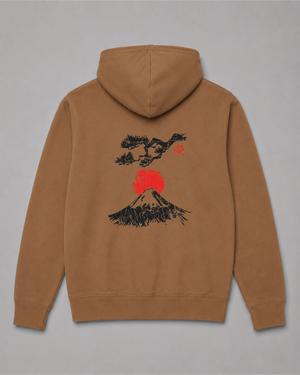
Whitehorse winters are cold and dry with short days, and summers bring long daylight and cool evenings. A thick hoodie over a base layer, plus a warm hat, covers most of the year.
More on the region: Indigenous Yukon · all of Canada.
Keep learning in the XUSI Journal
- First Nations, Métis and Inuit: What’s the Difference?
- How to Write a Land Acknowledgement That Means Something
- Orange Shirt Day & the National Day for Truth and Reconciliation
- National Indigenous Peoples Day and History Month: A Guide
- All Journal articles
Whitehorse questions
Do you ship orders to the Yukon?
Yes. Orders ship from Saskatoon and usually leave within 1–3 business days. The shipping cost to Whitehorse is calculated at checkout, and orders of $90 or more ship free within Canada.
Can a Whitehorse organization order custom shirts in small numbers?
The minimum for custom screen printing is 10 garments. Designs can have up to 4 colours, design help is included, orders are printed in Saskatoon and shipped to you, and every order is quoted before printing.
Could a Whitehorse Southern Tutchone or Tlingit language group order shirts with its own words?
Yes. Send us your wording and we will help lay out the design, with up to 4 colours per print. Runs start at 10 garments, and every order is quoted before printing. Please check spellings with your own speakers, because we print exactly what you approve.
XUSI is from Treaty 6. Does that connect to Yukon First Nations agreements?
Not directly. Yukon First Nations have their own land claim and self-government agreements, built on the 1993 Umbrella Final Agreement. Our designs carry Cree words and stories from our home in Treaty 6, explained on our meanings page. We encourage learning from Kwanlin Dün and Ta’an Kwäch’än about local history.
Last reviewed . Facts on this page come from the sources listed below.
Indigenous clothing from XUSI
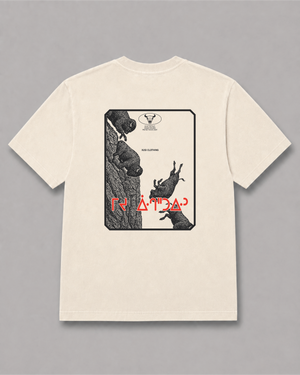
Whitehorse is on our map. XUSI, an Indigenous-owned apparel and screen-printing shop in Saskatoon, ships tees, hats and hoodies north to the Yukon capital for anyone who wants Prairie-made designs along the Yukon River.
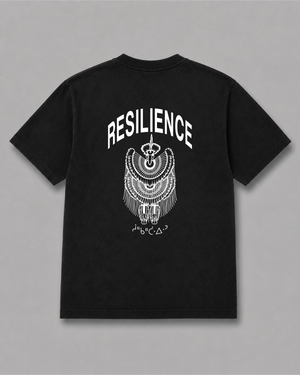
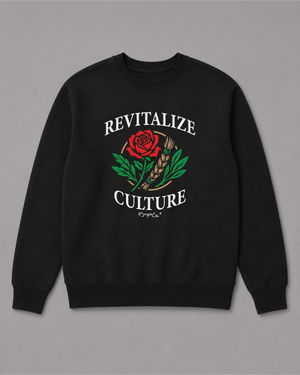
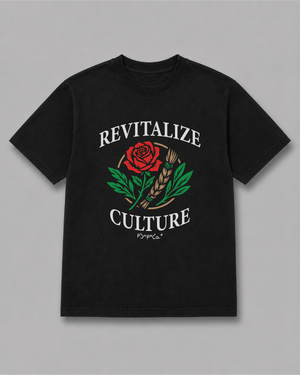
Whitehorse life is lived on the trails, so we think about gear that moves. Under the midnight sun, a heavyweight cotton tee and an A-frame snapback suit a loop on the Millennium Trail. Cool evenings by the Yukon River call for a Black Oni long sleeve. When aurora season returns in the fall, a crewneck under a light jacket makes late nights outside easier. From freeze-up on, our heaviest hoodie layers under a parka for ski trails and Sourdough Rendezvous. A Golden Era ringer tee is an easy pick for a show at the Yukon Arts Centre.