
Indigenous Yellowknife: Chief Drygeese Territory, Nations and Community
An introduction to Yellowknife: its history, the Nations whose lands it sits on, and Indigenous community life today, with sources.
About Yellowknife
Yellowknife, known in Dene as Somba K’e, the money place, sits on the north shore of Great Slave Lake atop ancient Canadian Shield rock. It is built on Chief Drygeese Territory, the traditional land of the Yellowknives Dene First Nation, whose communities of Dettah and Ndilǫ are close by. Gold discoveries in the 1930s launched the town, and the Con and Giant mines operated for decades. Yellowknife became the capital of the Northwest Territories in 1967 and a city in 1970, and it now serves as a supply centre for the territory’s diamond mines as well as its government hub. The Northwest Territories recognizes 11 official languages. Aurora viewing draws many visitors, and the Prince of Wales Northern Heritage Centre holds territorial collections. Folk on the Rocks brings music to Long Lake each summer, and the Snowking Winter Festival builds a snow castle on the frozen bay every March.
Yellowknife history
The city and its bay take their name from the Yellowknives, a Dene band. The Canadian Encyclopedia explains that they got copper for knives and other tools, and their name came from those copper blades. The Tłı̨chǫ, another Dene people, lived between Great Slave Lake and Great Bear Lake and relied on caribou for food and materials. Fur trader Peter Pond likely reached the area in the mid-1780s. Alexander Mackenzie came through in 1789 and John Franklin in 1820. Treaty 8, first signed in 1899, reached into parts of the Northwest Territories. Yellowknives Dene history holds that Elder Liza Crookedhand found gold-bearing rock while picking berries. A prospector later traded her a stovepipe for the location. Visible gold found in 1934 set off a rush. Con Mine began producing in 1938, and Giant Mine followed in 1948. Yellowknife first became a municipal district in 1953. The last gold mines closed in 2003 and 2004. Giant Mine left a hard legacy. Roasting its ore produced 237,000 tonnes of arsenic trioxide dust, stored in underground chambers. Officials expected permafrost to freeze around the vaults and seal the waste in. The mine stopped operating in 1999 and was abandoned in 2005.
Treaty and territory
Yellowknife is in Chief Drygeese Territory, the traditional land of the Yellowknives Dene First Nation, within Treaty 8.
Nearby: Dettah · Ndilǫ · Behchokǫ̀
Indigenous Yellowknife today
About 24 per cent of Yellowknife residents are Indigenous. The Yellowknives Dene First Nation runs administration offices in both communities: the Chief Drygeese Building in Dettah and the Deton Cho Building in Ndilǫ. It operates Kalemi Dene School and Kaw Tay Whee School. Its departments also cover early childhood education, housing, land management, wellness and environmental management. The Nation's motto reads, "As long as the sun shines, the river flows, and the grass grows." The North Slave Métis Alliance is the Indigenous government for Métis people from the north side of Great Slave Lake. It hosts cultural workshops such as hide tanning and ribbon skirt making. It also held the first community gathering for the National Day for Truth and Reconciliation. Its Winter Road Monitoring Program helps protect caribou, and it created a Lands and Culture Department in 2024. The Tłı̨chǫ Government, formed under the 2005 Tłı̨chǫ Agreement, serves Behchokǫ̀, Whatì, Gamètì and Wekweètì and has a presence in Yellowknife.
Life in Yellowknife
Yellowknife had 20,340 residents in the 2021 census. It is a diverse capital. Filipino residents make up 6.9 per cent of the population, Black residents 4.4 per cent and South Asian residents 3.1 per cent. Gold defined the city for most of its history. Gold was first noticed in the area in the 1890s, decades before the rush. Claims at Giant were staked in the summer of 1935, and the mine ran for about 50 years before closing in 1999. The final gold mines in the area shut in 2003 and 2004. Giant Mine sits along Back Bay on Great Slave Lake and the Ingraham Trail. Its cleanup, the Giant Mine Remediation Project, is run by the federal government. The Tłı̨chǫ Government has signed a ten-year economic benefits agreement tied to the work.
Yellowknife seasons and weather
January averages around −26 °C in Yellowknife, while summers are short, sunny and mild. Plan on serious winter layers, with a hoodie as a mid-layer and a warm hat whenever you head outside.
More on the region: Indigenous Northwest Territories · all of Canada.
Keep learning in the XUSI Journal
- First Nations, Métis and Inuit: What’s the Difference?
- How to Write a Land Acknowledgement That Means Something
- Orange Shirt Day & the National Day for Truth and Reconciliation
- National Indigenous Peoples Day and History Month: A Guide
- All Journal articles
Yellowknife questions
Do you ship to Yellowknife?
Yes. Orders leave Saskatoon within 1–3 business days, the shipping cost is calculated at checkout, and orders of $90 or more ship free within Canada.
Can you print hoodies for a Yellowknife festival crew?
Yes. Custom screen printing needs a minimum of 10 garments, supports up to 4 colours, and every order is quoted before printing. Design help is included, screens go up to 23x31 inches, and we ship the finished order from Saskatoon.
Could a Yellowknives Dene school or North Slave Métis program order custom hoodies?
Yes. Custom screen printing starts at 10 garments, with up to 4 colours per design, and every order is quoted before printing. Design help is included. We print in Saskatoon and ship the finished order to Yellowknife, which suits a school team, a cultural workshop group or a land-based program.
Do XUSI designs use Dene languages?
Many of our designs carry a Cree word, since XUSI is a Indigenous-owned brand from Saskatoon. Each word's story is on our Meanings page. Many of our designs carry a Cree word, with its story on our Meanings page.
Last reviewed . Facts on this page come from the sources listed below.
Indigenous clothing from XUSI
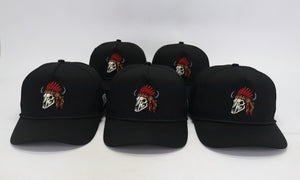
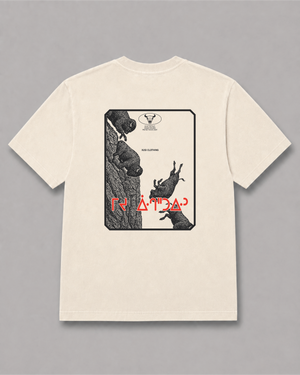
For Indigenous clothing in Yellowknife, check out XUSI. Our Indigenous-owned shop in Saskatoon ships everyday tees, warm hoodies and hats to Somba K’e, ready for both long winter nights and bright summer evenings on the lake.
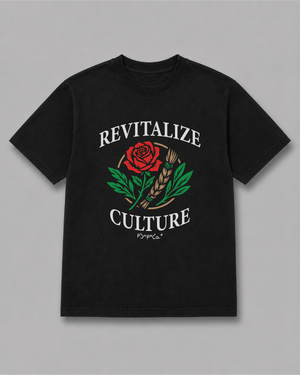
Yellowknife asks for layers most of the year. On a bright June evening along Back Bay, a light cotton tee and a snapback are all you need in the long northern daylight. As summer fades, the Black Oni long sleeve suits fishing trips out the Ingraham Trail. Once the lakes freeze, wear a heavy hoodie over a base layer and under your parka for aurora watching. Indoors at a hide tanning workshop or a community gathering, the Revitalize Culture crewneck keeps you warm. Yellowknife crews and school groups can also order custom hoodies, printed in Saskatoon and shipped north.